Families choosing a lunch drink
An organic coconut drink is the relevant format when a child wants something pourable with lunch. If it will regularly replace dairy, fortification becomes a separate label check.


For a lunch drink, choose an organic coconut drink rather than tinned coconut milk, which is intended as an ingredient in prepared food. If the drink regularly replaces dairy because a child cannot consume it, check the pack for calcium and iodine fortification; organic status alone does not establish this. Before packing either format, check the current ingredient and allergen label alongside the school’s food-allergy policy.
The intended use matters more than the shared word “coconut”: a drink, a cooking ingredient and a regular dairy substitute call for different checks.
An organic coconut drink is the relevant format when a child wants something pourable with lunch. If it will regularly replace dairy, fortification becomes a separate label check.
Tinned organic coconut milk can be used as an ingredient in a dish made at home. Check the recipe’s required format and the finished food’s storage needs rather than treating the tin as a ready-to-drink carton.
Match the current pack’s ingredients and cross-contact statement to the child’s plan, then check the individual school’s policy. Cambridge University Hospitals NHS Foundation Trust advises parents to discuss a child’s allergy needs with the school; Alleyn’s School is one example of a school whose policy restricts coconut.
Decide whether the coconut product is a drink or an ingredient first. Then check the pack against the child’s dietary needs and the school’s rules.
| Priority | What to check | Your needs |
|---|---|---|
| Drink or ingredient | Look for a coconut drink when buying a beverage. For food prepared at home, check whether the recipe calls for tinned cooking coconut milk; Biona Organic and Waitrose & Partners describe their tinned examples as cooking ingredients. | I’m packing something to drink, not buying coconut milk for a dish. If I’m making the food at home, the cooking format may be the relevant one. |
| Organic status | Check that the whole product is labelled organic rather than assuming that an organic coconut ingredient makes the entire drink organic. The UK Department for Environment, Food & Rural Affairs says organic labelling requires the applicable production rules and certification to be met. | Organic status matters to me for the product I’m buying, so I’ll check the current pack rather than rely on the ingredient name. |
| Dairy replacement | If a child cannot consume dairy, check the drink’s calcium and iodine fortification. Kingston and Richmond NHS Foundation Trust advises choosing fortified dairy substitutes in that situation and identifies 120 mg calcium per 100 ml as an amount to look for where possible. | This drink may replace dairy regularly, so I need to compare its current nutrition label, not assume that “organic” or “dairy-free” answers the nutrition question. |
| Allergies and school rules | Read the current ingredients and cross-contact statement against the child’s allergy plan. Check the school’s own policy: Alleyn’s School, for example, asks families not to bring coconut or coconut derivatives onto its site. | I need the packed lunch to fit both the child’s allergy plan and this school’s rules; a dairy-free description does not settle either check. |
| Storage after opening | Follow the exact pack’s refrigeration and use-by-opening instructions. Tesco Groceries lists four days after opening for Plenish’s drink; Sainsbury’s lists five days for Rude Health’s drink. Waitrose & Partners instructs users to refrigerate opened Duchy Organic coconut milk below 5°C and use it within two days. | I may open a larger carton or tin for several lunches, so I need to know when it was opened and follow its storage instructions. |
Tinned coconut milk is a cooking ingredient, not the same format as a pourable coconut drink. Biona Organic lists 18 g fat and 16 g saturates per 100 g for its regular tinned coconut milk.
Choose a coconut drink for a beverage; use tinned milk when it suits the food being prepared. Compare the nutrition labels if choosing between regular and light cooking versions.
Organic status does not establish whether a coconut drink contains added calcium or iodine. Kingston and Richmond NHS Foundation Trust notes that many organic dairy substitutes are not fortified.
If a child cannot consume dairy and the drink will replace it regularly, check both nutrients on the current pack.
A school’s allergy policy can restrict an ingredient independently of whether a product contains dairy. Alleyn’s School, for example, asks families not to bring coconut or coconut derivatives onto its site.
Check your child’s school policy and allergy plan before packing a coconut product.
The physical pack is the relevant place to check the product being packed, particularly its ingredients, allergen statement and instructions after opening.
Read that pack before using it for lunch and follow its stated refrigeration and storage period.
These examples illustrate different product formats and label checks; a brand name alone does not establish that every product in its range has the same ingredients or nutrition.
Tesco Groceries lists a 1 L organic UHT coconut-and-rice drink, a beverage format rather than tinned cooking milk.
Sainsbury’s lists an organic coconut-and-rice drink intended as a drink or for other pourable uses.
Biona Organic’s regular and light tinned coconut milks illustrate the cooking-ingredient route.
Waitrose & Partners lists Duchy Organic tinned coconut milk for cooking, including soups and desserts.
Alpro Coconut Original is a coconut-drink example for comparing fortification when replacing dairy is the main concern, rather than assuming every coconut drink has the same nutrients.
This Joybuy option is a coconut drink for the beverage route. If you specifically need an organic product or a fortified dairy replacement, check those details on its current pack before choosing it.
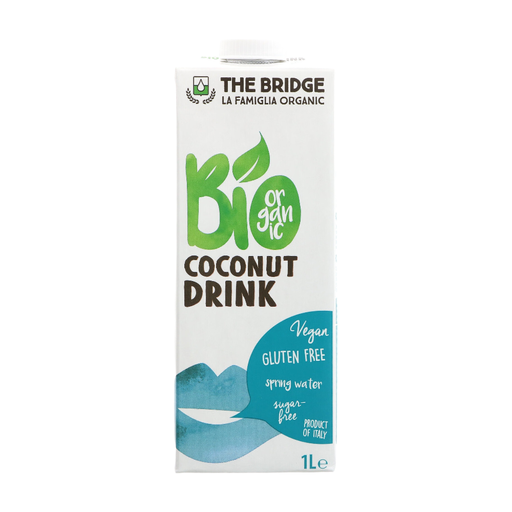 No image available
This is a drink-format option for a packed-lunch beverage. Check the current pack for whole-product organic status, calcium and iodine fortification, and ingredients and allergen information relevant to the child’s needs. Confirm that coconut is permitted under the school’s current policy.
No: the format determines how to use it. Tesco Groceries and Sainsbury’s list the Plenish and Rude Health examples as coconut-and-rice drinks, while Biona Organic and Waitrose & Partners describe their tinned coconut milks as cooking ingredients. Choose a drink for a lunch beverage and a tin for a suitable dish prepared at home.
No. The coconut-drink examples are described as plant-based or dairy-free, and Biona Organic lists coconut and water as the ingredients of its regular cooking milk. Check each current pack’s ingredients and allergen statement rather than applying that description to every coconut product.
Check the current label for calcium and iodine fortification if the child cannot consume dairy. Kingston and Richmond NHS Foundation Trust advises fortified dairy substitutes in that situation and suggests looking for 120 mg calcium per 100 ml where possible; an organic label alone does not answer the fortification question.
Yes, an individual school’s allergy policy may restrict it. Alleyn’s School asks families not to bring coconut or coconut derivatives onto its site. Check your own school’s current policy and discuss the child’s allergy needs with the school, as Cambridge University Hospitals NHS Foundation Trust advises.
Follow the exact pack rather than using one period for every product. Tesco Groceries lists four days after opening for the Plenish drink, Sainsbury’s lists five days for the Rude Health drink, and Waitrose & Partners says opened Duchy Organic coconut milk should be refrigerated below 5°C and consumed within two days.