For late-night cereal, porridge or a cold drink, choose an unsweetened, calcium-fortified long-life coconut drink if avoiding added sugar and storing an unopened carton in the cupboard matter to you. A standard coconut drink offers another option for drinking and food uses; choose a barista version when frothing coffee is the priority, but check its ingredients because the Alpro Barista Coconut product contains soya and sugar. Follow the storage instructions on the carton you buy, particularly after opening.
Who might choose each type?
Late-night cereal or porridge eaters
A long-life coconut drink can be kept unopened for a later supper. If avoiding added sugar or comparing calcium matters, check those details on the particular carton rather than relying on the words ‘coconut drink’.
Plant-based coffee drinkers
A barista coconut drink is the relevant type to consider for a foamed coffee. Check its ingredients as well as its preparation instructions: the Alpro Barista Coconut product listed by Waitrose & Partners contains soya beans and sugar.
Shoppers avoiding dairy or soya
Check the exact product’s ingredients and allergen statements. Tesco lists Koko Unsweetened as free from dairy and soya, whereas the Alpro Barista Coconut formulation listed by Waitrose & Partners contains soya beans.
What should you check on the carton?
Start with how you will use the drink, then compare the ingredients, nutrition panel and storage instructions of the cartons that suit that use.
| Priority |
What to check |
Your needs |
| Intended use |
Check whether the carton is a drinking-style coconut alternative or a barista product intended for coffee. For a recipe needing cooking coconut milk, check the type and ingredients separately. |
For cereal or porridge, I want a drink I can pour straight from the carton. For a foamed coffee, I need a product intended for that use. |
| Sugars |
Read both any ‘no added sugars’ wording and the sugars figure per 100 ml. Sainsbury’s describes Alpro Coconut Long Life Drink as having no added sugars; Tesco lists 0.2 g sugars per 100 ml for Koko Unsweetened. |
If I am avoiding added sugar, I want to distinguish an unsweetened or no-added-sugars drink from a barista recipe containing sugar. |
| Fortification |
Look for added calcium and compare the amount per 100 ml on the exact carton. Tesco lists 120 mg calcium per 100 ml for Koko Unsweetened; its product information also lists vitamins D2 and B12. |
If I regularly use a coconut drink instead of dairy milk, I want to compare the calcium information rather than assume every carton is fortified alike. |
| Allergens |
Read the current ingredients and precautionary allergen statements. Waitrose & Partners lists soya beans in Alpro Barista Coconut, while Tesco labels Koko Unsweetened free from soya. |
When avoiding soya, I cannot choose by the coconut wording on the front of the pack alone. |
| Storage and pack size |
Check unopened storage directions and the instructions after opening. Tesco says to refrigerate Koko Unsweetened after opening and consume it within five days. |
For an occasional late-night drink, I want a carton size I can use within its stated period after opening. |
What could lead to the wrong choice?
-
Picking a drinking carton for a cooking recipe
A coconut drink intended for cereal or coffee should not be assumed to give a curry or dessert the same consistency as culinary coconut milk.
Check whether the recipe calls for a drinking-style alternative or coconut milk intended for cooking before choosing the pack.
-
Assuming all coconut drinks contain the same calcium
Fortification depends on the product. Tesco lists 120 mg calcium per 100 ml for Koko Unsweetened, but that figure does not describe every coconut drink.
Compare the calcium figure per 100 ml on the cartons you are considering.
-
Assuming coconut means soya-free
The Alpro Barista Coconut formulation listed by Waitrose & Partners contains soya beans; the Koko Unsweetened product listed by Tesco carries a different free-from statement.
Read the ingredients and any precautionary allergen statement on the carton you buy.
-
Treating ‘long-life’ as an instruction for an opened carton
Storage instructions change after opening. Tesco instructs shoppers to refrigerate Koko Unsweetened and consume it within five days of opening.
Check the opened-carton period before buying a large pack for occasional use, and follow the instructions for each carton.
Relevant brand references
These product-line examples show why the exact formulation matters; a brand name alone does not establish its ingredients or nutrition values.
Koko
Tesco lists a 1 L Koko Unsweetened coconut-based drink for drinking-style uses.
- Tesco lists 0.2 g sugars and 120 mg calcium per 100 ml, with vitamins D2 and B12.
- The carton must be refrigerated after opening and consumed within five days. Sainsbury’s lists advice to consult a GP or qualified dietitian before using it as a main milk source for children under two.
Alpro
Sainsbury’s lists a standard UHT Coconut Long Life Drink and a separate coconut barista drink.
- The standard drink is described as coconut with rice, added calcium and vitamins, and no added sugars.
- The Alpro Barista Coconut formulation listed by Waitrose & Partners contains soya beans and sugar. Check the particular barista carton if either ingredient matters.
Tesco
Tesco’s coconut-drinks category lists a Long Life Coconut Original 1 L own-label option alongside branded drinks.
- The own-label carton offers another long-life product to compare with the named branded options.
- Check its own ingredients, allergens and nutrition panel before treating it as equivalent to another formulation.
Joybuy coconut drink options
These barista coconut drinks are options to consider when a late-night coffee-style drink is the priority. Compare their ingredients and pack sizes rather than treating them as substitutes for an unsweetened cereal drink.
 No image available
Alpro Barista Coconut Long Life Drink, 8 × 1 L
A coconut barista drink for coffee-style use, supplied as eight 1 L cartons. Contains soya and sugar, so check the carton if either ingredient matters. Refrigerate after opening and use within five days.
View on Joybuy
 No image available
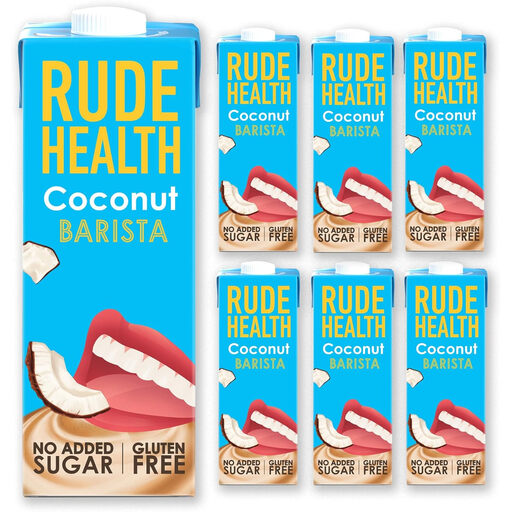
Rude Health Barista Coconut, 6 × 1 L
A barista-labelled coconut drink to consider for coffee-style use, supplied as six 1 L cartons. It contains oats; check the carton’s allergen information, calcium content and storage instructions if those details affect your choice.
View on Joybuy
Frequently asked questions
Is a long-life coconut drink the same as canned coconut milk for cooking?
No. The long-life coconut drinks discussed here are drinking-style alternatives used with foods such as cereal and porridge or in coffee. If a recipe depends on the consistency of cooking coconut milk, check for a culinary product rather than assuming a drinking carton will work the same way.
Can I keep a long-life coconut drink in a cupboard?
Check the unopened-carton storage instructions: long-life and chilled products need not have the same directions. After opening, follow the particular carton’s instructions. Tesco says to refrigerate Koko Unsweetened after opening and consume it within five days.
How do I compare calcium in coconut drinks?
Compare the calcium amount per 100 ml on each nutrition panel and check whether calcium has been added. Tesco lists 120 mg per 100 ml for Koko Unsweetened; that figure should not be applied to other cartons.
Are coconut drinks always suitable for someone avoiding soya?
No. Waitrose & Partners lists soya beans in Alpro Barista Coconut, while Tesco labels Koko Unsweetened free from soya. Check the current ingredients and precautionary allergen statement on the exact product before buying.
Can a coconut drink be a main milk source for an infant?
Do not assume that it can. Sainsbury’s lists Koko’s advice to consult a GP or qualified dietitian before using its unsweetened drink as a main milk source for children under two; that product advice is not an approval for other coconut drinks.


