Cereal, porridge and smoothie drinkers
If you want a coconut drink for breakfast bowls or smoothies, compare sweetness, fortification and how soon you will use an opened carton.


For cereal or porridge, start with an unsweetened coconut drink and compare sugars per 100ml: “no added sugar” does not mean zero sugars. If you want added calcium or vitamins, check the individual carton; if froth for coffee matters more, consider a barista drink and check whether it contains soya.
If you want a coconut drink for breakfast bowls or smoothies, compare sweetness, fortification and how soon you will use an opened carton.
If a coconut drink regularly replaces dairy at breakfast, check the exact product for added calcium and relevant vitamins rather than assuming all cartons contain the same nutrients.
If you want to froth a coconut drink for a latte or cappuccino, look at barista formulations and check their ingredients and heating instructions.
Decide how you will use the carton, then compare its sugars, added nutrients and allergen information.
| Priority | What to check | Your needs |
|---|---|---|
| Sweetness | Compare sugars per 100ml on the same basis. Tesco Groceries lists 0.2g per 100ml for Koko Unsweetened; its Alpro Coconut No Sugar listing states that it has no sugars or sweeteners. Check the nutrition panel even when a carton says “no added sugar”. | I want the coconut drink to leave room for the sweetness of fruit or other breakfast toppings. |
| Fortification | Read the exact carton for calcium, vitamin D, B12 and iodine. Tesco Groceries lists 120mg calcium per 100ml for Koko Unsweetened, while its Tesco Sweetened listing names added calcium, iodine, vitamin B12 and vitamin D2. | If this drink regularly replaces dairy at breakfast, I want to know which nutrients have been added. |
| Ingredients and allergens | Check the current ingredient list and allergen statement. Waitrose & Partners identifies soya in Alpro Coconut Barista with Soya, while Marks & Spencer says its Creamy Coconut Drink is not suitable for people with a milk allergy. | For an allergy or ingredient-avoidance requirement, a coconut or plant-based name is not enough for me to judge suitability. |
| Breakfast use | Check whether the carton is intended for cereal and porridge or for frothing coffee. For a barista drink, follow its preparation instructions rather than assuming all coconut drinks heat in the same way. | I mainly pour it over breakfast, or I need a drink formulated for weekend coffee. |
| Opened-carton use | Read the refrigeration and use-by-after-opening instructions on the carton. Consider its size alongside how often you will use it. | A large carton may be more than I will get through over one weekend. |
A drink can contain naturally occurring sugars without added sugar. The wording on the front does not give you its total sugars figure.
Compare the sugars line per 100ml when sweetness is important to your choice.
Added nutrients differ between products: Tesco Groceries lists calcium, iodine, vitamin B12 and vitamin D2 for Tesco Sweetened Coconut Drink, while Sainsbury's lists calcium, iodine, vitamin D and B12 for its Coconut Barista Drink.
If fortification matters to you, check the nutrient entries on the particular carton you are buying.
A coconut-flavoured coffee drink can also contain soya. Waitrose & Partners identifies soya in Alpro Coconut Barista with Soya.
Read the ingredient and allergen panel before choosing a barista carton if you avoid soya.
A long-life carton still has a limited period of use once opened. An occasional weekend coffee may not use up a large pack.
Match the pack size to your plans, refrigerate after opening and follow the carton’s instructions.
Alpro has separate Coconut No Sugar and Coconut Barista with Soya drinks for different breakfast uses.
Koko Unsweetened is a coconut drink to consider for cereal when comparing sugars and fortification.
Tesco Sweetened Coconut Drink is an own-label option for shoppers who want a sweetened carton with added nutrients.
Sainsbury's Coconut Barista Drink is an own-label coffee-format option.
M&S Plant Kitchen Creamy Coconut Drink is a separate product to assess by its own label, particularly where allergens matter.
Waitrose & Partners lists products from other brands, including Plenish Organic Unsweetened and Alpro Coconut Barista with Soya.
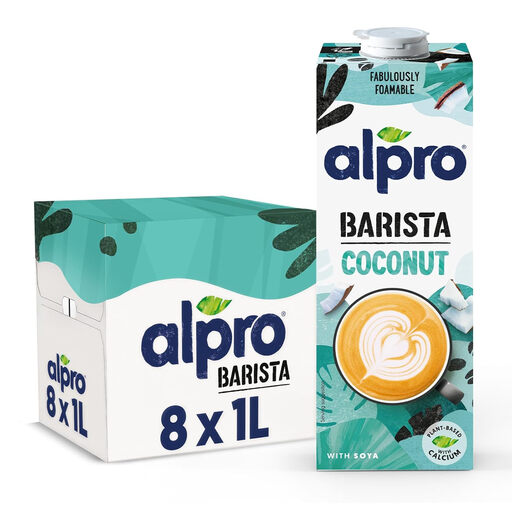
This barista-style coconut drink is relevant if frothing coffee is your breakfast priority; compare a standard unsweetened carton separately if you mainly use coconut drink on cereal or porridge.
 No image available
A coconut barista drink for weekend coffee, supplied as eight 1L cartons. Consider whether you will use the multipack, check the soya allergen information and follow the storage instructions after opening.
Start with an unsweetened or no-sugar carton, then compare sugars per 100ml. Tesco Groceries lists 0.2g sugars per 100ml for Koko Unsweetened and describes Alpro Coconut No Sugar as having no sugars or sweeteners.
Check it if the drink regularly replaces dairy at breakfast. The NHS advises people following a vegan diet to include fortified dairy alternatives; the nutrients added to individual coconut drinks differ, so read the carton for calcium and relevant vitamins or minerals.
A standard drink can be used in coffee, but a barista formulation is the more relevant option if froth is your priority. Waitrose & Partners describes Alpro Coconut Barista with Soya as formulated for foamability; check its soya warning and preparation instructions.
Refrigerate it and follow the period stated on that carton. Check this before choosing a large pack for occasional weekend use.
No. Marks & Spencer says its M&S Plant Kitchen Creamy Coconut Drink is not suitable for people with a milk allergy despite its vegan labelling. Check the current allergen statement and ingredients for the exact product.