A dairy-free coconut drink can be part of a toddler’s breakfast from age one, but a free-from claim does not establish that it is suitable as the main milk drink. If cow’s milk is excluded, check the exact carton for allergens, calcium, iodine, vitamins D and B12, energy and protein; seek GP or dietitian advice before making a coconut drink the main milk source for a child under two or one with restricted eating or poor growth.
Who is this choice for?
Parents replacing cow’s milk after age one
If a toddler needs a non-dairy main milk drink, the decision goes beyond finding a dairy-free label. NHS dietetic guidance advises checking fortification alongside energy and protein, because plant-based drinks differ substantially.
Families avoiding milk and soya
Check each coconut drink’s ingredients against the child’s allergens. Tesco lists Koko Unsweetened as free from dairy and soya, whereas Sainsbury’s lists soya in Alpro Coconut Barista.
Parents using a little in cereal or porridge
A small amount used as a breakfast ingredient is a different decision from relying on the drink as the child’s regular milk source. Check the ingredients for the child’s needs, and consider the wider diet before making a milk replacement.
What should you check on the carton?
First establish which allergens the child must avoid and how the drink will be used: on breakfast food, as an occasional drink or as a regular replacement for cow’s milk.
| Priority |
What to check |
Your needs |
| Allergens |
Read the current ingredients and allergen statement, not just the coconut or dairy-free wording. Check for soya and any other ingredients the child must avoid. |
I need a drink that fits this child’s particular allergies. A coconut base alone does not tell me whether it contains soya. |
| Fortification |
Look for calcium, iodine and vitamins D and B12. Kingston and Richmond NHS Foundation Trust advises aiming for 120 mg calcium per 100 ml when choosing a dairy substitute for a child who cannot have dairy. |
If cow’s milk is excluded regularly, I want to know what the alternative contributes, rather than assuming every fortified carton contains the same nutrients. |
| Energy and protein |
Compare both values per 100 ml. For children moving from cow’s-milk-protein-allergy formula to a non-dairy alternative, Hertfordshire and West Essex Clinical Guidance uses around 40 kcal and at least 1 g protein per 100 ml as selection checks. |
A drink used as the main milk source needs a closer look than a splash on porridge. I cannot judge that role from a dairy-free claim alone. |
| Sugar and use |
Check the ingredients for added sugar as well as the sugars figure on the nutrition panel. North East London NHS Foundation Trust advises avoiding sweetened plant drinks because of the added sugar. |
For cereal or porridge, I would prefer an unsweetened option where possible, while still checking energy and protein if the drink will replace milk regularly. |
| Age and diet |
Read any age or main-milk guidance on the exact pack. Tesco’s Koko Unsweetened listing gives a lower age limit of two years and advises GP or qualified dietitian input before use as a main milk source under two. |
If my child is under two, has restricted eating or is growing poorly, I need individual advice before making a coconut drink the main milk source. |
Common mistakes to avoid
-
Assuming dairy-free means nutritionally equivalent to milk
North West Knowledge Now’s NHS dietetic guidance notes that some coconut-based drinks are very low in energy and protein. A dairy-free label does not show whether the drink can meet a child’s needs as a regular milk alternative.
For replacement use, compare calcium, iodine, vitamins D and B12, energy and protein. The same guidance identifies unsweetened fortified soya and pea drinks as first choices where the child can tolerate them.
-
Relying on the front-of-pack free-from wording
Coconut drinks have different ingredient profiles: Tesco declares Koko Unsweetened free from soya, while Sainsbury’s lists soya in Alpro Coconut Barista.
Match the current carton’s full ingredients and allergen statement to the child’s needs each time you buy it.
-
Making a light coconut drink the main milk source
Tesco lists Koko Unsweetened at 19 kcal per 100 ml. That is below the around 40 kcal per 100 ml selection check in Hertfordshire and West Essex Clinical Guidance for a child moving from cow’s-milk-protein-allergy formula to a non-dairy alternative; the checklist is not an individual suitability assessment.
For a child under two, or one with restricted eating or poor growth, ask a GP or paediatric dietitian before relying on a coconut drink as the main milk source.
-
Assuming added calcium means added iodine
Fortification differs between products. Tesco’s Koko Unsweetened listing names calcium and vitamins D2 and B12, while Koko Dairy Free lists iodine for Koko Super.
Check the exact carton for each nutrient that matters when dairy is excluded; do not infer iodine content from a calcium claim.
Coconut drink brands to recognise
Koko
Koko sells several coconut drink formulations, including Unsweetened and Super; their labels should not be treated as interchangeable.
- Tesco declares Koko Unsweetened free from dairy, soya, nuts and gluten, with 120 mg calcium per 100 ml and added vitamins D2 and B12.
- The same listing gives 19 kcal per 100 ml and a lower age limit of two years. Check the age guidance and seek individual advice before using it as a main milk source for a younger child.
Alpro
Alpro’s Coconut No Sugar and Coconut Barista serve different preferences and have different ingredient profiles.
- Sainsbury’s lists Coconut No Sugar as dairy-free, with no sugars or sweeteners and added calcium and vitamins B12 and D.
- Sainsbury’s lists soya in Coconut Barista. Its coconut name and dairy-free description do not make it suitable for a child who must avoid soya.
Tesco
Tesco lists own-label Original and Sweetened Coconut Drinks as well as other brands’ coconut drinks.
- The own-label range offers both Original and Sweetened variants to distinguish when reading the carton.
- Check the individual product’s ingredients and nutrition panel before considering it for a toddler’s regular milk replacement; the variants should not be assumed to have the same fortification.
Coconut drink options on Joybuy
These barista-style coconut drinks are options to assess for use with breakfast, not ready-made choices for a toddler’s main milk source. Check the child’s allergens and the current carton before deciding how to use either one.
 No image available
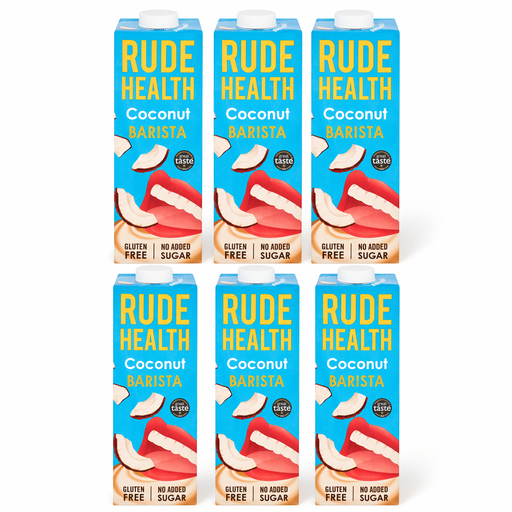
Rude Health Barista Coconut, 6 × 1L
This coconut drink may be considered for cereal or porridge where oats are tolerated, rather than assumed to be a main milk replacement. Its product information identifies oats as an allergen; check the current carton’s ingredients and fortification before regular replacement use.
View on Joybuy
 No image available
Alpro Barista Coconut Long Life Drink, 8 × 1L
This coconut drink is an option to assess for breakfast where dairy is avoided and soya is tolerated. Sainsbury’s lists Alpro Coconut Barista with soya, added calcium and vitamins B2, B12 and D; check the current pack’s full nutrition panel before using it as a regular milk replacement.
View on Joybuy
Questions about toddler breakfast
Can a toddler have a coconut drink at breakfast?
A child aged one or over can have an unsweetened, fortified plant-based drink as part of their diet, according to North West Knowledge Now’s NHS dietetic guidance. Coconut drinks vary in energy and protein, though, so using one on cereal is not the same decision as making it the child’s regular milk source.
What should I check if it will replace cow’s milk?
Check calcium, iodine, vitamins D and B12, energy and protein on the exact carton. Kingston and Richmond NHS Foundation Trust advises aiming for 120 mg calcium per 100 ml in a dairy substitute; Hertfordshire and West Essex Clinical Guidance uses around 40 kcal and at least 1 g protein per 100 ml as checks when a child is moving from cow’s-milk-protein-allergy formula to a non-dairy alternative. Those figures do not replace advice for an individual child.
Is every coconut drink free from milk and soya?
No: check the current ingredients and allergen statement for the exact drink. Tesco declares Koko Unsweetened free from dairy and soya, but Sainsbury’s lists soya in Alpro Coconut Barista. A coconut-based name does not establish the full allergen profile.
Can a coconut drink be the main milk source for a child under two?
Do not assume it can. Tesco’s Koko Unsweetened listing gives a lower age limit of two years and advises consulting a GP or qualified dietitian before using that product as a main milk source under two. Seek individual advice when choosing a main milk drink for a child with allergies, restricted eating or poor growth.


