
24/7 Customer Support

Free returns

Same-day & Next-day Delivery

Quality Guaranteed

Unlock Your Welcome Offers: FREE Delivery | Up to 80% OFF | Free 30-day JoyPlus trial
Download the APP
From refreshing post-workout hydration to the secret ingredient in a creamy curry, coconut drinks have become a staple in many UK households. The shelves, both physical and virtual, are brimming with options. But with so much choice comes confusion. It's easy to pick a product that looks right, only to find it falls short.
As the Joybuy Product Recommendation Officer, my role is to help you navigate the market. Many shoppers find themselves disappointed by a few common issues. Before you buy coconut drinks online, let's look at the frequent pitfalls that can lead to a wasted purchase.
coconut milk drink for your morning latte, only to see it separate into an unappealing, curdled mess the moment it hits the hot coffee.canned coconut milk you chose for your Thai green curry is thin and watery, failing to deliver the rich, creamy texture the recipe requires.Understanding what to look for can help you avoid these problems and find the right product for your needs every time.
To make a smart choice, you don't need to be a food scientist. You just need to know what to check on the label. Focusing on these three parameters will ensure the product you choose performs as expected.
The term "coconut drink" covers a wide range of products derived from different parts of the coconut. Their properties and uses are not interchangeable.
coconut milk drink, while thicker, higher-fat versions are often sold as canned coconut milk for cooking.The front of the package tells a story, but the ingredients list tells the facts. When looking for dairy-free drinks, always check for:
barista coconut milk. These are not necessarily bad; they are included to prevent separation and help the milk foam properly. However, if you're seeking a product with minimal ingredients, you may prefer to avoid them.Not all coconut milks are created equal, especially when it comes to coffee. A standard coconut milk drink is formulated for cold consumption and will likely split in hot beverages.
A barista coconut milk, such as those from brands like Rude Health barista or Alpro coconut, is specifically designed to handle heat and create stable microfoam for lattes and cappuccinos. These blends often contain a precise balance of proteins, fats and stabilisers to deliver a creamy texture and consistent performance that standard coconut drinks cannot match.
Based on these practical considerations, here are a few recommendations matched to different needs.
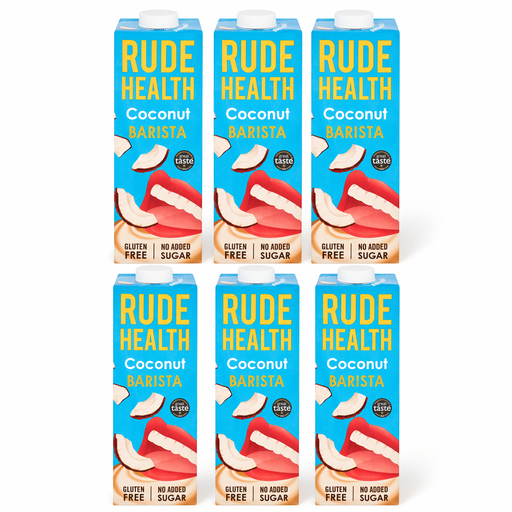
Why This Fits Their Persona: For the UK coffee lover perfecting their flat white at home, this blend is designed to deliver a café-quality experience without dairy. It provides a subtle coconut flavour that complements coffee rather than overpowering it.
It directly solves the "curdled coffee crisis." This is a purpose-built barista blend with stabilisers, ensuring it heats and foams without splitting.
The blend of gluten-free oats and coconut provides a creamy texture that foams well. It's formulated to work with hot drinks.

Why This Fits Their Persona: For the home cook exploring Caribbean or South-East Asian cuisines, this is a pantry essential. Its rich, unsweetened profile provides the authentic base needed for curries, soups and stews.
This product avoids the "watery cooking fail." It is a proper cooking milk with a high coconut extract content, not a thin drinking milk.
Made from only coconut extract and water, it provides a pure, authentic flavour and creamy texture. It is versatile for both savoury and sweet dishes.
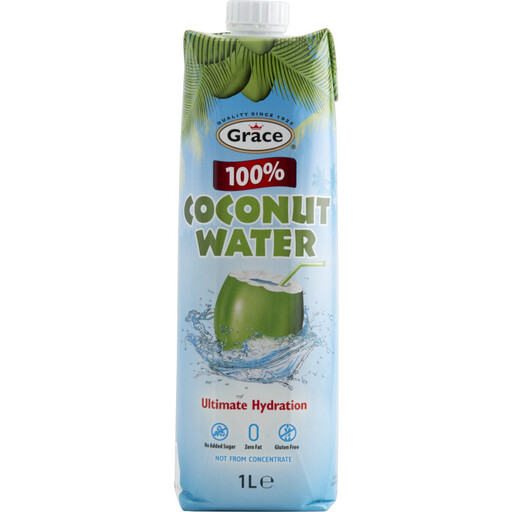
Why This Fits Their Persona: Ideal for someone in the UK seeking a natural, low-calorie refreshment after exercise or as a daily hydrator. It's a straightforward, no-fuss option for clean drinking.
This product is the antidote to the "healthy sugar trap." It is 100% pure coconut water with no added sugar, ensuring you get what you expect.
It is fat-free, not from concentrate and contains naturally occurring electrolytes like potassium. The only additive is ascorbic acid (Vitamin C) to preserve freshness.
We have compiled a complete, real-time list of products that fully satisfy these strict selection criteria and UK safety regulations.
It is not recommended. Standard coconut milk drinks are not formulated to withstand high temperatures and will often separate or curdle in hot coffee. For best results, always choose a product specifically labelled as a barista coconut milk, as it contains ingredients that help it remain stable and create foam.
Coconut water is the thin, clear liquid from inside young coconuts, used primarily as a refreshing drink. Coconut milk is a thicker, white liquid made from the flesh of mature coconuts and water. It is used both as a dairy-free milk alternative and as a rich ingredient in cooking.
Once opened, any unused canned coconut milk should not be stored in the can. Transfer it to an airtight, non-metallic container and keep it in the refrigerator. It is best consumed within 3 days for optimal freshness and flavour.