What should you check?
Decide whether ‘mild’ means less sweetness, a less pronounced coconut flavour or a less rich texture. Then check the carton’s intended use and directions for the drink you plan to make.
| Priority |
What to check |
Your needs |
| Sweetness |
Read both the unsweetened or no-sugars wording and the sugars value per 100 ml. Koko Dairy Free lists 0.2 g sugars per 100 ml for Koko Unsweetened; Sainsbury’s lists 1.7 g per 100 ml for its Sweetened Long Life Coconut Drink. Neither figure measures coconut-flavour intensity. |
I would rather add any sweetness myself, but I still want to judge the coconut flavour by trying the drink. |
| Hot-drink use |
Look for directions covering hot drinks, heating or frothing. Koko Dairy Free describes its Unsweetened drink for hot and cold use; Sainsbury’s says to let water cool slightly before adding its Sweetened Long Life Coconut Drink because separation can occur. |
My drink needs to work in the tea, chai or coffee I actually make, and I can follow directions specific to that carton. |
| Carton or can |
Check whether the product is presented as a drink or a cooking ingredient. Marks & Spencer presents its canned Coconut Milk for curries, soups and desserts and lists 17.3 g fat per 100 g. |
For an everyday mug, I’m looking for a drinking carton; I would choose a cooking can when a recipe calls for its richer texture. |
| Ingredients and allergens |
Check the exact variant’s allergen statement and any listed added nutrients. Sainsbury’s Sweetened Long Life Coconut Drink has a soya-allergy warning, while M&S says its Creamy Coconut Drink is unsuitable for people with a milk allergy. |
Someone in my household may need to avoid milk or soya, so the word ‘coconut’ alone is not enough to settle the choice. |
Brand and retailer references
These examples show how labels and intended uses differ; a retailer reference does not imply that every coconut drink it stocks has the same ingredients or preparation advice.
Alpro
Alpro has a Coconut No Sugars drinking carton and a separate Coconut Barista formula for coffee.
- Sainsbury’s lists Alpro Coconut No Sugars as containing no sugars or sweeteners and suggests it for a chai latte.
- The Joybuy listing for Alpro Coconut Barista declares soya and lists 3.3 g sugars per 100 ml; its coffee positioning is not evidence that it will taste milder.
Koko
Koko Dairy Free describes its Unsweetened coconut drink for both hot and cold drinks.
- Koko Dairy Free lists 0.2 g sugars, 1.2 g protein and 120 mg calcium per 100 ml; the Sainsbury’s listing also identifies vitamins D2 and B12.
- Its hot-drink description comes from the manufacturer and does not establish how its flavour compares with other cartons.
Tesco
Tesco’s coconut-drinks category includes own-brand Original and Sweetened long-life cartons alongside other brands.
- The two own-brand names give shoppers distinct Original and Sweetened options to inspect.
- Check the individual carton’s ingredients and hot-drink directions before choosing it for a winter mug.
Sainsbury’s
Sainsbury’s Sweetened Long Life Coconut Drink has product-specific directions for adding it to a hot drink.
- Sainsbury’s lists 1.7 g sugars per 100 ml and added calcium, iodine, vitamin D and vitamin B12.
- The retailer says to let water cool slightly before adding it and marks the drink unsuitable for customers with a soya allergy due to manufacturing methods.
M&S
M&S lists a Creamy Coconut Drink carton and a separate canned Coconut Milk intended for cooking.
- The Creamy Coconut Drink lists added calcium, iodine, vitamin B12 and vitamin D.
- M&S marks the drink unsuitable for people with a milk allergy. Its canned Coconut Milk is described for curries, soups and desserts, so check which format you need.
Waitrose
Waitrose lists Plenish Organic Unsweetened Long Life Coconut Drink, a product from another brand.
- The Waitrose listing describes four ingredients, no added sugar and 10% organic coconut milk.
- Its allergen information says the product may contain nuts and soya; check the pack if either matters to your household.
Joybuy coconut drink options
These two barista-style coconut drinks are options for coffee-based warm drinks. If avoiding sweetness is your main reason for choosing a mild drink, compare their sugars information with unsweetened drinking cartons before deciding.
 No image available
Alpro Barista Coconut Long Life Drink, 8 × 1L
Consider this pack if you want a coconut drink with listing directions to heat and froth it for coffee. Its listed ingredients include coconut milk and soya, and its nutrition information gives 3.3 g sugars per 100 ml. It is not a no-sugars option; check the exact pack if you avoid soya.
View on Joybuy
 No image available
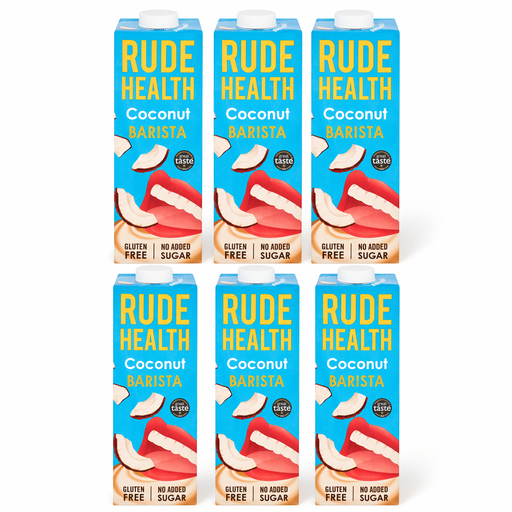
Rude Health Barista Coconut, 6 × 1L
This coconut-and-oat barista drink is described for coffee drinks, including cortados and cappuccinos. Its listed ingredients include 2% coconut and 13% gluten-free oats, with 4.5 g sugars per 100 ml. Check the pack’s hot-drink preparation directions before choosing it specifically for heating or frothing.
View on Joybuy
Questions about warm coconut drinks
Should I use a carton or canned coconut milk for a warm drink?
Start with a drinking carton for a straightforward tea, chai, coffee or hot chocolate. Marks & Spencer describes its canned Coconut Milk for curries, soups and desserts and lists 17.3 g fat per 100 g; use a cooking product when a recipe calls for that richer ingredient rather than treating it as an interchangeable drink.
How can I avoid coconut drink separating in hot water?
Follow the directions for your exact carton. Sainsbury’s says to let water cool slightly before adding its Sweetened Long Life Coconut Drink because separation can occur; that instruction should not be assumed to apply to every coconut drink.
Is coconut drink automatically suitable if I avoid milk or soya?
No: check the exact product’s current allergen information. M&S marks its Creamy Coconut Drink unsuitable for people with a milk allergy, Sainsbury’s gives its Sweetened Coconut Drink a soya-allergy warning, and the Alpro Coconut Barista listing declares soya.
Can a coconut drink be a young child’s main milk source?
Do not make that choice on flavour or the word ‘fortified’ alone. Sainsbury’s product information for Koko Unsweetened says to consult a GP or qualified dietitian before using it as a main milk source for a child under two. NHS clinical guidance for children moving from CMPA formula also addresses specific energy, protein and fortification needs; seek individual advice for that situation.
How long can I keep an opened coconut drink carton?
Follow the storage directions on the carton you buy. The Waitrose listing for Plenish Organic Unsweetened Long Life Coconut Drink says to consume it within four days of opening; do not apply that period to a different product without checking its label.


