Who is choosing the drink?
The guest’s allergen requirements and the way the coconut product will be served determine which details matter most.
Guests avoiding specific allergens
For an older guest avoiding milk, soya, gluten, nuts or lactose, match the requirement to the particular product’s current label. Marks & Spencer, for example, labels its Creamy Coconut Drink vegan but not suitable for people with a milk allergy.
People comparing fortified drinks
Some coconut drinks list added calcium and vitamins; others have different formulations. If those nutrients matter to the guest’s wider diet, compare the amounts on the pack rather than assuming every coconut drink is fortified.
Hosts serving drinks and baking
A pourable coconut drink and culinary coconut milk serve different purposes. Koko Dairy Free’s published nutrition information, for example, lists 1.2g saturated fat per 100ml for its unsweetened drink and 15.7g per 100ml for Koko Cuisine Coconut Milk.
What should you check first?
Decide what will go into cups and what will go into recipes, then compare the exact allergen wording and nutrition information for each product.
| Priority | What to check | Your needs |
|---|
| Allergen fit |
Read the current ingredients, highlighted allergens and any “may contain” or “not suitable for” statement. A vegan label does not settle allergy suitability: Marks & Spencer labels its Creamy Coconut Drink unsuitable for people with a milk allergy. |
If my guest avoids a particular allergen, I need the declaration for this product—not an assumption based on coconut or plant-based wording. |
| Serving format |
Choose a drink-style carton for tea or coffee; check a culinary coconut milk against the recipe. Koko Dairy Free lists 15.7g saturated fat per 100ml for Koko Cuisine Coconut Milk, compared with 1.2g per 100ml for its unsweetened drink. |
For cups of tea, I want a pourable drink. For a dessert or filling that calls for coconut milk, I can consider a culinary product instead. |
| Fortification |
Compare calcium and added vitamins per 100ml on the chosen carton. Tesco lists 120mg calcium and 0.75µg vitamin D2 per 100ml for Koko Unsweetened Alternative Drink; formulations differ. |
When dairy is excluded, I want to see what this drink contributes to the guest’s wider diet, without treating one serving as a complete nutritional substitute. |
| Nutrition panel |
Compare sugars, saturated fat and protein on the same per-100ml basis. Koko Dairy Free lists 0.2g sugars per 100ml for its unsweetened drink; Waitrose & Partners lists 4.1g sugars per 100ml for Rude Health Chilled Coconut Drink despite its no-added-sugar description. |
“No added sugar” would not tell me the total sugars in the carton. I’d read the nutrition panel if I were serving it regularly. |
| Opened-pack storage |
Follow the storage temperature and use-by-after-opening instructions on the particular pack. Marks & Spencer and Waitrose & Partners specify use within five days of opening for their respective coconut drinks. |
If I open a carton ahead of afternoon tea, I need its own refrigeration and opened-pack instructions. |
Brand and retailer references
These examples show why the formulation and label of a particular product matter more than a brand-wide assumption.
Koko Dairy Free
Koko Dairy Free makes both drink-style cartons and culinary coconut milk.
- Tesco lists Koko Unsweetened Alternative Drink as free from dairy, soya, nuts and gluten, and as containing calcium, vitamin D2 and vitamin B12.
- Koko Cuisine Coconut Milk is a separate cooking product; Koko Dairy Free lists 15.7g saturated fat per 100ml for it. Check the current pack before applying either product’s declarations to a guest.
Alpro
Alpro’s Coconut Original and Coconut Barista are different formulations.
- Tesco lists Coconut Original as lactose-free and suitable for coeliacs, with added calcium and vitamins B2, B12 and D.
- Waitrose & Partners lists Coconut Barista as containing soya and possibly nuts. Do not transfer Coconut Original’s suitability statements to the Barista product.
M&S Plant Kitchen
Marks & Spencer lists its Creamy Coconut Drink with added calcium, iodine, vitamin B12 and vitamin D.
- Although the drink is labelled vegan, Marks & Spencer says it is not suitable for people with a milk allergy. Its allergen advice directs shoppers to check the current label.
Rude Health
Rude Health’s chilled coconut-and-rice drink is listed by Waitrose & Partners with added calcium.
- The Waitrose & Partners listing describes the chilled drink as gluten-free and having no added sugar, and gives 120mg calcium per 100ml.
- The same listing gives 4.1g sugars and less than 0.5g protein per 100ml. Check the physical pack for the guest’s particular allergy requirements.
Tesco
Tesco’s product listings offer ingredients and nutrition details for specific Koko and Alpro coconut drinks.
- The Koko Unsweetened listing names its free-from declarations and gives calcium and vitamin amounts per 100ml.
- Use the current product pack for the final ingredient and allergen check, as recipes can change.
Joybuy product options
These options include coconut barista drinks for coffee and coconut milk for afternoon-tea recipes. Check each product’s current pack against the guest’s allergen requirements before serving.
 No image available
Alpro Barista Coconut Long Life Drink, 8 × 1L
A barista-style coconut drink to consider for afternoon-tea coffee when soya is acceptable. It contains soya; check the current carton for any other allergens relevant to the guest.
View on Joybuy
 No image available
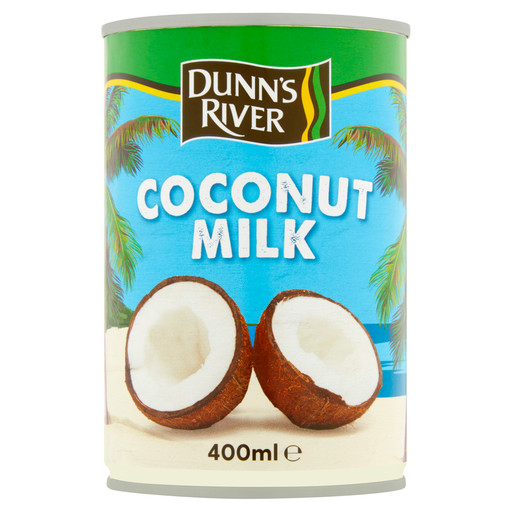
Dunns River Coconut Milk, 400ml
A coconut milk option for desserts or other recipes rather than a like-for-like tea drink. Check the current tin’s allergen wording and nutrition panel when planning what to serve.
View on Joybuy
 No image available
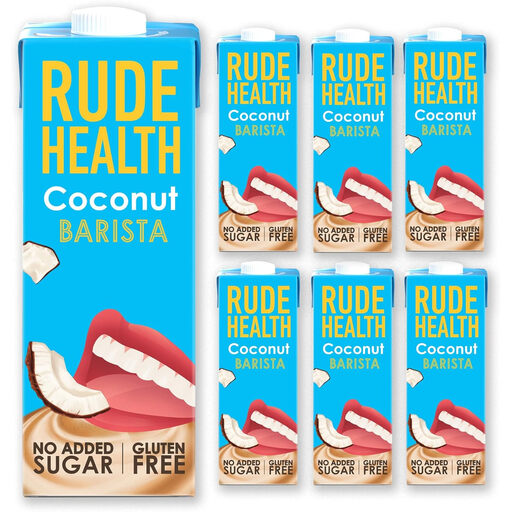
Rude Health Barista Coconut, 6 × 1L
A barista-style coconut drink for coffee when oats fit the guest’s requirements. It contains oats; check the current carton’s allergen and precautionary statements, including any gluten-related wording.
View on Joybuy
Frequently asked questions
Does vegan coconut drink suit someone with a milk allergy?
Not necessarily. Marks & Spencer labels its Creamy Coconut Drink vegan but also states that it is not suitable for people with a milk allergy. Check the particular pack’s ingredients and precautionary statements against the guest’s requirements.
Which allergens should I check for an afternoon-tea guest?
Check the allergens the guest needs to avoid, including any relevant milk, soya, gluten, peanut or tree-nut declarations, and read “may contain” and “not suitable for” wording. Tesco lists Koko Unsweetened Alternative Drink as free from dairy, soya, nuts and gluten, while Waitrose & Partners lists Alpro Coconut Barista as containing soya and possibly nuts.
Should I put coconut milk or coconut drink in tea?
Choose a drink-style carton for tea or coffee and reserve culinary coconut milk for recipes that call for it. Koko Dairy Free lists 1.2g saturated fat per 100ml for its unsweetened drink and 15.7g per 100ml for Koko Cuisine Coconut Milk, so the two are not nutritionally interchangeable.
What should I look for in a fortified coconut drink?
Compare the calcium and added vitamins per 100ml on the specific carton, alongside the guest’s wider diet. Tesco lists 120mg calcium and 0.75µg vitamin D2 per 100ml for Koko Unsweetened Alternative Drink; NHS guidance gives adults’ daily calcium and vitamin D figures as 700mg and 10µg respectively.
How should I store a coconut drink after opening it?
Follow that carton’s refrigeration and opened-pack instructions. Marks & Spencer specifies refrigeration at 0°C to +5°C and use within five days for its Creamy Coconut Drink; Waitrose & Partners also lists use within five days after opening for Rude Health Chilled Coconut Drink. Instructions can differ between products.


