Shoppers pouring coconut milk at breakfast
If you want coconut flavour over cereal or in porridge or a smoothie while comparing fat and sugars, look at unsweetened coconut drinks rather than assuming a cooking can serves the same purpose.


For cereal, porridge or a smoothie, an unsweetened, calcium-fortified coconut drink is the more relevant format when keeping fat lower is a priority. Choose reduced-fat canned coconut milk when a breakfast recipe calls for a richer cooking ingredient, but compare its fat and saturates per 100ml or 100g: “reduced fat” does not mean the same thing as a low-fat drink.
If you want coconut flavour over cereal or in porridge or a smoothie while comparing fat and sugars, look at unsweetened coconut drinks rather than assuming a cooking can serves the same purpose.
For a recipe that calls for a richer coconut ingredient, a reduced-fat culinary can may suit the method. Compare its fat and saturates on the nutrition panel rather than relying on the words “reduced fat”.
If ingredients, allergens, declared nutrients or how long an opened product keeps matter to your choice, check the exact pack. Instructions and nutrition figures differ between products, and Koko’s retailer listings give slightly different figures.
Start with how you will use the coconut product, then compare the relevant labels and opened-pack instructions.
| Priority | What to check | Your needs |
|---|---|---|
| Breakfast use | Check whether the product is a pourable coconut drink or a culinary can, and whether its suggested uses fit your recipe. Sainsbury's suggests Alpro Coconut No Sugars for porridge, pancakes and smoothies; its Blue Dragon Light listing describes cooking uses. | I want something to pour over cereal, or I need a coconut ingredient for cooking. Those are different shopping decisions. |
| Fat and saturates | Compare figures on the same per-100ml or per-100g basis. Sainsbury's lists Koko Unsweetened at 1.4g fat and 1.2g saturates per 100ml, and Blue Dragon Light at 6.2g fat and 5.1g saturates per 100ml. | Keeping fat or saturates lower matters more to me than choosing a can simply because it says “light” or “reduced fat”. |
| Sugars and fortification | Read the sugars figure and any calcium or vitamin declarations on the exact drink. Sainsbury's lists less than 0.5g sugars and 120mg calcium per 100ml for Koko Unsweetened; it describes Alpro Coconut No Sugars as containing no sugars or sweeteners and as a source of calcium and vitamins B12 and D. | If a coconut drink is replacing milk at breakfast, I want to know whether this particular carton is unsweetened and fortified. |
| Ingredients and allergens | Read the current pack’s ingredient and allergen statements. Sainsbury's listing for Blue Dragon Light says it may contain peanuts and nuts; do not assume another coconut product has the same statement. | I need to check the product I am buying, rather than rely on the word “coconut” to tell me everything in it. |
| After opening | Check the refrigeration and use-by-opening instructions for the exact product. Waitrose Essential Reduced Fat and Blue Dragon Light state two days after opening; Sainsbury's lists three days for Amoy Reduced Fat. | For one weekend recipe, I would choose a size I can use within the pack’s stated storage period. |
A reduced-fat can can still have a higher saturates figure than a coconut drink. Sainsbury's lists 5.1g saturates per 100ml for Blue Dragon Light, compared with 1.2g per 100ml for Koko Unsweetened.
Compare the nutrition panels on the same measurement basis, and choose the format your breakfast actually needs.
Sainsbury's suggests Alpro Coconut No Sugars for porridge and smoothies, while it describes Blue Dragon Light for dishes such as soups and curries. The formats serve different uses.
Choose a drink for pouring or blending; consider a can when the recipe calls for a culinary coconut ingredient.
A can left over from one breakfast recipe may need using soon: the listed instructions for Waitrose Essential Reduced Fat, Blue Dragon Light and M&S Reduced Fat specify two days after opening.
Check the exact pack’s storage directions and plan how to use the remainder within its stated period.
Koko Unsweetened has slightly different nutrition figures on the Sainsbury's and Joybuy listings. An online figure may therefore not match the pack you pick up.
Check the current pack’s nutrition, ingredients and allergen statements when those details determine your choice.
Koko Unsweetened is a carton coconut drink for a pourable breakfast use, rather than canned culinary coconut milk.
Alpro Coconut No Sugars is a coconut drink suggested by Sainsbury's for porridge, pancakes and smoothies.
Essential Reduced Fat Coconut Milk is a culinary can, rather than a carton drink for pouring.
M&S Reduced Fat Coconut Milk is a culinary coconut milk for recipes.
Blue Dragon Light Coconut Milk is a canned cooking option described for curries, soups and sauces.
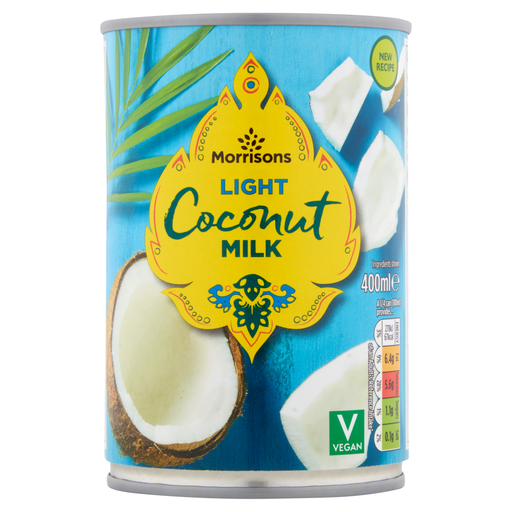
This Morrisons canned option is for a recipe that calls for coconut milk, such as a smoothie or baked breakfast dish. If you need a drink to pour over cereal, compare carton coconut drinks separately.
 No image available
This canned coconut milk is listed for uses including smoothies and baking. If keeping saturates lower is the priority, compare its current pack label with a carton drink before choosing it for breakfast.
A carton coconut drink is the more relevant format for pouring over cereal; choose a can when a recipe calls for a culinary coconut ingredient. For a same-basis label comparison, Sainsbury's lists Koko Unsweetened drink at 1.4g fat per 100ml and Blue Dragon Light canned milk at 6.2g fat per 100ml.
Check fat, saturates, sugars and any declared calcium or vitamins on the exact pack, as well as its ingredients. The NHS identifies unsweetened, calcium-fortified plant alternatives, including coconut-based drinks, within the dairy-and-alternatives food group; fortification still needs checking product by product.
Follow the exact product’s storage instructions. The listings for Blue Dragon Light, Waitrose Essential Reduced Fat and M&S Reduced Fat specify two days after opening, while Sainsbury's lists three days for Amoy Reduced Fat; their handling directions also differ.
Check the current pack’s ingredient and allergen statements before buying. For example, Sainsbury's listing for Blue Dragon Light says it may contain peanuts and nuts, but that statement should not be assumed to apply to other coconut products.