Households buying a milk alternative
If you use a coconut drink with cereal or in everyday drinks, compare the volume of the cartons you would need rather than assuming it comes in a 4-pint bottle.


Tesco Groceries lists coconut drinks in 1-litre cartons, while the 4-pint, 2.272-litre example from Waitrose is dairy milk; check the current listing if you need that exact coconut-drink size. Choose a coconut drink for cereal or other drinking uses, but a cooking coconut milk when a recipe calls for it. For a budget shop, compare the pack format you will use, then check the individual label if sugar, ingredients or fortification affect your choice.
If you use a coconut drink with cereal or in everyday drinks, compare the volume of the cartons you would need rather than assuming it comes in a 4-pint bottle.
Unsweetened and no-added-sugars coconut drinks offer different label choices from sweetened products. Check the wording and ingredients on the particular carton.
If a curry, soup or dessert calls for cooking coconut milk, distinguish it from a beverage-style coconut drink before choosing a pack.
Start with how you will use the coconut product, then check its pack size and label rather than treating every product called coconut milk as interchangeable.
| Priority | What to check | Your needs |
|---|---|---|
| Pack format | Confirm the volume and number of cartons. Tesco Groceries lists 1-litre coconut drinks; Waitrose identifies its 4-pint, 2.272-litre pack as dairy milk. | I need enough coconut drink for the household, but I do not need it all in one bottle. |
| Intended use | Check whether the product is a drink or a cooking milk. Waitrose lists cooking coconut milk in 400ml packs; Koko Cuisine lists 17.4g fat per 100ml for its cooking product. | For cereal or a drink, I want a beverage-style carton. For a recipe calling for coconut milk, I need to check the cooking product instead. |
| Sugar wording | Read the specific pack’s ingredients and sugar information. Alpro describes Coconut No Sugars as having no added sugars or sweeteners; other products may have different formulations. | Avoiding added sugar matters to me, so I want to check the actual carton rather than rely on the word coconut. |
| Fortification | Check which nutrients, if any, are listed as added. The UK government’s SACN and COT assessment says nutrient content varies considerably between plant-based drinks. | If this will regularly replace dairy milk in my shopping, I want to know what the individual carton contains. |
| Ingredients | Read the current ingredients and allergen information, especially for drinks that combine coconut with another plant ingredient. | I need to check the individual product if an ingredient or allergen affects what I can buy. |
The checked Tesco coconut drinks are 1-litre products, whereas Waitrose’s 4-pint, 2.272-litre example is dairy milk.
Check the listed volume and plan how many cartons you need if you are replacing a larger household pack.
Cooking coconut milk and beverage-style coconut drinks have different intended uses. Koko Cuisine, for example, lists 17.4g fat and 15.7g saturated fat per 100ml for its cooking milk.
Choose by the use stated on the product or in your recipe, rather than by the shared coconut milk wording.
The UK government’s SACN and COT assessment says nutrient content varies considerably across plant-based drinks.
Read the current carton’s nutrition and fortification information, particularly if it will regularly replace dairy milk.
These ranges illustrate the distinction between coconut drinks and cooking milk; a brand reference does not describe every product in its range.
Tesco Groceries lists 1-litre own-label coconut drinks, including Long Life Coconut Original and Sweetened Coconut Drink.
Koko has an unsweetened coconut drink and a separate Cuisine cooking coconut milk.
Alpro offers coconut-drink variants, including Coconut No Sugars and Barista.
M&S describes its Creamy Coconut Drink as a dairy alternative.
Waitrose lists 400ml cooking coconut milk and, separately, dairy milk in a 4-pint, 2.272-litre pack.
These options are coconut drinks or coconut-style barista drinks in 1-litre cartons, including one multi-carton bundle. Check each product’s ingredients and intended use if you need a particular type of coconut drink.
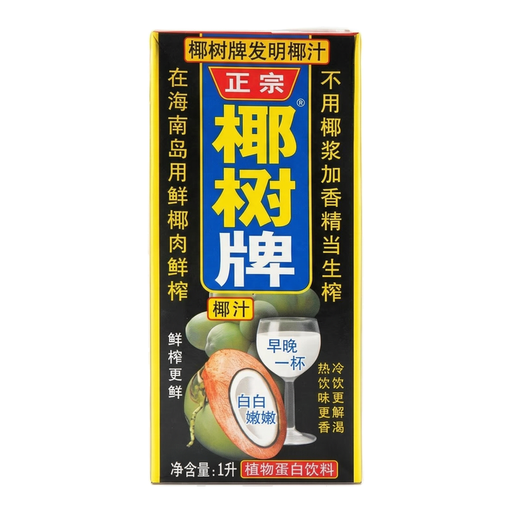 Image unavailable
A 1-litre coconut beverage option for drinking rather than a 4-pint bottle. Check the current ingredients if you are avoiding added sugar, and follow the carton’s storage instructions after opening.
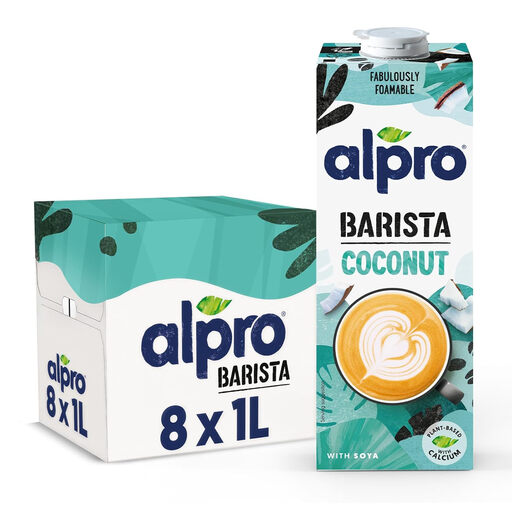 Image unavailable
An eight-carton barista-drink bundle for someone who wants multiple 1-litre cartons rather than one larger bottle. It is a coffee-focused coconut-style drink; check the current ingredients and allergen information if soya matters to you.
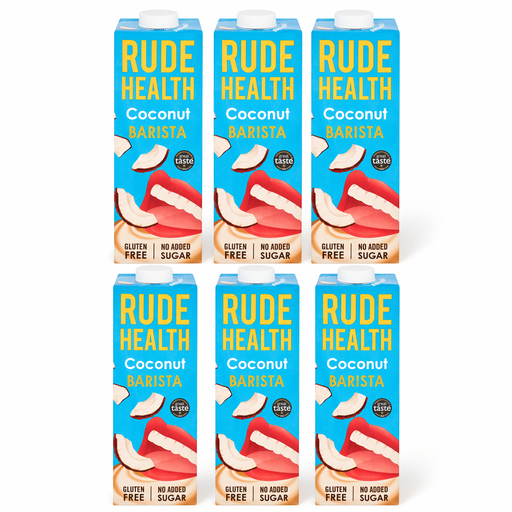 Image unavailable
A 1-litre barista coconut-style drink for coffee use, not a 4-pint bottle. Check the current oat and coconut ingredients if you want a predominantly coconut drink, and follow the pack’s storage instructions.
Check the exact product listing rather than assuming it does. Tesco Groceries lists the cited coconut drinks in 1-litre cartons, while Waitrose’s cited 4-pint, 2.272-litre product is dairy milk.
No: choose according to whether you need a beverage-style product or an ingredient for a recipe. Waitrose lists cooking coconut milk in 400ml packs, and Koko Cuisine lists 17.4g fat and 15.7g saturated fat per 100ml for its cooking product.
Choose an unsweetened or no-added-sugars variant if that label distinction matters to you, then read the individual carton’s ingredients and nutrition information. Alpro describes its Coconut No Sugars drink as having no added sugars or sweeteners; that description is specific to the variant.
Read the current pack’s nutrition and fortification information, including whether it lists calcium, iodine, vitamin B12 or vitamin D. The UK government’s SACN and COT assessment says nutrient content varies considerably between plant-based drinks.
Read the ingredients and allergen information on the individual carton, including any precautionary statement relevant to you. GOV.UK’s allergen-labelling guidance identifies 14 allergens that food businesses must disclose when used as ingredients; do not rely on a broad dairy-free description alone.