For cakes that call for tinned cooking coconut milk, do not assume a coconut drink or an individual-carton multipack will work in its place. Check the recipe and pack format before ordering in bulk, then confirm the ingredients in every bake and the school’s allergy arrangements. A dairy-free label on one product does not establish that every coconut product or finished cake is suitable for every pupil.
Who is choosing?
School bake-sale organisers using coconut milk in recipes
Choose the format named by each recipe, work out how much you need and keep an ingredient record for every finished bake. Before ordering, ask the school what its event and allergy arrangements require.
Organisers looking for a dairy-free recipe ingredient
Check the exact product label and every other ingredient in the bake. A coconut-based drink described as dairy-free is not necessarily interchangeable with tinned cooking coconut milk, and a dairy-free ingredient does not make the finished item suitable for every allergy.
What should you check before buying?
Start with the recipe’s required format, then choose a pack quantity and check the ingredients and event arrangements.
Tinned cooking coconut milk
Choose when: The cake or dessert recipe calls for tinned cooking coconut milk; M&S describes its tinned product as an option for baking.
Bear in mind: The Sainsbury’s, M&S and Waitrose products described here are individual 400 ml tins, not confirmed multipacks or lunchbox portions.
Coconut-based drink
Choose when: The recipe specifies a milk-style drink or permits that substitution, and the exact product label meets the event’s needs.
Bear in mind: Alpro and Koko’s described drinks have different formulations from the tinned cooking products, so matching the word “coconut” is not enough to establish recipe suitability.
| Priority | What to check | Your needs |
|---|
| Recipe format | Read whether the recipe specifies tinned cooking coconut milk or a coconut-based drink. If changing format, check whether the recipe permits it. | I’m baking to a recipe and want the coconut ingredient it actually calls for, rather than relying on the word “milk” on a carton. |
| Pack quantity | Confirm the number of units and the quantity in each one. Do not treat a single-tin listing as evidence of a multipack. | A multipack would help with the number of bakes planned, but I need to know exactly what each pack contains before ordering. |
| Ingredients | Read the current label for each product and record the ingredients in the finished bake. Check any allergen and precautionary wording on the exact pack. | I need to give families accurate information about each cake, including ingredients beyond the coconut product. |
| Event handling | Ask the school for its current allergy and event requirements. Make ingredient information accessible to helpers and check how items will be prepared and served. | If we offer items for pupils with particular allergy requirements, I want the preparation and serving arrangements agreed before the sale. |
What can go wrong?
-
Buying a coconut drink for a recipe that specifies a tin
The Alpro and Koko drinks described here have different formulations from the tinned cooking products. A carton marked “coconut milk” is therefore not, by itself, a reason to change the ingredient in a cake recipe.
Check the recipe first. If it permits a substitution, compare the exact products’ ingredients and quantities before buying for the full batch.
-
Assuming “coconut milk” always contains dairy—or is safe for every allergy
The Alpro and Koko coconut drinks described by their product information are dairy-free. That description does not establish the ingredients of another product or of a finished bake.
Read every current pack label, record all ingredients used and check the school’s requirements before describing an item to families.
-
Leaving allergen planning until the sale
Anaphylaxis UK recommends providing as much allergen information as possible at school bake sales. Department for Education guidance says schools in England must publish an allergy safety policy; the arrangements for a particular event still need to be checked with its school.
Ask for the school’s current event requirements before purchasing, and make an ingredient record available to the people serving each item.
-
Assuming a suitable single product is also sold as a multipack
A product’s recipe suitability and its pack format are separate questions. The Sainsbury’s, M&S and Waitrose cooking products described here are 400 ml tins; their individual listings do not establish a multipack.
Confirm the format, unit count and current label of the product you intend to order, then calculate the quantity needed for your recipes.
Relevant brand references
These examples distinguish cooking tins from coconut-based drinks; a brand reference does not establish a current multipack option.
Sainsbury’s
Sainsbury’s lists a 400 ml own-brand coconut milk for cooking.
- Its listed ingredients include 68% coconut extract, giving you a specific product label to compare with a recipe.
- The described product is one tin, not an established multipack; check the current label when purchasing.
M&S
M&S lists a 400 ml tinned coconut milk and describes tinned coconut milk as an option for baking.
- The listed tin contains 60% coconut extract, a useful detail when comparing specified ingredients.
- Confirm the current product and pack format rather than assuming the tin is sold in a multipack.
Waitrose Essential
Waitrose lists Essential Coconut Milk as a 400 ml tinned cooking ingredient.
- The listed ingredients include 60% coconut extract, water and guar gum.
- The described item is an individual tin; use the current pack label for ingredient and allergen checks.
Koko Dairy Free
The Koko product described by Tesco is an unsweetened coconut-based drink in a 1 L carton.
- Tesco describes this drink as dairy-free, soya-free, nut-free and gluten-free.
- It is a drink rather than the described 400 ml cooking tins; check the current label and recipe before substituting it.
Alpro
Alpro Coconut Original is a coconut-based drink in a 1 L carton.
- Alpro lists 5.3% coconut milk in this drink and describes it as dairy-free.
- Its formulation differs from the listed tinned cooking products; a recipe must allow for a drink-style ingredient.
Joybuy product options
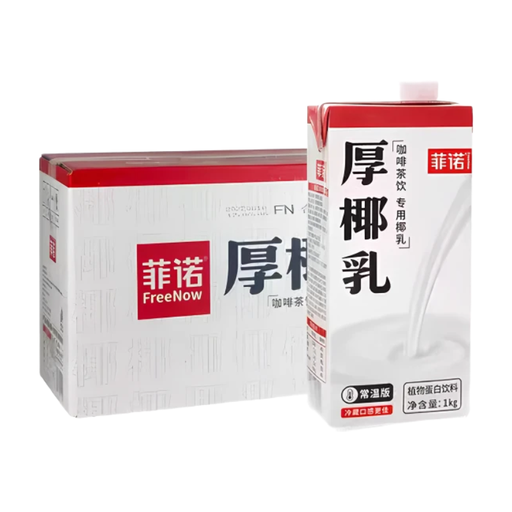
This individual-carton coconut beverage is an option to consider only if your recipe permits that format. Check its current label and the school’s event requirements before ordering.
 No image available
FreeNow Thick Coconut Milk, 200 g × 24 cartons
The individual cartons may suit a recipe that permits this coconut beverage, but they are not established as a substitute for tinned cooking coconut milk. Check the current ingredients, precautionary allergen wording and your school’s requirements before using them for a bake sale.
View on Joybuy
Questions about recipes and allergens
Does coconut milk automatically contain dairy milk?
No. The Alpro and Koko coconut drinks described in their product information are dairy-free, but that does not establish what is in another coconut product or a finished cake. Read the current label and record every ingredient used in the bake.
What allergen information should accompany a school bake-sale item?
Keep an ingredient record for each finished item and make it available to the people serving it. Anaphylaxis UK recommends providing as much allergen information as possible at school bake sales; ask the school what its own event and allergy arrangements require.
Can a coconut drink replace tinned coconut milk in a cake recipe?
Do not assume it can. The Alpro and Koko drinks described here have different formulations from the listed cooking tins. Use the format specified by the recipe, or check that the particular recipe permits the drink before buying enough for a bake sale.


