Families making small coconut bakes
If a recipe calls for tinned coconut milk, compare the declared fat on like-for-like labels and plan what to do with any milk left in the can.


When a baking recipe calls for coconut milk, start with a light tinned coconut milk rather than a carton drink. Among the three light tins with comparable labels in this article, Sainsbury's lists the lowest declared fat at 5.6g per 100ml, followed by Blue Dragon at 6.2g and Pride at 8.9g, according to their retailer listings. A coconut drink is a different ingredient; use one when the recipe permits a milk-style drink, and check the current pack label before baking for a child with a dietary requirement.
If a recipe calls for tinned coconut milk, compare the declared fat on like-for-like labels and plan what to do with any milk left in the can.
Match the coconut milk format specified by the recipe, then check the ingredients and dietary information on the particular pack you buy.
A coconut drink and tinned cooking coconut milk have different ingredient compositions. The word ‘coconut’ on both packs does not make them interchangeable in a bake.
Match the recipe's ingredient format first. Then compare nutrition figures using the same unit and check the pack instructions for any leftovers.
| Priority | What to check | Your needs |
|---|---|---|
| Declared fat | Compare fat per 100ml across tinned light products, rather than mixing per-100ml and per-100g figures. Sainsbury's lists 5.6g, Blue Dragon 6.2g and Pride 8.9g per 100ml on their retailer labels. | I want to reduce the declared fat in a recipe that calls for tinned coconut milk, without choosing on the basis of unlike label units. |
| Product format | Check whether the recipe specifies tinned coconut milk or accepts a milk-style drink. Alpro lists 14.1% coconut milk in its Coconut No Sugars drink; Sainsbury's light tin lists 40% coconut extract. | For this bake, I need to measure the ingredient the recipe actually calls for, not substitute a carton drink solely because its fat figure is lower. |
| Opened-pack storage | Read the instructions on the pack you open. Sainsbury's says to refrigerate and use its light coconut milk within 3 days; the Blue Dragon and M&S listings specify 2 days. | A small bake might not use a whole can, so I need a plan for the remainder. |
| Current ingredients | Read the actual pack's ingredients and dietary information, particularly when cooking for someone with a relevant requirement. Tesco advises that food product information can change. | Before serving the bake to a child with a dietary requirement, I want to check the exact product used. |
Alpro Coconut No Sugars drink lists 14.1% coconut milk, while Sainsbury's light tinned product lists 40% coconut extract. Their different compositions do not establish an equivalent baking result.
Use the format named in the recipe. Try a drink in place of a tin only as a deliberate recipe test.
Sainsbury's labels its light coconut milk at 5.6g fat and 40% coconut extract per 100ml, against 14.8g fat and 68% coconut extract for its regular coconut milk. Those differences could matter in a recipe where coconut richness or texture is important; they are not a baking-test result.
Use the specified type for a bake with little room for experimentation, or make a small test batch.
The checked Sainsbury's, Blue Dragon and M&S products give opened-pack use windows of 2 or 3 days, depending on the product.
Follow the instructions on your own pack for transferring and refrigerating unused contents, and plan another use within its stated window.
Product information can change, so a previous purchase or online description may not describe the can in your kitchen.
Check the current pack's ingredients and dietary information before serving a child with a relevant requirement.
These references describe particular coconut milks and a coconut drink, not every product made by each brand.
Its light tinned coconut milk is one option for recipes calling for cooking coconut milk.
Blue Dragon Light is another tinned coconut milk with nutrition declared per 100ml.
Pride Coconut Milk Light is a tinned product whose Tesco listing mentions cakes and other desserts among suggested uses.
M&S Reduced Fat Coconut Milk is a tinned option with nutrition stated on a different measurement basis from the three per-100ml tins above.
Amoy Reduced Fat Coconut Milk is a cooking coconut milk containing 41% coconut extract, according to Kraft Heinz.
Alpro Coconut No Sugars is a coconut drink, rather than a tinned cooking coconut milk.
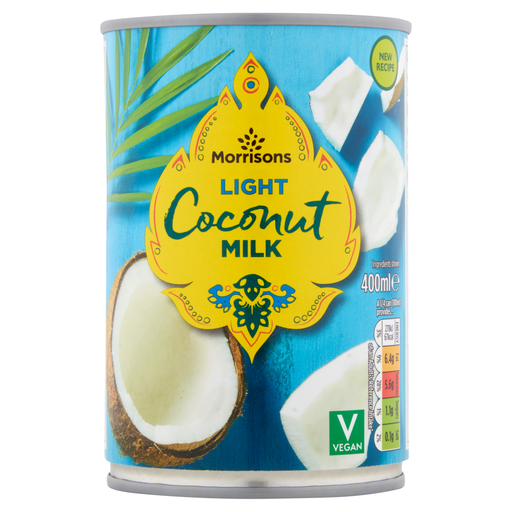
This canned reduced-fat coconut milk is an option to consider when your baking recipe calls for tinned coconut milk. Check its current pack details against the recipe and any dietary requirements.
 No image available
The 400ml canned format matches a recipe calling for tinned coconut milk. Check the current can label for its nutrition, ingredients and opened-pack storage instructions before using it in a family bake.
Start with a light tinned coconut milk if the recipe says coconut milk rather than a milk-style drink. Of the three comparable tins here, Sainsbury's lists 5.6g fat per 100ml, Blue Dragon 6.2g and Pride 8.9g on their retailer labels; those figures compare declared fat, not cake results.
Use Alpro Coconut No Sugars when the recipe allows a plant-based drink, or test the substitution before relying on it. Alpro lists 14.1% coconut milk in its drink, while Sainsbury's light tinned milk lists 40% coconut extract, so their ingredient compositions differ.
Follow the instructions on the exact can you open. Sainsbury's says to refrigerate its light coconut milk and use it within 3 days; the Blue Dragon and M&S listings specify refrigeration and use within 2 days, with their own instructions for storing unused contents.
Yes, particularly when baking for a child with a dietary requirement. Food product information can change, so read the ingredients and dietary information on the current pack rather than relying on an earlier purchase or online listing.