
24/7 Customer Support

Free returns

Same-day & Next-day Delivery

Quality Guaranteed

Unlock Your Welcome Offers: FREE Delivery | Up to 80% OFF | Free 30-day JoyPlus trial
Download the APP
Buying coconut milk in the UK should be straightforward, but the shelf offers more choice than a simple can of coconut milk. You may find cartons, tins, coconut cream, creamed coconut, coconut milk powder and ready-made coconut desserts. The right option depends on how much you use, the recipe you are preparing and how quickly you can finish an opened pack.
As the Joybuy Product Recommendation Officer, I focus on practical details rather than broad marketing claims. Here are the main points to check before adding coconut milk to your basket.
Coconut cream generally contains a higher proportion of coconut extract and has a thicker texture than standard coconut milk. It is useful for rich sauces, desserts and toppings, but it may make a light soup or drink feel overly dense.
Creamed coconut is different again. It is a concentrated block made from coconut, usually requiring grating or dissolving in water. Check the recipe before substituting one product for another.
A 1L coconut milk carton can be economical for regular cooks, but it may create waste if you only prepare occasional curries. Once opened, many products need refrigeration and should be consumed within two to three days, according to the supplied product instructions.
For one or two portions, a 165ml or 250ml pack may be more practical. A 400ml can is commonly suited to a family curry, soup or dessert recipe.
Reduced-fat coconut milk contains less fat and normally has a lighter body. It can work well in soups, drinks and everyday sauces, but it may not provide the same richness as a full-fat option in Thai curry, coconut rice or desserts. Compare the coconut extract percentage, rather than relying only on front-of-pack wording.
The extract percentage gives a useful indication of how much coconut is present, although texture also depends on stabilisers and processing. For example, the supplied Chaokoh 400ml tin lists 53% coconut extract, while Dunn’s River Coconut Milk 400ml lists 60% coconut extract.
A higher percentage is not automatically suitable for every recipe. It may provide a fuller flavour and richer mouthfeel, while a lower-fat or lower-extract option may be easier to use in drinks or lighter dishes.
Coconut milk naturally contains fat, with a large proportion being saturated fat. Nutrition panels supplied for standard products show notable variation: Morrisons Reduced Fat Coconut Milk lists 6.4g fat per 100ml, while some full-fat options list around 17–22g per 100ml.
Use the per-100ml or per-100g figures when comparing products. This avoids being misled by different serving sizes. Creamed coconut is considerably more concentrated; Dunn’s River Creamed Coconut lists 69g fat per 100g, so a small amount can add substantial richness.
Always read the current packaging for ingredients, allergen information, best-before dates and storage instructions. “Plant-based” does not necessarily mean free from every allergen or suitable for every dietary requirement.
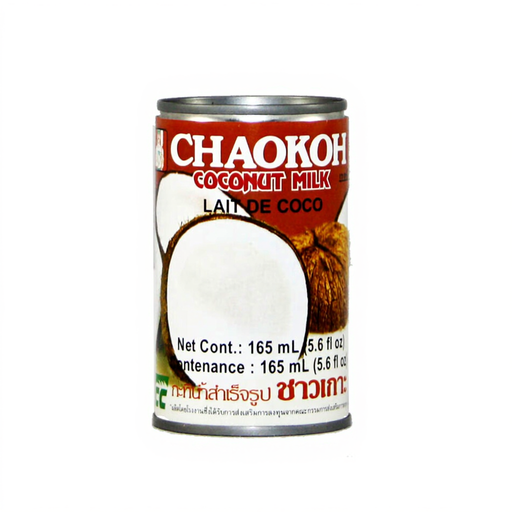
Why This Fits Their Persona: The small tin suits occasional cooks, students and anyone preparing a single curry, soup or dessert without opening a larger pack.
The 165ml portion limits opened leftovers and makes it easier to control recipe quantities.
Ready to use; contains coconut extract, water and citric acid.
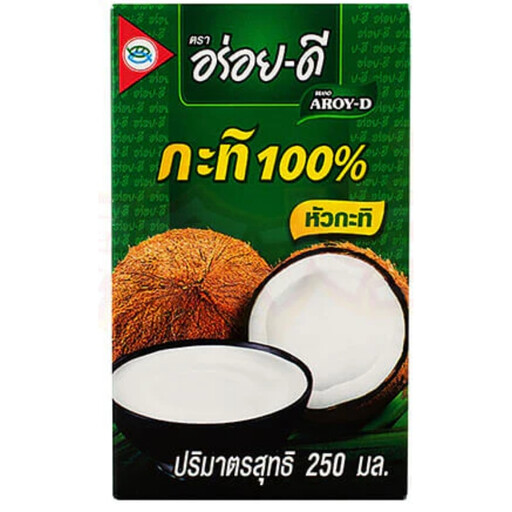
Why This Fits Their Persona: A compact carton offers a convenient format for cooks who value tidy pantry storage and measured portions for Thai or Southeast Asian recipes.
The 250ml size is less wasteful than a 1L carton when a recipe needs only a modest amount.
Aseptic packaging; listed ingredients are coconut milk, water, guar gum and xanthan gum.

Why This Fits Their Persona: Powder is practical for frequent cooks, professional kitchens and shoppers who want to adjust concentration across curries, gravies, baking and drinks.
You can mix only the amount required, reducing the risk of refrigerated leftovers.
Long storage potential when kept dry; can be added directly or mixed with water.
We have compiled a complete, real-time list of products that fully satisfy these strict selection criteria and UK safety regulations.
Remember that not every coconut dessert is dairy-free. Little Moons Coconut Mochi Ice Cream contains milk and soya, while other frozen products may have different allergen information. Check the label before serving guests.
Many coconut milk products are suitable for vegans, but check the ingredient list and dietary statement. Coconut milk powder can contain milk-derived ingredients, as shown by the sodium caseinate in Tropical Sun Coconut Milk Powder. Coconut-based ice cream may also contain milk.
Follow the packaging instructions. The supplied products commonly advise transferring unused coconut milk to a suitable container, refrigerating it and consuming it within two to three days. Do not use a can or carton that is swollen, leaking or badly damaged.
It can, but the result will usually be thicker and richer. To create a closer coconut milk consistency, dilute coconut cream with water according to the recipe. For precise results, use the format specified in the cooking instructions.