What should you check?
Settle the recipe’s intended use first, then calculate the volume and check the exact product labels before choosing packs.
| Priority |
What to check |
Your needs |
| Cooking format |
Check whether the recipe calls for cooking coconut milk or a coconut drink. Read the exact pack’s ingredients and stated uses; Sainsbury’s describes Blue Dragon’s 400ml coconut milk for sauces and soups. |
I’m making a coconut-based gravy or sauce, rather than buying a drink to serve alongside the meal. |
| Pack quantity |
Under the UK Product Regulation and Metrology Act 2025, four UK pints equal 2.273045L. Six 400ml cans supply 2.4L; check the volume of any pack labelled by weight before counting it towards a liquid-volume requirement. |
The recipe calls for roughly four pints, but I only want to open as much cooking coconut milk as the batch needs. |
| Allergens |
Read the current ingredients and precautionary statements. Sainsbury’s Blue Dragon 400ml listing says it may contain peanuts and nuts; GOV.UK explains that regulated allergens used as ingredients must be identified on prepacked food labels. |
I’m cooking for guests and need to check the specific product against their allergy requirements, not rely on a plant-based description. |
| Opened storage |
Follow each pack’s transfer, refrigeration and use instructions. Sainsbury’s listings say to use opened KTC and Blue Dragon 400ml coconut milk within two days, and its Aroy-D 400ml listing within three days. |
Will there be opened coconut milk left after the gravy is made? I need a plan for using it within the pack’s stated period. |
| Nutrition label |
Compare figures on the same stated basis and for the exact variant. Sainsbury’s Aroy-D 400ml listing gives 17g saturates per 100ml; a figure stated per 100g is a different comparison basis. |
If the recipe uses several cans, I want to read the nutrition panels as well as choose the flavour and quantity the dish calls for. |
Brand and product-line references
These examples describe particular listed products or drink ranges, not every product made by each brand.
Aroy-D
Sainsbury’s lists an Aroy-D 400ml cooking coconut milk with 70% coconut extract.
- The listed product provides an ingredient percentage to check against a recipe’s intended coconut flavour.
- The same listing gives 17g saturates per 100ml and says to refrigerate after opening and use within three days. Check the exact variant: Aroy-D products need not have identical labels.
KTC
Sainsbury’s lists a KTC 400ml cooking coconut milk containing 54.55% coconut extract.
- The listed ingredient percentage helps distinguish this particular cooking product from a coconut drink.
- Its listing says to transfer opened contents to a suitable non-metallic container, refrigerate and consume within two days. Check the volume separately on any KTC pack labelled by weight.
Blue Dragon
Sainsbury’s describes its Blue Dragon 400ml coconut milk for sauces, soups and other sweet or savoury dishes.
- The listed product contains 56% coconut extract and states cooking uses relevant to a coconut-based sauce.
- The listing says it may contain peanuts and nuts; check the current pack when allergy suitability matters.
Alpro
Tesco lists 1L Alpro coconut drinks. Alpro describes these plant-based products as coconut drinks rather than coconut milk.
- A drink carton is relevant when the intended use is a dairy-free beverage or a recipe explicitly names a coconut drink.
- A drink listing does not establish that the carton will produce the same result as canned cooking coconut milk in gravy.
Koko
Tesco lists Koko Dairy Free coconut drink options in 1L cartons.
- The listed carton size can be useful when the recipe specifically requires a coconut drink.
- Check the exact carton’s ingredients, allergens and intended use before considering it for a cooked sauce.
Joybuy cooking coconut milk options
These canned cooking coconut milk options are relevant when the roast recipe calls for a coconut-based sauce or other savoury dish. For a four-pint quantity, calculate from each pack’s liquid volume; a pack labelled by weight needs its volume checked separately.
 No image available
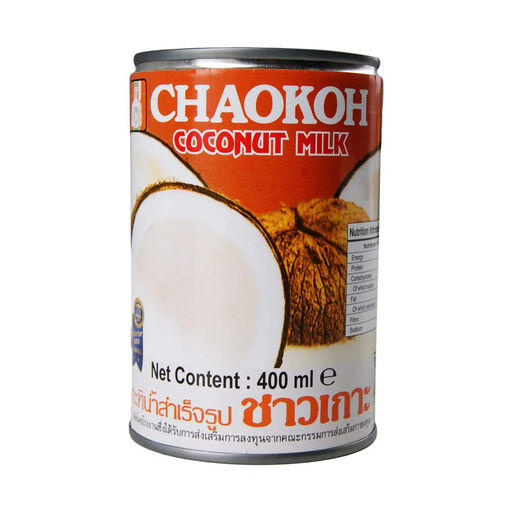
Chaokoh Coconut Milk Tinned 400ml
For a recipe using canned coconut milk, this 400ml tin lets you calculate the required quantity in 400ml increments. Check the current pack’s ingredients, allergen information and instructions for opened contents.
View on Joybuy
 No image available
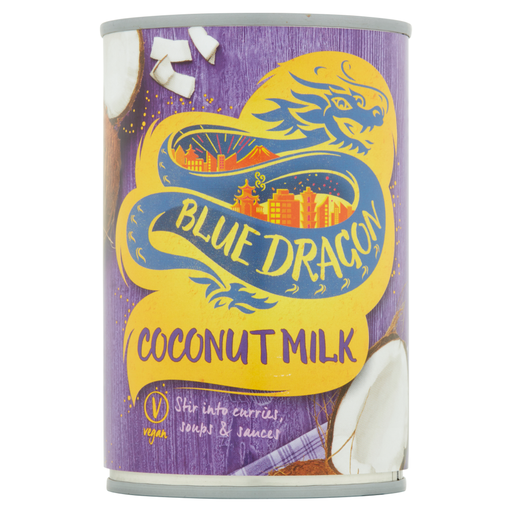
Blue Dragon Coconut Milk 400ml
Sainsbury’s describes this 400ml coconut milk for sauces and soups and lists 56% coconut extract. Its product listing says it may contain peanuts and nuts and instructs users to refrigerate opened contents in an appropriate container and consume them within two days; check the current pack.
View on Joybuy
 No image available
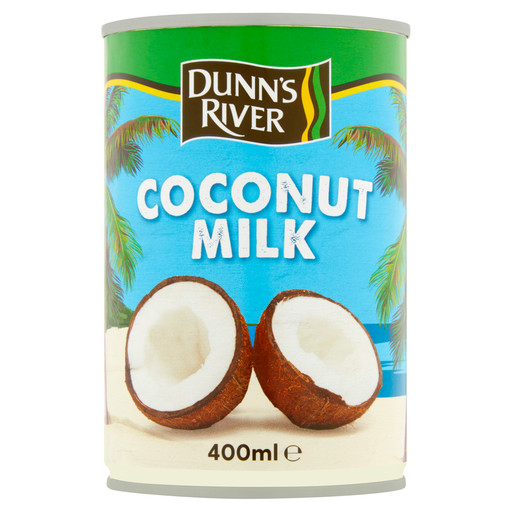
Dunns River Coconut Milk 400ml
This 400ml coconut milk is an option for a recipe requiring the canned cooking format. Use the stated volume to plan the batch, and check the current pack for ingredients, allergens and instructions after opening.
View on Joybuy
 No image available
AROY-D Coconut Milk Cooking 19% Fat 400ml
This 400ml cooking variant is an option when the recipe specifies coconut milk for a sauce. Its name states 19% fat; check the current pack’s full nutrition panel, allergens and storage directions rather than applying figures from a different Aroy-D variant.
View on Joybuy
 No image available
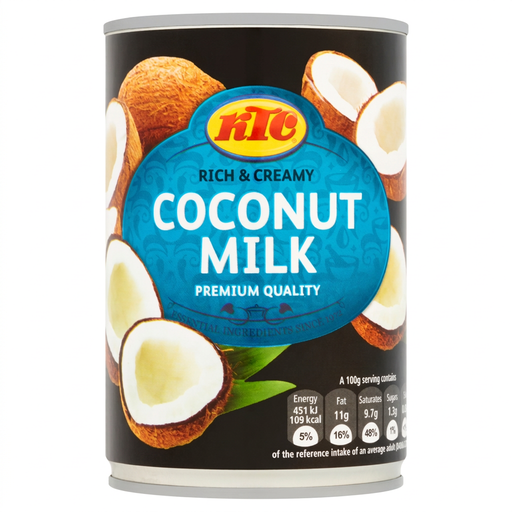
KTC Coconut Milk 400G
This cooking coconut milk is labelled 400G, a weight rather than a liquid volume. Check its stated volume before calculating a four-pint quantity, and read the current pack’s nutrition, allergen and opened-storage information.
View on Joybuy
Common questions
How many 400ml cans make four UK pints?
Six cans provide 2.4L, slightly more than four UK pints. The UK Product Regulation and Metrology Act 2025 defines a pint as 0.56826125L, making four pints 2.273045L. Check whether your recipe actually calls for that much cooking coconut milk before buying six cans.
Can a 1L coconut drink replace canned coconut milk in roast gravy?
Use a coconut drink when the recipe calls for one; do not assume it will give the same result as a cooking milk. Tesco lists 1L coconut drinks as a separate product type, while Sainsbury’s describes its Blue Dragon 400ml cooking coconut milk for sauces and soups.
How should I store coconut milk after opening?
Follow the instructions on the exact pack. Sainsbury’s listings say to refrigerate opened KTC and Blue Dragon 400ml coconut milk and consume it within two days; its Aroy-D 400ml listing says to refrigerate and use it within three days. Transfer the contents to another container where the label instructs you to.
Does a plant-based coconut milk suit someone with a nut or peanut allergy?
Do not determine allergy suitability from “plant-based” wording alone. Sainsbury’s Blue Dragon 400ml listing says it may contain peanuts and nuts. Check the current product’s ingredients and precautionary statements against the individual’s requirements.
Does coconut milk make a Sunday-roast gravy dairy-free?
Coconut milk alone does not determine whether the finished gravy is dairy-free: check the stock, fat, thickener, seasonings and other ingredients too. Tesco Real Food’s dairy-free roast gravy recipe, for example, specifies dairy-free vegetable stock alongside tamari and cornflour.


