Who is this choice for?
The intended use matters as much as the name on the front of the pack: a cooking ingredient and a resident drink call for different checks.
Care-home catering teams planning cooked dishes
For staff choosing coconut milk for curries, soups, sauces or desserts, the useful comparisons are recipe use, the amount added to each portion, the nutrition declaration and what must happen to an opened pack.
Teams serving dairy-free resident drinks
For staff considering a coconut-based drink, the pack’s ingredients, declared protein and any added nutrients need to be considered alongside the individual resident’s nutrition and allergy requirements.
Managers overseeing food provision
For managers setting purchasing and service procedures, Norfolk and Waveney Integrated Care System’s care-home guidance calls for residents’ nutritional needs to be assessed and reviewed, with preferences and clinical requirements taken into account. A single coconut product will not answer every resident’s needs.
What should you check before buying?
Specify whether the product is for a recipe or a drink, then compare the relevant labels and the portion actually served. Care Quality Commission guidance requires providers to assess and meet residents’ nutritional and hydration needs.
| Priority | What to check | Your needs |
|---|
| Product format |
Check whether the pack is canned coconut milk intended for cooking or a coconut drink intended as a beverage. Match it to the recipe or drinks service. |
I am making a curry, soup or dessert, so I need a cooking ingredient rather than a drink. For a resident’s beverage, I need to assess a coconut drink separately. |
| Nutrition |
Compare energy, fat, saturates and protein on the exact pack, using the same per 100 ml or per 100 g basis. Calculate the contribution from the amount the recipe or serving uses; check any declared calcium and vitamins in a drink. |
A change from regular to reduced-fat coconut milk would affect the dish I serve. I need to judge that change against the recipe and each affected resident’s assessed plan, not the word “light” alone. |
| Ingredients and allergies |
Read the delivered pack’s ingredient and allergen statements and check them against resident records before service. Do not infer allergy suitability from “dairy-free” or “coconut” in a product name. |
If I am serving someone with an allergy, I need the current pack and their recorded requirements to agree. Marks & Spencer labels its Creamy Coconut Drink as unsuitable for people with a milk allergy. |
| Opened-pack handling |
Follow that product’s refrigeration, container and use-after-opening instructions. Record when it was opened and plan portions around its stated period. |
When I switch products, I need the kitchen to follow the new pack’s instructions rather than carry over the procedure for the previous tin or drink. |
Brand and retailer product references
These examples illustrate why the exact product and format matter; a brand name alone does not identify a suitable cooking milk or resident drink.
Tesco
Tesco’s UK coconut-milk listings include own-label standard and light 400 ml tins alongside coconut drinks.
- The two canned formats provide a starting point for comparing options for a recipe.
- Check the delivered product’s nutrition, ingredients and allergen label rather than assuming the listings cover the pack in hand.
Koko
Koko Unsweetened Alternative Drink is a coconut-based beverage, not a canned cooking milk.
- The Tesco product specification lists added calcium and vitamins D2 and B12, with 1.2 g protein per 100 ml.
- Assess the declared nutrients and ingredients against the particular resident’s plan; added nutrients do not by themselves establish suitability as a dairy-milk replacement.
Alpro
Alpro Coconut Original is presented as a coconut drink rather than canned coconut milk for cooking.
- Alpro describes Coconut Original as having no added sugars and as naturally low in fat.
- Use the current pack’s full nutrition and ingredient information when assessing this particular drink for service.
Sainsbury’s
Sainsbury’s Coconut Milk 400 ml is a culinary coconut milk for recipes.
- Its product specification lists 68% coconut extract, 149 kcal and 14.8 g fat per 100 ml.
- The specification lists 13.8 g saturates per 100 ml and says to refrigerate after opening and use within three days.
M&S
M&S lists a culinary Coconut Milk for dishes and a separate Creamy Coconut Drink.
- The cooking milk is presented for curries, soups and sundaes; the drink lists added calcium, iodine and vitamins B12 and D.
- The Creamy Coconut Drink label says it is not suitable for people with a milk allergy. Check the current label for either product before service.
Waitrose
Waitrose lists Essential Coconut Milk and a separate Essential Reduced Fat Coconut Milk in its culinary range.
- Essential Coconut Milk lists 174 kcal and 18.1 g fat per 100 ml, providing figures for recipe planning.
- The Essential Coconut Milk pack instruction calls for unused contents to be transferred to a non-metallic container, refrigerated below 5°C and consumed within two days.
Joybuy cooking options
These are canned coconut milk options for cooking, including a reduced-fat version. For a resident drink, assess a separate beverage product against the resident’s care plan rather than treating a cooking tin as a substitute.
 No image available
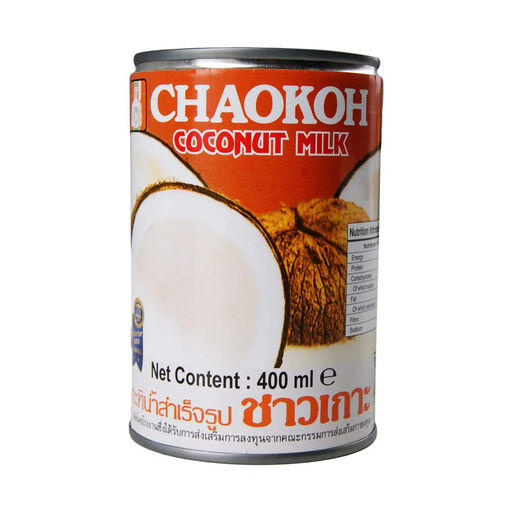
Chaokoh Coconut Milk 400ml tin
A canned option to consider for cooked dishes. Check how much the recipe uses against residents’ assessed needs; the listed nutrition includes 14.7 g saturates per 100 g.
The product information calls for opened contents to be transferred to a non-metallic container, refrigerated and used within two days. Check the current pack’s ingredients and allergy information before service.
View on Joybuy
 No image available
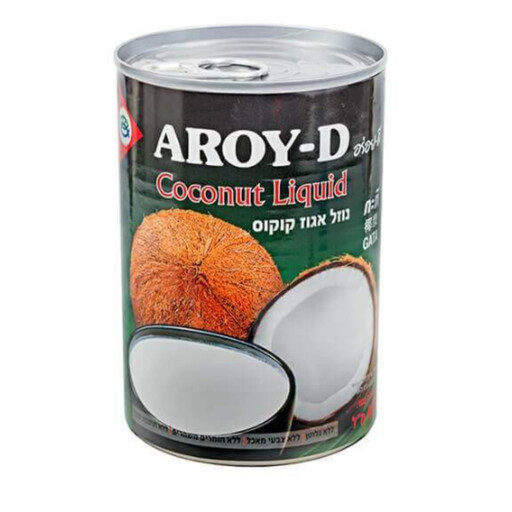
AROY-D Coconut Milk 17% Fat 400 ML
A canned cooking option for recipes where this 17% fat variant is appropriate. Check the amount used against the assessed meal plan; the listed nutrition includes 15 g saturates per 100 g.
The product information warns of possible traces of soy and milk. Verify the current pack against resident allergy records; its opened-pack instruction says to refrigerate and use within three days.
View on Joybuy
 No image available
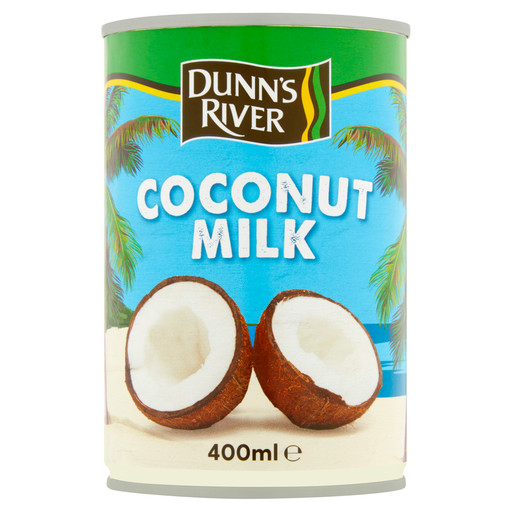
Dunns River Coconut Milk 400ml
A canned option for savoury or sweet cooking. Review the recipe portion against assessed needs; its listed nutrition includes 19 g saturates per 100 ml.
The product information says “Allergens: None” while also listing coconut as an ingredient. Resolve that discrepancy against the current pack and resident records before use. It also calls for opened contents to be transferred to an airtight non-metallic container, refrigerated and used within two days.
View on Joybuy
No image available
Morrisons Reduced Fat Coconut Milk 400ml
A reduced-fat canned option for cooking when that version fits the recipe and assessed meal plan. The product information lists 67 kcal and 6.4 g fat per 100 ml; compare portions rather than assuming it suits every resident.
Check the current pack’s allergen information before service. Its opened-pack instruction calls for transfer to a non-metallic container, refrigeration and use within two days.
View on Joybuy
 No image available
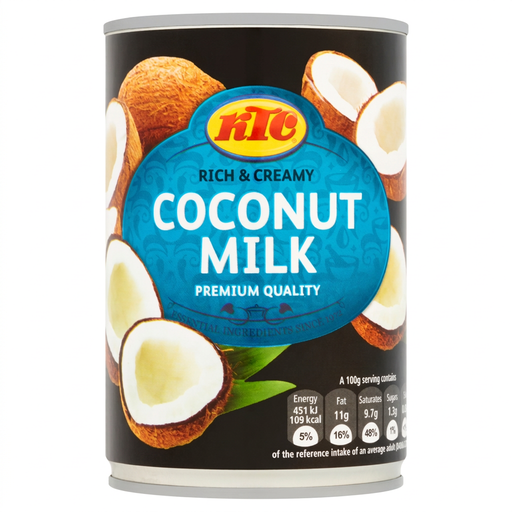
KTC Coconut Milk 400G
A canned coconut milk option for curries or desserts. Use the current pack’s nutrition declaration and the recipe quantity when reviewing its contribution to a resident’s meal.
Check its ingredients and allergen information against resident records. The product information calls for opened contents to be transferred to a non-metallic container, refrigerated and used within two days.
View on Joybuy
Questions about choosing and serving coconut milk
Should a care home use canned coconut milk or a coconut drink for a dairy-free resident?
Use canned coconut milk as a cooking ingredient and assess a coconut drink separately if the intended use is a beverage. Being dairy-free does not establish that a drink meets a resident’s nutritional, hydration or allergy requirements; check its label against their assessed care plan.
Is a vegan or dairy-free label enough to choose a product?
No. A vegan or dairy-free description does not show whether that particular cooking milk or drink meets an individual resident’s needs. Care Quality Commission guidance requires providers to assess nutritional and hydration needs and provide food and drink to meet them; check the current product label and the resident’s recorded requirements.
How long can opened coconut milk be kept?
Follow the instruction on the exact pack. Waitrose Essential and M&S canned coconut milk specify two days after opening, while Sainsbury’s canned Coconut Milk specifies three days; Koko Unsweetened Alternative Drink specifies five days after opening. Follow any accompanying refrigeration and container instructions rather than applying one product’s period to another.
What should staff check when a resident has a food allergy?
Check the delivered pack’s ingredients and allergen information against the resident’s allergy records before preparation and service. Do not rely on the product name or an older online listing; for example, M&S says its Creamy Coconut Drink is not suitable for people with a milk allergy.


