Cooks making several portions of curry or soup
If you want a less rich coconut sauce, compare light tins by their declared fat and coconut content. Check how soon the contents must be used after opening before deciding how much to cook.


For a batch curry or soup where you want a less rich sauce, start with a light or reduced-fat tinned coconut milk; choose a standard tin when coconut milk needs to contribute more body. Fat levels and coconut content differ between products, but those figures do not establish how mild a finished recipe will taste. Use a coconut drink in place of a cooking tin only if a thinner result suits the recipe.
If you want a less rich coconut sauce, compare light tins by their declared fat and coconut content. Check how soon the contents must be used after opening before deciding how much to cook.
When coconut milk is a major part of the sauce, a standard cooking tin is a useful starting point. The compared standard products have higher declared fat and coconut-extract levels than the light tins, although the finished texture also depends on the recipe.
Alpro and Koko coconut drinks have different formulations from the compared cooking tins. Consider one as a substitute only if the dish can accommodate a thinner liquid.
Choose the format for the sauce you are making, then compare labels and plan how you will use the opened tin.
| Priority | What to check | Your needs |
|---|---|---|
| Sauce richness | Compare fat on the same per-100ml or per-100g basis. Check the declared coconut-extract percentage where given; neither figure is a taste test. | I want a coconut sauce that is less rich without assuming every light tin will taste or cook alike. |
| Batch portions | Check fat and saturates on the pack, the quantity going into the whole recipe and the number of portions you will actually make. | For a sauce built around coconut milk, I need to decide whether a standard tin’s fuller formulation suits the portions I am preparing. |
| Product format | Check whether the carton is a coconut drink or the product is tinned cooking coconut milk. Compare their stated coconut content and fat using the labelled units. | A drink is convenient to hand, but I only want to use it if a thinner soup or adapted sauce will work. |
| Storage and reheating | Read the opened-pack refrigeration and use-within instructions. Plan smaller cooked portions for chilling or freezing, and reheat each portion only once. | I want to use the opened tin in time and reheat individual meals rather than repeatedly warming the whole batch. |
Alpro and Koko drinks have much lower declared fat and coconut content than the compared cooking tins, so a direct swap may produce a thinner sauce.
Use a drink when the recipe calls for a thin liquid, or adapt the recipe rather than replacing a tin without adjustment.
The compared reduced-fat tins differ in declared fat and coconut-extract content; the word ‘light’ alone does not tell you how a sauce will turn out.
Compare the current labels on a consistent per-100ml or per-100g basis and choose according to the role coconut milk plays in the dish.
The compared Tesco and Sainsbury’s ranges give different refrigerated use-within periods after opening. Unused coconut milk can go to waste if the next cooking session falls outside the pack’s instructions.
Check the specific tin, transfer leftovers as directed and plan when you will cook with them. Cool cooked meals before dividing them into smaller portions for freezing, as GOV.UK food-hygiene guidance advises.
A large container is harder to heat evenly, particularly in a microwave. The Food Standards Agency’s caterer guidance says food should be reheated only once.
Store meals in smaller portions. Stir food heated in a microwave and make sure each reheated portion is thoroughly hot throughout.
Tesco has standard and light 400ml tinned coconut milk for cooking.
Sainsbury’s lists both a light coconut milk and a standard cooking tin.
M&S offers reduced-fat and standard 400ml coconut milk for cooking.
Waitrose lists reduced-fat and other tinned coconut milks in its cooking range.
Alpro Coconut No Sugars is a coconut drink, not a tinned cooking coconut milk.
Koko Unsweetened Coconut UHT is a coconut drink rather than a direct cooking-tin equivalent.
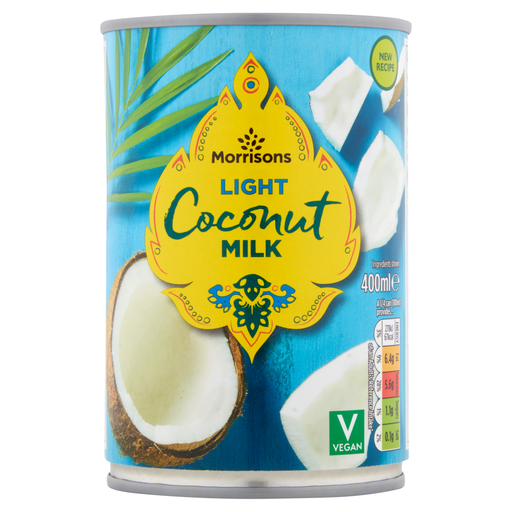
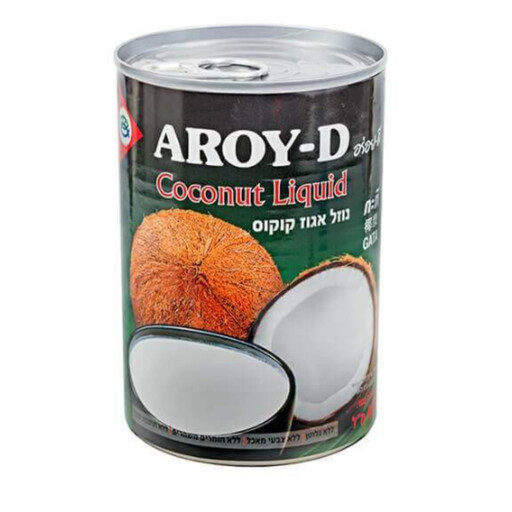
These two cooking tins illustrate different choices for batch meals: reduced-fat coconut milk for a less rich starting point and a 17% fat coconut milk for a sauce where more body is wanted.
 No image available
A reduced-fat cooking tin to consider for a less rich batch curry or soup. After opening, transfer unused contents to a non-metallic container, refrigerate and use within 2 days.
 No image available
A standard cooking tin to consider when coconut milk contributes substantially to a batch sauce. It is not the reduced-fat option; refrigerate the unused portion after opening and use within 3 days.
Choose a light cooking tin if you want a less rich starting point; choose a standard tin when coconut milk needs to contribute more sauce body. Sainsbury’s labels, for example, list 5.6g fat per 100ml for its Light product and 14.8g per 100ml for its standard tin. Neither figure guarantees how mild your finished curry will taste.
Yes, if a thinner liquid suits the recipe or you adjust the sauce. Alpro UK lists 14.1% coconut milk in Coconut No Sugars, while the Sainsbury’s listing gives 9% for Koko Unsweetened; these drinks are formulated differently from the compared cooking tins.
Follow the instructions on the specific tin. The compared Tesco products say to refrigerate unused contents and use them within 2 days; the compared Sainsbury’s products give 3 days. Check whether the pack also directs you to transfer the remainder to another container.
You can plan to freeze cooked portions, following the recipe and your appliance instructions. GOV.UK food-hygiene guidance advises cooling cooked dishes before freezing and dividing them into smaller portions.
Heat the portion thoroughly so it is hot in the centre, stirring microwave-heated food to reduce cold spots. The Food Standards Agency’s caterer guidance says food should be reheated only once, so taking out one portion at a time avoids repeatedly reheating the batch.