Couples making a coconut-based main
If a curry, stew, sauce or soup relies on coconut milk, look for a cooking product and compare its stated ingredients. A carton described as a coconut drink serves a different purpose.


For an anniversary curry, sauce or coconut dessert, choose cooking coconut milk if that is what the recipe calls for; a coconut drink is not an automatic substitute. Four pints is 2.272 litres according to Tesco, so start with the recipe volume and work out how many cooking tins you need, then compare their stated ingredients and coconut-extract percentages.
If a curry, stew, sauce or soup relies on coconut milk, look for a cooking product and compare its stated ingredients. A carton described as a coconut drink serves a different purpose.
Check that the product is intended for cooking or desserts and that its pack size covers the recipe. If the coconut milk has separated, follow its own handling instructions before using it.
Ask about guests’ specific ingredient requirements and read the current pack before cooking. Do not assume that someone’s response to other nuts establishes whether coconut is suitable for them.
Decide whether the recipe needs cooking coconut milk, confirm the volume, then compare the ingredients and handling directions on the products you are considering.
| Priority | What to check | Your needs |
|---|---|---|
| Product type | Read the stated use: cooking coconut milk for curries or desserts, or a coconut drink for drinking and breakfast dishes. Alpro describes its 1-litre product as a coconut drink. | I’m making a sauce that calls for cooking coconut milk, not choosing a drink simply because its carton mentions coconut. |
| Recipe quantity | Check the recipe volume and the pack size. Tesco labels four pints as 2.272 litres; the cooking products described by Marks & Spencer, Waitrose and Sainsbury’s here are 400ml tins. | If the recipe really calls for four pints, I need enough cooking coconut milk to measure out 2.272 litres. Six 400ml tins contain 2.4 litres, leaving some unused. |
| Coconut extract | Compare percentages within the cooking coconut milk category, alongside the full ingredient lists. Sainsbury’s lists 70% for Aroy-D and 48% for Tropical Sun; Marks & Spencer and Waitrose each list 60% for the products discussed here. A percentage alone is not a taste or texture test. | For a coconut-based main or dessert, I want to know what the tin contains rather than assume products with the same name will give an identical result. |
| Ingredients and handling | Check for ingredients such as guar gum or emulsifiers if those affect your choice. Follow the product’s directions for shaking or handling separation, and check its instructions after opening. | A short ingredient list matters to me, and I’d rather follow the tin’s directions than mistake normal separation for a problem. |
| Serving guests | Read the current pack’s ingredients and dietary information, including any statements relevant to a guest’s requirements. Check the date mark and storage directions before use. | I’m cooking for other people, so I’ll confirm their ingredient requirements before deciding which tin to serve. |
Alpro identifies its 1-litre product as a coconut drink and lists uses including smoothies and porridge. A recipe written for tinned cooking coconut milk does not establish that the drink will work in the same way.
For a curry, sauce or coconut dessert, check that the product is intended for cooking before comparing its ingredients.
Tesco labels four pints as 2.272 litres, while the cooking coconut milk examples from Marks & Spencer, Waitrose and Sainsbury’s are 400ml tins. A pack labelled four pints is not necessarily cooking coconut milk.
Use the recipe’s required volume to calculate how many cooking tins to buy. Six 400ml tins provide 2.4 litres; measure the amount needed rather than adding all six automatically.
Sainsbury’s Tropical Sun listing says that product naturally separates, and its Aroy-D listing notes that cold conditions may cause solidification. Appearance alone does not tell you how to handle every product.
Check the condition and directions on the particular pack. Tropical Sun’s listing directs shoppers to shake it before use.
A guest’s ingredient requirements apply to the product you actually serve, not just to the description you read while shopping.
Ask guests about their requirements and check the physical pack’s ingredients, date mark and storage directions before cooking.
These examples include cooking coconut milk and one distinct coconut drink; compare the specific product with your recipe rather than treating every coconut product from a brand as interchangeable.
Sainsbury’s lists Aroy-D Coconut Milk as a 400ml cooking product.
Marks & Spencer describes its 400ml Coconut Milk for dishes including curries, soups and sundaes.
Waitrose lists Duchy Organic Coconut Milk in a 400ml format for curries, soups and desserts.
Sainsbury’s lists Tropical Sun 100% Natural Coconut Milk as a 400ml cooking product.
Sainsbury’s lists an Alpro 1-litre coconut drink, a different product type from the cooking tins above.
These 400ml cooking coconut milk options suit a recipe that calls for a tin rather than a coconut drink. Check the recipe volume to decide how many cans you need.
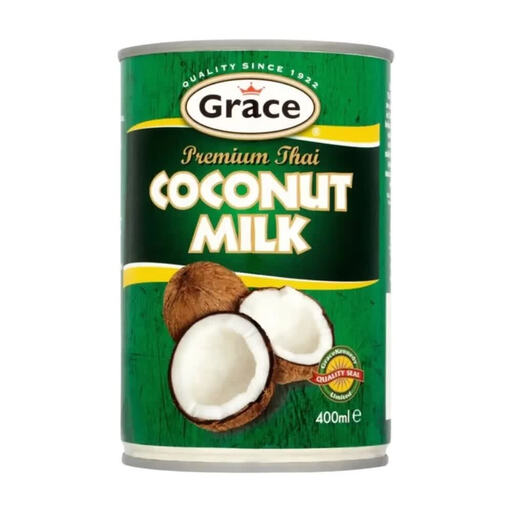 No image available
For an anniversary curry, sauce or coconut dessert, this 400ml can is a cooking coconut milk option. Work out the quantity from your recipe, and check the current can’s ingredients before serving guests with specific requirements.
 No image available
For a curry, soup or dessert where the ingredient list matters, Sainsbury’s lists this 400ml product as coconut extract (48%) and water. Its listing says it may naturally separate and should be shaken before use; check the current can before serving guests.
No. Tesco labels a four-pint pack as 2.272 litres. If that is the volume your recipe requires, six 400ml tins contain enough, but you would need to measure out the amount called for.
Do not assume it is a direct substitute. Alpro identifies its product as a coconut drink, with uses including smoothies and porridge; use cooking coconut milk for a recipe that calls for a cooking tin unless the recipe specifically accommodates a drink.
Separation can occur in coconut milk. Sainsbury’s says Tropical Sun’s product naturally separates and directs shoppers to shake it before use; follow the instructions on your particular pack.
Follow the directions on the product you open. Marks & Spencer says to refrigerate its Coconut Milk and eat it within two days; Waitrose gives two days for Duchy Organic, while Sainsbury’s listings give three days for Aroy-D and Tropical Sun.
A tree-nut allergy alone does not establish whether coconut is suitable for a particular guest. Anaphylaxis UK says there is no general recommendation for people with tree-nut allergies to avoid coconut; ask the guest about coconut specifically and check the current product label.