What should you check before buying?
Identify the product the recipe calls for, calculate its required quantity, then check the chosen tin’s label for its formulation and opened-pack instructions.
| Priority |
What to check |
Your needs |
| Product type |
Check that a curry, soup or dessert ingredient is sold as cooking coconut milk. Joybuy describes Coconut Palm 1L as ready to drink; its Alpro Barista Coconut is a soya-based coffee drink. |
My recipe calls for cooking coconut milk, so a larger drinks carton is not an automatic substitute. |
| Formulation |
Compare fat figures on the same basis. Tesco lists 15.0g per 100ml for its standard milk and 6.0g per 100ml for Light; M&S lists 17.3g per 100g for standard and 9.3g per 100g for Reduced Fat. Do not compare per-100g and per-100ml figures as identical measures. |
For a dish where coconut richness matters, I would start with standard cooking milk. If I choose reduced-fat milk, I need the recipe to suit that change. |
| Quantity |
Multiply the recipe’s coconut-milk quantity by the portions you plan to make, then check each pack’s stated size. Sainsbury’s labels its cited 400ml tin as four servings; Waitrose labels its Essential tin as two. |
I’m feeding several guests and want enough for the recipe, rather than treating “family pack” or a serving label as a universal measure. |
| Leftovers and labels |
Check the exact product’s refrigeration and use-within instructions after opening. Tesco and Waitrose specify two days for the cited tins; Sainsbury’s specifies three. Read the current ingredients and allergen statements before serving guests with dietary requirements. |
If the recipe leaves part of a tin, I want a plan to use it within that product’s stated period. |
Relevant brand references
These product-line examples help distinguish cooking tins from coconut drinks; they do not indicate which brands are available in the Joybuy selection below.
Tesco
Tesco’s cited 400ml standard and Light cooking coconut milks provide a within-range formulation comparison.
- Tesco Groceries lists 51% coconut extract and 15.0g fat per 100ml for its standard tin, compared with 22% extract and 6.0g fat per 100ml for Light.
- Check the chosen tin’s current label rather than applying these figures to every Tesco coconut-milk product.
Sainsbury’s
The cited Sainsbury’s 400ml cooking coconut milk is labelled as four servings.
- Sainsbury’s lists 68% coconut extract and 14.8g fat per 100ml for this product.
- Its four-serving label does not establish how much coconut milk your recipe needs per guest; the product says to refrigerate after opening and use within three days.
Waitrose
Waitrose Essential Coconut Milk is a cooking-tin reference for comparing formulation, serving labels and leftover instructions.
- Waitrose & Partners lists 60% coconut extract and 18.1g fat per 100ml for this tin, which is labelled as two servings.
- Waitrose instructs users to refrigerate the opened product below 5°C and consume it within two days. Its serving label is specific to this product.
M&S
The cited M&S 400ml standard and Reduced Fat cooking coconut milks offer another within-range comparison.
- M&S lists 60% coconut extract and 17.3g fat per 100g for standard milk, compared with 33% extract and 9.3g fat per 100g for Reduced Fat.
- These fat figures are per 100g, not per 100ml. Both cited products instruct users to refrigerate leftovers and use them within two days.
Alpro
Alpro Barista Coconut is relevant as a product-type distinction, not as a cooking-coconut-milk tin.
- Joybuy lists it as an 8 × 1L barista drink containing a soya base and coconut milk.
- Check the ingredients and recipe before considering it in place of cooking coconut milk; the listed drink contains soya.
Joybuy cooking coconut milk options
These Joybuy options are cooking coconut milks in standard and reduced-fat formats. Match the pack measure and formulation to your anniversary-dinner recipe before deciding how many to buy.
 No image available
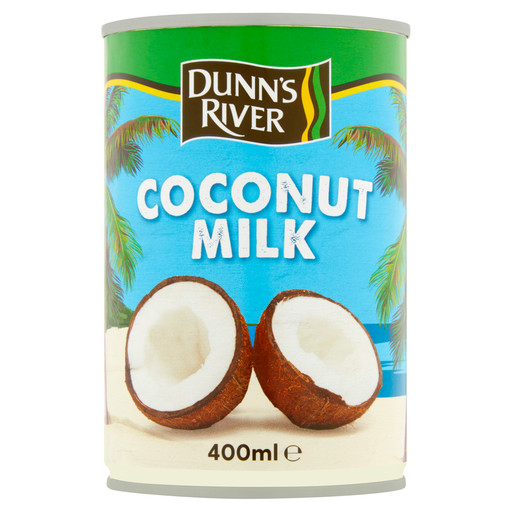
Dunns River Coconut Milk 400ml
A 400ml option for a recipe specifying cooking coconut milk. Calculate the number of tins from the recipe; check the physical pack’s current ingredients and allergen information before serving guests with dietary restrictions.
View on Joybuy
 No image available
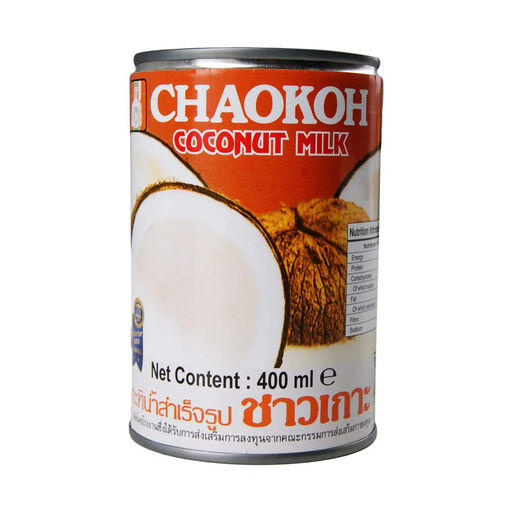
Chaokoh Coconut Milk 400ml Tin
A 400ml tinned option for a cooking recipe. Check its current nutrition label if comparing fat figures with another tin, keeping per-100g and per-100ml measures distinct.
View on Joybuy
 No image available
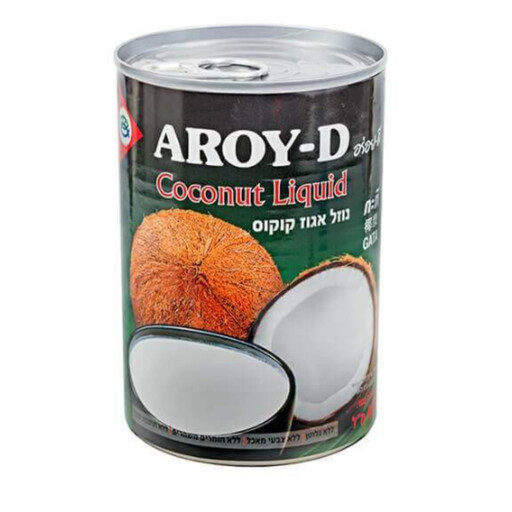
AROY-D Coconut Milk 17% Fat 400ml
The title identifies a 400ml cooking-milk option with 17% fat. Check the current label’s allergen and precautionary statements for guests with dietary restrictions, and use the recipe quantity to plan the number of tins.
View on Joybuy
 No image available
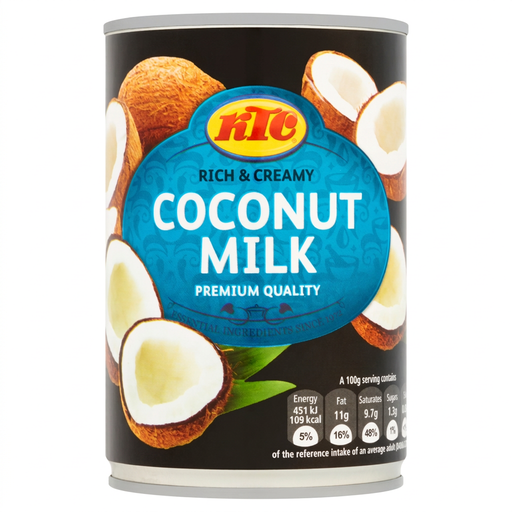
KTC Coconut Milk 400g
A cooking-milk can labelled by weight. If your recipe measures coconut milk in millilitres, check the amount needed rather than treating 400g as an interchangeable volume; check the label’s fat figure if formulation matters to the dish.
View on Joybuy
No image available
Morrisons Reduced Fat Coconut Milk 400ml
A 400ml reduced-fat cooking option if that is the formulation you intend to use. For a sauce or dessert that relies on coconut milk for body, consider the recipe’s requirements before replacing standard milk; calculate tins from the recipe rather than a serving label.
View on Joybuy
Questions about planning and leftovers
How many tins should I buy for an anniversary dinner?
Multiply the recipe’s coconut-milk quantity by the number of portions you plan to make, then compare the result with the tin size. Do not use a pack’s serving label as a universal rule: Sainsbury’s labels its cited 400ml tin as four servings, while Waitrose labels its Essential tin as two.
Should I choose standard or reduced-fat cooking coconut milk?
Start with standard cooking coconut milk when the recipe relies on it for richness; choose reduced-fat if that formulation suits the dish you intend to make. Tesco lists 15.0g fat per 100ml for its cited standard tin and 6.0g per 100ml for Light. M&S lists 17.3g per 100g for standard and 9.3g per 100g for Reduced Fat, so compare each pair on its stated measurement basis.
Can a 1L coconut drink replace a cooking tin?
Do not treat it as a direct substitution without checking the recipe and ingredients. Joybuy describes Coconut Palm 1L as ready to drink and lists water, fresh coconut meat juice and sugar; its Alpro Barista Coconut is a soya-based coffee drink. Neither product type is the same as a tin sold as cooking coconut milk.
How should I handle coconut milk left after opening?
Follow the storage and use-within instructions on the exact pack. The cited Tesco and Waitrose cooking tins specify refrigeration and use within two days after opening; Sainsbury’s specifies refrigeration and use within three days. Plan another use for a remainder only within the chosen product’s stated period.
What should I check for guests with dietary restrictions?
Read the physical pack’s current ingredients and allergen or precautionary statements before serving it. Do not assume that every coconut-labelled product has the same ingredients: Joybuy’s listed Alpro Barista Coconut drink contains a soya base.


