Who is choosing?
The right format depends on whether coconut is a pour-over drink, a dairy replacement or an ingredient that gives a recipe richness.
Families making chilled snacks
For cereal, smoothies or fruit snacks, compare carton drinks first. Check the sugars line and ingredients, then try the flavour rather than assuming that a label such as “unsweetened” means every child will find it mild.
Families excluding dairy
If a child regularly has a plant drink instead of dairy milk, check the exact product’s calcium, iodine, protein and energy information as well as its allergen statement. Plant drinks differ nutritionally, as the Office for Health Improvement and Disparities and Kingston and Richmond NHS Foundation Trust explain.
Home cooks making coconut snacks
For pancakes, baking or desserts that call for coconut richness, a cuisine-style or canned milk may fit the recipe. It is a different choice from a carton drink intended for pouring.
What should you check?
Choose the format for the snack first, then compare labels within that format. Coconut content and sugars are useful comparisons, but neither guarantees a mild flavour.
| Priority | What to check | Your needs |
|---|
| Drink or cooking milk |
Check whether the pack is a carton drink or a cuisine-style or canned ingredient. Koko Dairy Free lists 9% coconut milk in its Unsweetened drink and 25% coconut extract in Koko Cuisine; these are different product formulations, not a flavour rating. |
For cereal or a smoothie, I need something intended to pour as a drink. For a recipe that calls for richness, I can choose a cooking milk instead. |
| Sweetness |
Read both the ingredients and sugars per 100ml. Koko Dairy Free lists 0.2g sugars per 100ml for Unsweetened; its Original contains concentrated apple juice and lists 0.9g per 100ml. |
If I want less sweetness in a chilled snack, I’ll compare the actual labels rather than rely on “Original”, “0 Sugar” or “unsweetened” alone. |
| Regular dairy replacement |
Compare calcium, iodine, protein and energy on the exact pack. Kingston and Richmond NHS Foundation Trust advises families excluding dairy to look for calcium fortification, ideally 120mg per 100ml, and to consider iodine too. |
A coconut drink used regularly in place of dairy needs a wider nutrition check; choosing one for an occasional recipe is a different decision. |
| Allergens |
Read the current ingredient and allergen statements, including precautionary wording. Marks & Spencer says its vegan Creamy Coconut Drink is not suitable for people with a milk allergy; Waitrose says its listed Plenish drink may contain nuts and soya. |
Where an allergy matters, I need to check the particular pack being served, not assume “vegan” or “coconut” settles suitability. |
| After opening |
Follow the pack’s refrigeration and use-by-opening instructions. Waitrose lists four days after opening for its Plenish carton and two days for its Duchy canned coconut milk. |
For snacks spread across the holidays, I want a pack size I can use within its stated storage period. |
Brand and retailer examples
These examples show why the precise product and format matter; a brand name alone does not establish flavour, nutrition or allergy suitability.
Koko
Koko Dairy Free lists both carton drinks and a cuisine-style coconut milk.
- Its Unsweetened drink lists 9% coconut milk, 0.2g sugars and 120mg calcium per 100ml.
- Koko Cuisine lists 25% coconut extract and 17.4g fat per 100ml; neither formulation’s figures establish how mild it will taste to a child.
Alpro
Tesco Groceries lists Alpro Coconut No Sugar and Coconut Original in different carton formats.
- The named variants give shoppers distinct labels to compare for a snack drink.
- Check the ingredients and nutrition panel of the particular variant rather than assuming the two have the same sugars or fortification.
Tesco
Tesco Groceries lists own-label Long Life Coconut Original and Sweetened Coconut Drink.
- The listing distinguishes original and sweetened drink options.
- Use the exact carton’s sugars, nutrition and allergen information to decide whether either suits the intended snack.
M&S
Marks & Spencer lists a Creamy Coconut Drink containing 8% coconut cream and added calcium, iodine, vitamin B12 and vitamin D.
- Its product information identifies the fortification and lists apple juice concentrate among the ingredients.
- Marks & Spencer states that this vegan-labelled drink is not suitable for people with a milk allergy.
Waitrose
Waitrose lists both a Plenish carton coconut drink and a Duchy canned coconut milk.
- The Plenish drink lists 10% coconut milk; the Duchy cooking milk lists 60% coconut extract, illustrating the difference in format.
- Waitrose says the Plenish drink may contain nuts and soya. Check each pack’s allergen and storage instructions separately.
Joybuy coconut drink options
These are coconut beverages to compare for chilled school-holiday snacks, not substitutes for rich cooking coconut milk. Their sugar, sweetener and allergen details make the exact label particularly important.
 No image available
Alpro Barista Coconut Long Life Drink, 8 × 1L
A ready-to-drink coconut beverage that can be served chilled, although it is formulated for barista use. Its listed figures include 2.5% coconut milk, 3.3g sugars, 0.7g saturated fat and 1.5g protein per 100ml; the ingredients list calcium and vitamins B2, B12 and D2. It contains soya. If it will regularly replace dairy for a child, check the current pack for the calcium quantity and iodine information, and try the flavour rather than assuming it is mild.
View on Joybuy
 No image available
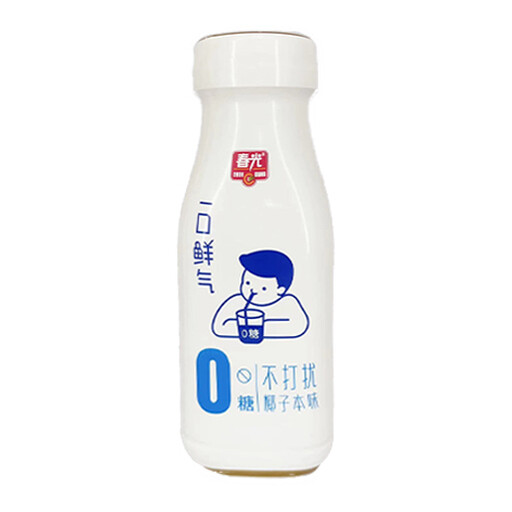
Chunguang 0 Sugar Coconut Milk, 245ml × 15
A portioned coconut beverage described for serving chilled. Its listed ingredients include 15% coconut juice, 4.5% coconut water, the sweeteners erythritol and sucralose, and milk-derived sodium caseinate. “0 Sugar” does not mean unsweetened or establish a mild taste. This product contains a milk ingredient, so check the current allergen statement if milk must be avoided; also check calcium, iodine and protein information if considering it as a regular dairy replacement.
View on Joybuy
Questions about coconut drinks
Is carton coconut drink the same as cooking coconut milk?
No. Carton drinks and cuisine-style coconut milk are formulated for different uses. Koko Dairy Free lists 9% coconut milk in its Unsweetened drink, compared with 25% coconut extract and 17.4g fat per 100ml in Koko Cuisine. Compare carton drinks for pouring over cereal or making smoothies; choose cooking milk when a recipe calls for richness.
How do I choose a mild coconut option for snacks?
Start with the intended use, then compare the ingredients and sugars line on carton drinks. Koko Dairy Free lists 0.2g sugars per 100ml for Unsweetened, while Original contains concentrated apple juice and lists 0.9g per 100ml. Those details help compare sweetness but cannot predict which flavour a child will prefer.
Can a coconut drink regularly replace dairy milk for a child?
Do not assume the two are nutritionally interchangeable. Kingston and Richmond NHS Foundation Trust advises families excluding dairy to check calcium and iodine, and notes that substitutes can differ in protein and energy. If a coconut drink will be a child’s regular main drink, consider the wider diet with an appropriate healthcare professional.
Does “vegan” mean a coconut drink is suitable for a milk allergy?
No. Marks & Spencer labels its Creamy Coconut Drink vegan but states that it is not suitable for people with a milk allergy. For a diagnosed allergy, check the exact pack’s ingredient and allergen statements and follow the child’s clinical advice.
Can coconut drink be an infant’s main milk drink?
No. Frimley Healthier Together NHS guidance says plant-based dairy alternatives may be used in cooking from six months, but not as the main milk drink until a child is over one year old. Seek individual clinical advice if an infant cannot have cow’s milk.


