Bakers reducing fat in coconut-based loaves
If the recipe specifies canned coconut milk, compare the fat figure on each can. A ‘light’ or ‘reduced fat’ name does not tell you how its nutrition panel compares with another can.


Choose a reduced-fat can when a bread recipe calls for canned coconut milk and you want to keep that cooking-milk format while comparing fat values. If you are replacing lower-fat dairy milk, a coconut drink is the closer starting point: King Arthur Baking distinguishes coconut beverages for that substitution from well-shaken canned coconut milk for whole-milk substitution. The two formats have different coconut concentrations, so do not assume they will give the same flavour or dough consistency.
If the recipe specifies canned coconut milk, compare the fat figure on each can. A ‘light’ or ‘reduced fat’ name does not tell you how its nutrition panel compares with another can.
The milk being replaced matters. King Arthur Baking suggests a coconut beverage for recipes using skimmed or lower-fat milk, but well-shaken canned coconut milk for whole-milk substitution.
Check the current pack as well as the product name. For example, Sainsbury’s listing for Blue Dragon Light Coconut Milk includes a precautionary statement about peanuts and nuts.
Start with the liquid named in the bread recipe, then compare nutrition panels and ingredients within a suitable format.
Choose when: The recipe calls for canned coconut milk, but you want to compare reduced-fat versions.
Consider: These cans retain a cooking-milk format, but their fat values vary and they are not interchangeable with a thinner carton drink.
Choose when: You are replacing lower-fat dairy milk and the recipe permits a plant drink, as in King Arthur Baking’s substitution guidance.
Consider: A drink may contain much less coconut than a cooking can; check whether its other ingredients suit the loaf.
| Priority | What to check | Your needs |
|---|---|---|
| Recipe format | Check whether the recipe says canned coconut milk or dairy milk. King Arthur Baking uses well-shaken canned coconut milk for whole-milk substitution and a coconut beverage for skimmed or lower-fat milk substitution. | If my recipe expects a cooking can, I do not want to swap in a carton drink without considering the change to the dough. |
| Fat value | Compare fat per 100ml or per 100g on the same basis. Waitrose lists 6.2g per 100ml for Essential Reduced Fat Coconut Milk, while M&S lists 9.3g per 100g for its reduced-fat can; those differently based figures should not be treated as identical measures. | I want to compare reduced-fat cans using their nutrition panels, rather than relying on ‘light’ wording. |
| Coconut content | Read the ingredient list when changing format or brand. Koko lists 9% coconut milk in its Unsweetened No Sugar Milk drink; Waitrose lists 23% coconut extract in its reduced-fat can, and Sainsbury’s lists 25% in Blue Dragon Light. | For a coconut-forward loaf, I need to know whether a drink has a different formulation from the can in the recipe. |
| Other ingredients | Check whether a drink is unsweetened and whether it contains other ingredients relevant to the recipe. Read the current pack’s full ingredient and allergen statements when dietary suitability matters. | If I am adapting a dairy-free recipe or avoiding an allergen, the word ‘coconut’ alone is not enough for me to choose. |
| Measuring and storage | Follow the can’s directions if its contents have separated before measuring. After opening, use the storage instructions on the specific pack. | I want to measure a mixed ingredient for the dough and handle any leftover coconut milk as directed. |
Reduced-fat canned products have different nutrition figures. For example, Waitrose and Blue Dragon each list 6.2g fat per 100ml, while M&S lists 9.3g per 100g for its reduced-fat can.
Read the fat figure and its per-100ml or per-100g basis before comparing products.
A carton drink and a canned ingredient can differ substantially in coconut content. Koko’s Unsweetened No Sugar Milk lists 9% coconut milk, compared with 23% coconut extract in Waitrose Essential Reduced Fat Coconut Milk.
Follow the recipe’s intended format. When adapting a dairy-milk recipe, use the type of milk being replaced to guide the choice.
Dietary descriptions do not replace the full allergen statement. Sainsbury’s listing for Blue Dragon Light says it may contain peanuts and nuts.
Check the current pack before baking when an ingredient or allergen affects suitability.
If a can has separated, a spoonful taken from only one part may not represent the mixed contents the recipe calls for.
Follow the pack’s mixing instructions before measuring; Waitrose and Blue Dragon provide shaking or gentle-warming advice for their products.
These product lines illustrate the difference between reduced-fat cooking cans and coconut drinks; a brand name alone does not establish the right substitution.
Essential Reduced Fat Coconut Milk is a 400ml canned cooking product.
Blue Dragon Light Coconut Milk is another 400ml cooking can.
Amoy Reduced Fat Coconut Milk is a 400g canned option.
M&S lists both reduced-fat and standard canned coconut milk.
Koko’s Unsweetened No Sugar Milk drink and Cuisine Coconut Milk are different product formats.
Alpro Coconut No Sugars is a long-life coconut drink, not a canned cooking milk.
These options cover two different bread-recipe situations: a reduced-fat cooking can and a coconut drink to consider when replacing dairy milk. Choose by the ingredient the recipe expects, not by treating the two formats as direct equivalents.
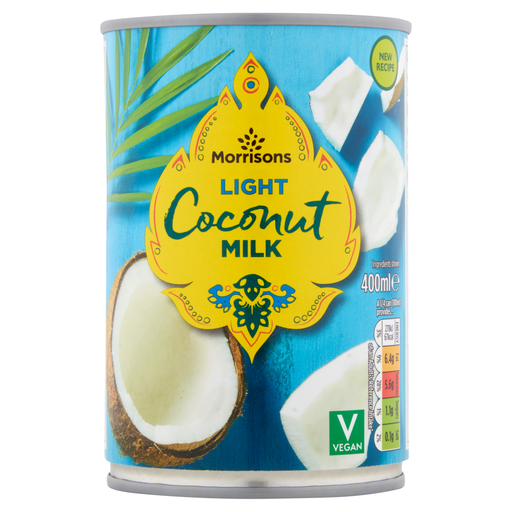 No image available
This canned option matches a recipe that calls for reduced-fat cooking coconut milk. Compare its current nutrition panel with other cans if fat content drives your choice, and follow the pack’s mixing directions before measuring separated contents.
 No image available
This drink format is relevant when a recipe permits a plant drink in place of dairy milk, rather than requiring canned coconut milk. It is a barista variant, not the Alpro Coconut No Sugars product discussed above; check its soya content and sugar information against the recipe and dietary requirements.
No. Compare the nutrition figures rather than relying on the description: Waitrose Essential Reduced Fat and Blue Dragon Light each list 6.2g fat per 100ml, while other reduced-fat cans can have different values or use a per-100g basis.
Match the substitute to the milk in the recipe. King Arthur Baking suggests well-shaken canned coconut milk for whole milk, and a coconut beverage for skimmed, 1% or 2% milk; check the particular drink’s ingredients if the recipe needs an unsweetened liquid.
Mix it according to the pack instructions before measuring it for dough. Waitrose and Blue Dragon give shaking or gentle-warming advice for their canned products when the contents have thickened or separated.
No. Vegan suitability and precautionary allergen information answer different questions: Sainsbury’s Blue Dragon Light listing says it may contain peanuts and nuts. Check the current pack’s full allergen statement for the product you will use.
Follow the instructions on that can. The Waitrose, Blue Dragon and M&S product information advises transferring leftovers to a suitable container, refrigerating them and using them within two days; the pack you buy takes precedence if its directions differ.