Who is choosing coconut milk for curry?
The useful distinction is between cooking coconut milk and a coconut drink, then between richer and reduced-fat cooking products.
Cooking a curry with a substantial sauce
Choose a product described for cooking, then compare its coconut extract and fat values with other cooking products. Long-life coconut drinks sold as milk alternatives have a different formulation from the cooking examples listed by Tesco Groceries, Sainsbury’s and Waitrose & Partners.
Making a lighter curry
A reduced-fat cooking coconut milk keeps the choice within the cooking category. Sainsbury’s and M&S list light or reduced-fat versions, but a recipe written for regular coconut milk may produce a less rich sauce with them.
Using a long-life drink from the cupboard
Alpro and Koko coconut drinks are milk alternatives, not the same products as cooking coconut milk. Check whether the curry recipe calls for a thin liquid before using one in place of a cooking can or carton.
What should you check before buying?
Choose the cooking format first; use the ingredient and nutrition labels to decide how rich you want the sauce to be.
| Priority | What to check | Your needs |
|---|
| Product format |
Look for a cooking coconut milk described for curries or sauces. If considering a long-life drink, check that the recipe calls for that type of liquid. |
I want the coconut milk to form part of the curry sauce, rather than use a drink kept for cereal or tea. |
| Sauce richness |
Compare coconut extract and fat on matching per-100-ml or per-100-g labels. Waitrose & Partners lists Kingfisher Oriental at 72% extract and 21.3 g fat per 100 ml; Sainsbury’s Light lists 40% and 5.6 g per 100 ml. Those figures do not guarantee a particular flavour or texture. |
For a richer sauce, I would consider a cooking product with higher listed values. If I would rather use a reduced-fat product, I can allow for a less rich result. |
| Ingredients |
Read the current pack’s full ingredients and allergen information, including any emulsifiers or stabilisers. Check the exact variant, as cooking coconut milks do not all have the same formulation. |
Ingredient or allergen suitability matters to me, so I need to check the pack I will actually use. |
| Leftovers |
Follow that pack’s transfer, refrigeration and use-by instructions after opening. Tesco Groceries lists 2 days for its coconut milk; Sainsbury’s lists 3 days for its standard product. |
I may not use the whole pack in one curry and want to plan what to do with the remainder. |
Brand and retailer references
These examples show why the product line and its label matter more than the brand name alone; they do not indicate which products are available on Joybuy.
Tesco
Tesco Groceries lists a 400 ml own-label cooking coconut milk.
- Its listing states 51% coconut extract and 15 g fat per 100 ml.
- Check the current can for its ingredients and opened-pack directions rather than relying on an older listing.
Sainsbury’s
Sainsbury’s lists standard and light own-label cooking coconut milks.
- The standard listing states 68% coconut extract and 14.8 g fat per 100 ml; Light states 40% extract and 5.6 g fat per 100 ml.
- Choose between these formulations according to the sauce you want, rather than treating the light version as an identical substitute.
M&S
M&S lists regular and reduced-fat cooking coconut milk.
- Its regular product lists 60% coconut extract and 17.3 g fat per 100 g; Reduced Fat lists 33% extract and 9.3 g fat per 100 g.
- The stated nutrition basis is per 100 g, so do not compare those fat figures as though they were per 100 ml.
Waitrose
Waitrose & Partners lists Kingfisher Oriental Coconut Milk as a cooking option; Kingfisher is not a Waitrose own-label product.
- The Kingfisher listing describes curry use and states 72% coconut extract and 21.3 g fat per 100 ml.
- Those label values help with a richness comparison, but do not establish how it will taste in a particular recipe.
Koko
Koko has distinct long-life drink and Cuisine Coconut Milk products.
- Koko Dairy Free lists 1.4 g fat per 100 ml for its Unsweetened drink and 17.4 g per 100 ml for Koko Cuisine Coconut Milk.
- Check which Koko product a recipe calls for; the drink and cooking product are not the same formulation.
Alpro
Alpro describes its Coconut No Sugars product as a coconut drink.
- Alpro UK lists 1.2 g fat per 100 ml for this long-life milk alternative.
- If a curry recipe calls for cooking coconut milk, do not assume the drink will give the same sauce.
Joybuy cooking coconut milk options
These Joybuy listings are cooking coconut milks for curry, including a reduced-fat option. Use each product’s current pack to confirm the ingredients and instructions that matter to your recipe.
 No image available
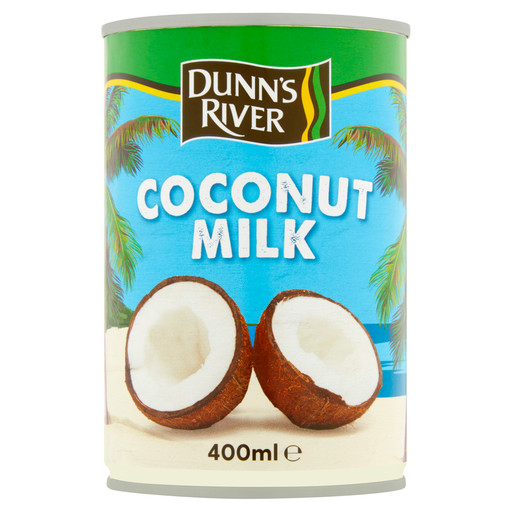
Dunns River Coconut Milk 400 ml
This 400 ml cooking coconut milk is described for curries. Check the current pack’s ingredients, allergen information and directions for storing any remainder.
No image available
Morrisons Reduced Fat Coconut Milk 400 ml
This reduced-fat cooking coconut milk is an option when a lighter curry sauce is the aim. Its 400 ml can should not be assumed to give a recipe the same richness as regular coconut milk; check the current pack for ingredients and storage directions.
 No image available
AROY-D Coconut Milk Cooking 19% Fat 400 ml
This 400 ml cooking coconut milk is described for curries and is labelled 19% fat. Check its current carton for ingredients and the applicable opened-pack storage period.
 No image available
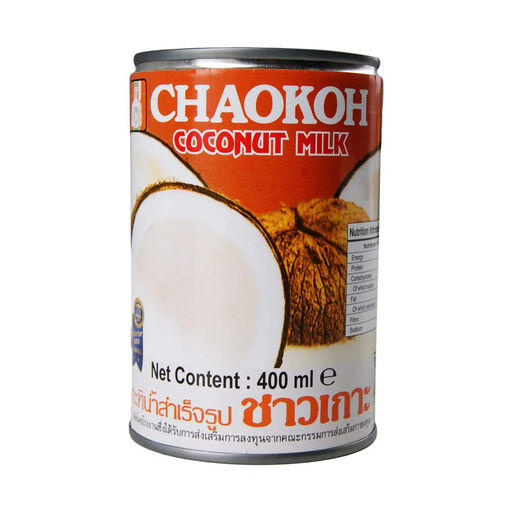
Chaokoh Coconut Milk Tinned 400 ml
This 400 ml tinned coconut milk is described for curry cooking. When comparing its nutrition with another product, check whether both labels use per 100 g or per 100 ml; follow the tin’s directions for leftovers.
 No image available
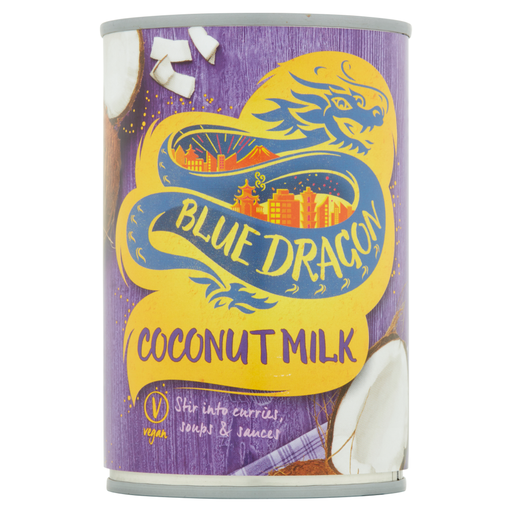
Blue Dragon Coconut Milk 400 ml
This 400 ml coconut milk is described for curry cooking. Check the current pack’s ingredient and precautionary allergen information, and compare nutrition values only on a matching per-100-g or per-100-ml basis.
Coconut milk for curry: questions answered
Is a long-life coconut drink the same as cooking coconut milk?
No. Alpro UK and Koko Dairy Free describe the examples here as coconut drinks or milk alternatives; their labels list 1.2 g and 1.4 g fat per 100 ml respectively. For a curry that relies on coconut milk for sauce richness, choose a cooking product unless the recipe specifically calls for a thinner milk alternative.
What label details help me choose a richer curry sauce?
Start with a product sold for cooking, then compare its coconut extract and fat values on the same nutrition basis. Waitrose & Partners lists Kingfisher Oriental Coconut Milk at 72% extract and 21.3 g fat per 100 ml; these are useful label details, not a guarantee of a particular flavour or finished texture.
Can I use reduced-fat coconut milk in a curry?
Yes, when a lighter sauce suits the recipe. Sainsbury’s lists 5.6 g fat per 100 ml for its Light coconut milk versus 14.8 g per 100 ml for its standard version, so do not assume the two will give the same richness.
How should I store coconut milk left after cooking?
Follow the directions on the product you opened, including any instruction to transfer and refrigerate the remainder. Tesco Groceries lists use within 2 days for its coconut milk, while Sainsbury’s lists 3 days for its standard product; the period is not universal.
Where should I check ingredients and allergens?
Read the current pack’s ingredient and allergen information before use, particularly if a specific ingredient affects your choice. Coconut extract levels and other ingredients differ between cooking products, so an older retailer listing is not a substitute for the pack in hand.


