Vegan cooks making roast gravy or creamy sides
If the recipe needs a substantial coconut base, compare cooking tins rather than assuming a coconut drink will behave the same way. Check the current pack for a vegan suitability statement.


For a Sunday-roast gravy or creamy side, start with tinned culinary coconut milk marked suitable for vegans if the recipe needs a rich coconut base; a coconut drink may give a thinner result. If independent vegan certification matters to you, check the mark on the exact pack against the certifier's product directory. Compare saturated fat on the nutrition label and check allergen information separately from vegan labelling.
If the recipe needs a substantial coconut base, compare cooking tins rather than assuming a coconut drink will behave the same way. Check the current pack for a vegan suitability statement.
A statement that a product is suitable for vegans is not the same as a third-party certification mark. Look for the mark on the exact pack and confirm the named product in the certifier's directory.
Compare nutrition panels if the richness of the sauce and its saturated-fat content both matter. If someone eating the roast has an allergy, check the exact pack's ingredients and precautionary allergen statements independently of its vegan label.
Choose the format the recipe calls for, then check the exact product's vegan claim, nutrition panel and allergen information.
| Priority | What to check | Your needs |
|---|---|---|
| Recipe fit | Check whether the recipe calls for tinned cooking coconut milk or a coconut drink. For cooking tins, compare coconut extract and fat on the labels without assuming either figure guarantees the finished texture. | I want a coconut base for gravy or a creamy side, rather than a drink-style ingredient that could leave the sauce thinner. |
| Vegan status | Check the current pack for a vegan suitability statement. If third-party certification is essential, look for a recognised mark and confirm the exact product in the certifier's directory. | A vegan statement may meet my needs, or I may want independent certification as well. The two claims are not interchangeable. |
| Allergens | Read the ingredients and precautionary allergen statements on the exact pack. The Food Standards Agency cautions that vegan labelling alone is not a substitute for allergen labelling because cross-contact can occur. | If someone at the table has an allergy, I need to check the product's allergen information, not rely on its vegan label. |
| Saturated fat | Compare saturates on equivalent nutrition panels and consider the amount the recipe uses. Marks & Spencer lists 15.1g saturates per 100g for its standard coconut milk and 8.2g per 100g for its reduced-fat version; the latter also has less coconut extract. | I may prefer a reduced-fat cooking tin, provided its lighter formulation suits the gravy or side dish I am making. |
Alpro lists 5.3% coconut milk and 0.9g fat per 100ml for Coconut Original Drink. That is a different formulation from the culinary tins listed by Waitrose and Marks & Spencer with 60% coconut extract, so the drink may give a thinner sauce.
Use a cooking tin when the recipe calls for one. Choose a drink carton only when the recipe specifies it or a lighter texture is acceptable.
A retailer's suitability statement does not establish that the exact product holds an independent certification. The Vegan Society sets criteria for its Vegan Trademark and provides a product search.
If certification is a requirement, check the current pack for the relevant mark and confirm the named product with the certifier.
Marks & Spencer lists 15.1g saturates per 100g for its standard coconut milk and 8.2g per 100g for its reduced-fat version. Reduced-fat does not mean free of saturated fat.
Compare the nutrition panels and the quantity your roast recipe uses; weigh a lighter formulation against the texture you want.
The Food Standards Agency says vegan labelling alone should not be used as a proxy for allergen labelling: cross-contact risks may still matter.
Before serving someone with an allergy, read the ingredients and precautionary allergen information on the specific pack.
These examples show why a coconut drink, a standard cooking tin and a reduced-fat tin need separate label checks; a retailer's vegan listing does not establish third-party certification.
Alpro Coconut Original is a vegan-labelled coconut drink, not a standard tinned cooking coconut milk.
Tesco lists Koko coconut alternatives among its dairy-free drinks.
Tesco separates tinned coconut milk from coconut drinks in its grocery categories.
Marks & Spencer lists standard and reduced-fat culinary coconut milks marked vegan.
Waitrose lists Essential Coconut Milk and Duchy Organic Coconut Milk as suitable for vegans.
These 400ml tinned coconut milks represent a reduced-fat option and another cooking-tin option for a roast sauce or side. Check the current pack against your recipe, vegan requirements and any allergen needs.
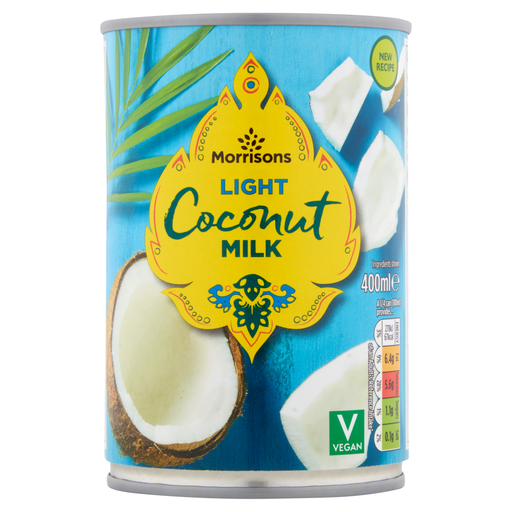 Image unavailable
Consider this reduced-fat tin for a roast sauce where a lighter formulation suits the recipe. Check its current coconut content, nutrition panel and vegan labelling; if certification or allergen information matters, inspect those details on the exact pack.
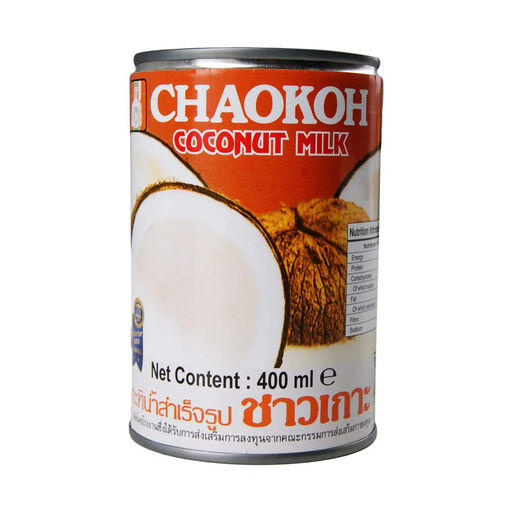 Image unavailable
This tinned coconut milk is an option to check for a coconut-based gravy or side dish. Compare the current pack's ingredients and nutrition panel with the recipe's requirements, and check vegan certification and allergen statements separately if needed.
Do not assume vegan suitability from the name alone. Check the current pack's ingredients and vegan statement; if you require independent certification, check for a recognised mark on that product.
Use a coconut drink only if the recipe calls for one or a thinner result is acceptable. Alpro lists 5.3% coconut milk and 0.9g fat per 100ml for Coconut Original Drink, whereas the Waitrose Essential and standard M&S cooking tins each list 60% coconut extract. Those formulations should not be treated as interchangeable in a gravy that relies on richness.
Look for a recognised certification mark on the exact current pack, then search for the named product in the certifier's directory. The Vegan Society provides a search for its Vegan Trademark; a retailer's 'suitable for vegans' statement alone does not confirm that certification.
No. The Food Standards Agency cautions that vegan labelling is not a substitute for allergen labelling because cross-contact can occur. Read the ingredients and precautionary allergen statements on the exact pack before serving it.