Hosts cooking party food
If the menu includes a mild curry, soup or sauce, start with a coconut cooking milk. Compare its per-100ml nutrition label and consider whether the recipe needs the texture of a cooking tin rather than a pourable drink.


For a party curry, soup or sauce, choose a light or reduced-fat coconut cooking milk; for a drink or smoothie, choose a coconut drink instead. Compare fat and saturates per 100ml within the format you need, then check the current pack and guests’ allergy requirements before serving.
If the menu includes a mild curry, soup or sauce, start with a coconut cooking milk. Compare its per-100ml nutrition label and consider whether the recipe needs the texture of a cooking tin rather than a pourable drink.
For a drink or smoothie, look for a product labelled as a coconut drink. If it is being chosen for a child who avoids dairy, check its ingredients and fortification against that child’s dietary requirements.
Confirm guests’ requirements before choosing ingredients. Check the current pack for ingredients and precautionary allergen statements, and keep that information available for each dish served.
Choose the cooking or drinking format first; its label then tells you which nutrition, ingredient and storage details apply to the product you will use.
| Priority | What to check | Your needs |
|---|---|---|
| Cooking or drinking | Check whether the pack is a cooking milk or a coconut drink. Follow the recipe if it specifies one format; a drink is not a like-for-like choice when a sauce needs the texture of a cooking milk. | I’m making a curry or sauce, so I need a cooking product rather than a ready-to-pour drink. |
| Fat and saturates | Compare both figures per 100ml on cooking tins. The reviewed Sainsbury’s, Tesco, Blue Dragon and essential Waitrose light or reduced-fat products list 5.6–6.2g fat and 4.9–5.5g saturates per 100ml, according to their retailer listings. | If I’m choosing a reduced-fat cooking milk, I want to compare the actual label figures, not rely on the word “light”. |
| Ingredients and allergens | Read the current pack for the exact product and check other ingredients in the finished dish. Tesco Groceries lists a “may contain peanuts and nuts” statement for Blue Dragon Light Coconut Milk; a vegan description does not remove that warning. | Before serving a group, I need to know whether any child must avoid an ingredient or a named precautionary allergen. |
| A child’s regular drink | Distinguish a recipe ingredient from a regular milk alternative. Sainsbury’s describes Alpro Coconut No Sugar as a drink containing calcium and vitamins B12 and D; check the chosen drink and the child’s age and dietary requirements rather than treating a cooking tin as equivalent. | A coconut drink may be on the party menu, but I don’t want to assume it meets a child’s everyday milk requirements. |
| After opening | Check the pack’s refrigeration and use-by-opening instructions before preparing food ahead. Waitrose & Partners instructs users of its essential reduced-fat coconut milk to refrigerate unused contents below 5°C and use them within two days. | If I’m preparing food before the party, I need to know how the opened product must be stored. |
A coconut drink and a canned cooking milk have different intended uses. A drink may not give a curry or sauce the texture expected from a cooking milk.
Check the recipe and the product description before buying. Choose a drink for serving or smoothies, and a cooking milk when the recipe calls for one.
A reduced-fat description does not tell you the amount of saturated fat. The four cooking products listed by Sainsbury’s, Tesco Groceries and Waitrose & Partners have 4.9–5.5g saturates per 100ml.
Read total fat and saturates separately, using the same per-100ml basis when comparing tins.
Tesco Groceries describes Blue Dragon Light Coconut Milk as suitable for vegans but also lists a “may contain peanuts and nuts” statement. Suitability depends on the allergies relevant to the guests and the whole dish.
Confirm requirements with the organiser or parents, then check the current labels of every ingredient before serving.
A light cooking milk is chosen for recipes, not on the basis that it provides the same nutrition as a child’s usual milk drink. Coconut drinks also differ in their fortification.
If a child follows a prescribed dairy-free diet, check the drink against their existing dietary guidance rather than substituting a cooking tin.
These are references for the particular products described below, not claims about every product made by each brand.
Tesco Light Coconut Milk is a canned cooking option.
Sainsbury’s Coconut Milk Light is a cooking milk rather than a ready-to-pour drink.
Blue Dragon Light Coconut Milk is a cooking product described for curries, soups and sauces.
Essential Reduced Fat Coconut Milk is a canned cooking milk.
Alpro Coconut No Sugar is a coconut drink, not a canned cooking milk.
This canned reduced-fat option is for party recipes that call for coconut cooking milk. Check its current label against your recipe and guests’ requirements.
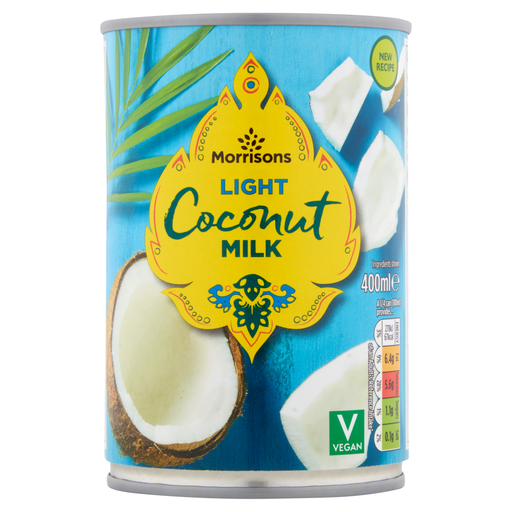 No image available
This 400ml canned reduced-fat coconut milk fits a party recipe calling for a coconut cooking milk. Compare fat and saturates on the current can, and check its ingredients and allergen statements against guests’ requirements before serving.
Not as a general rule. The Tesco Light and Sainsbury’s Light cooking milks listed by their retailers have coconut extract and water among their ingredients, while Sainsbury’s describes Alpro Coconut No Sugar as a plant-based drink. Check the current label of the exact product and every other ingredient in the dish when avoiding dairy.
Start with a light or reduced-fat cooking milk, not a coconut drink. The reviewed retailer listings give 5.6g fat per 100ml for Sainsbury’s Light, 6.0g for Tesco Light, and 6.2g for both Blue Dragon Light and essential Waitrose Reduced Fat. Check the recipe, saturates and current allergen label as well as total fat.
Do not assume it will give the same result. A coconut drink is intended for uses such as serving, smoothies or cereal, whereas canned coconut cooking milk is used in dishes such as curries and sauces. If the recipe specifies a cooking milk, use that format unless the recipe gives a suitable substitution.
Confirm guests’ requirements, read the current labels of all ingredients and keep the allergen information with the dishes served. In particular, Tesco Groceries lists a “may contain peanuts and nuts” statement for Blue Dragon Light Coconut Milk, despite describing it as suitable for vegans.
Do not treat a cooking tin as equivalent to a regular milk drink. For a child who avoids cow’s milk, the choice of a drink depends on their age, dietary requirements and the product’s fortification; follow any dietary advice already given for a diagnosed allergy or prescribed diet.