For cereal and breakfast coffee, start with an organic carton coconut drink rather than a can intended for cooking: Plenish describes cereal and coffee uses, while Waitrose positions its Duchy Organic can for curries, soups and desserts. In Great Britain, check that the organic claim applies to the finished drink, not just an ingredient. If coconut drink regularly replaces dairy, compare nutrition panels too; the Vegetarian Society notes that organic plant-based milks may lack added calcium, vitamin D and iodine.
Who is each option for?
Organic-first cereal and muesli eaters
If you want a coconut drink to pour over cereal, granola or porridge, look at carton drinks sold for that use. Check the finished product’s organic claim and ingredient list rather than choosing a cooking tin because its name says coconut milk.
People regularly replacing dairy
If coconut drink is your usual choice for cereal, tea or coffee, organic status and added nutrients are separate checks. The Vegetarian Society notes that organic plant-based milks may lack added calcium, vitamin D and iodine; compare the current nutrition panel if fortification matters to you.
Occasional coconut-flavour shoppers
For an occasional pour with breakfast, choose the format that fits the dish. Plenish describes its coconut drink for cereal and coffee, while Waitrose describes Duchy Organic canned coconut milk for cooking and desserts.
What should you check before buying?
Decide whether the product is for pouring or cooking, then check its organic claim, nutrition panel and ingredient list on the exact variant you intend to buy.
| Priority |
What to check |
Your needs |
| Organic status |
Check whether the finished drink is labelled organic and look for certification information on the pack. In Great Britain, GOV.UK says products labelled organic must meet organic production rules and certification requirements. |
I want an organic breakfast drink, not merely one that lists an organic coconut ingredient. |
| Breakfast format |
Look for a carton drink described for cereal or coffee. Waitrose describes its Duchy Organic can for curries, soups and desserts; its label lists 18 g fat and 15.8 g saturates per 100 g. |
For muesli and coffee, I need something intended as a pourable drink. I would choose a can when making a recipe that calls for coconut cooking milk. |
| Added nutrients |
If the drink regularly replaces dairy, inspect the nutrition panel for added calcium and vitamins rather than inferring them from an organic claim. Koko lists calcium, vitamin D2 and vitamin B12 for its separate Unsweetened drink; Rude Health also sells a separate chilled coconut drink with added calcium. |
When coconut drink is my regular dairy alternative, I want to know what the particular product provides, even if that changes which drink I choose. |
| Sweetness and ingredients |
Read the ingredient list and distinguish a no-added-sugar claim from the sugars shown on the nutrition panel. Rude Health describes its organic coconut drink as no added sugar and lists spring water, organic rice, organic coconut milk and sea salt. |
I prefer to check what will go into my cereal or coffee, rather than judging sweetness from the coconut flavour or the front of the pack. |
Common buying mistakes
-
Treating a cooking can as a carton drink
Plenish describes its coconut drink for cereal and coffee; Waitrose positions Duchy Organic canned coconut milk for curries, soups and desserts. The can’s label lists 18 g fat and 15.8 g saturates per 100 g, so it is a different choice for a breakfast pour.
For cereal, start with a carton drink. Choose canned coconut milk when a recipe calls for a richer cooking ingredient.
-
Assuming organic means fortified
The Vegetarian Society notes that organic plant-based milks may lack added calcium, vitamin D and iodine. An organic claim therefore does not answer what the drink contributes when it regularly replaces dairy.
Check the current nutrition panel. If added nutrients are a priority, compare the organic carton with a product that explicitly lists fortification.
-
Choosing from the words “coconut milk” alone
Carton drinks and canned cooking milks serve different uses, while organic status, added sugar and fortification belong to the exact product and variant.
Open the product details and check its format, finished-product organic claim, ingredients and nutrition panel before buying.
Relevant brand and product references
These examples illustrate different product choices; a brand name alone does not establish that every coconut product it sells is organic or fortified.
Plenish
Plenish describes a coconut carton drink for cereal, smoothies, baking and coffee, made with water, organic coconut, rice and salt.
- Its stated uses include cereal and morning coffee.
- If you use it as a regular dairy replacement, check the current carton’s nutrition panel for fortification.
Rude Health
Rude Health describes its organic coconut drink as no added sugar and lists spring water, organic rice, organic coconut milk and sea salt.
- The organic carton drink is a distinct option for shoppers checking ingredients and added sugar.
- Its chilled coconut drink with added calcium is a separate product; do not assume the two have the same organic status or nutrition panel.
Koko Dairy Free
Koko Unsweetened is a coconut drink to compare when added nutrients matter more than an organic claim.
- Koko lists added calcium, vitamin D2 and vitamin B12 for this product.
- Check the exact pack if organic certification is a requirement; fortification does not establish organic status.
Duchy Organic / Waitrose
Waitrose describes Duchy Organic Coconut Milk as a canned ingredient for curries, soups and desserts.
- The canned format is relevant when a recipe calls for coconut cooking milk.
- Its listed 18 g fat and 15.8 g saturates per 100 g describe this can, not a carton breakfast drink.
Joybuy product option
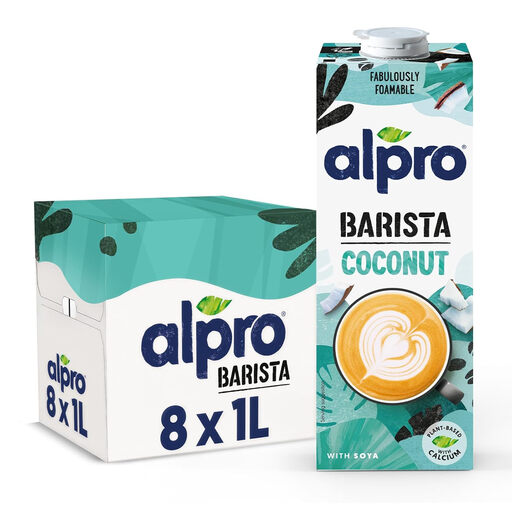
The option here is a coconut-containing barista drink for breakfast coffee. If you specifically want an organic drink to pour over cereal, check its organic claim and cereal use before choosing it.
 No image available
Alpro Barista Coconut Long Life Drink, 8 x 1 L
For breakfast coffee, this barista drink is a coconut-containing option to compare. The product is described as soya-based, so check its ingredient and allergen information if you avoid soya. Check the pack’s organic claim and suitability for cereal separately if either is important to your choice.
Joybuy
Questions about coconut milk for breakfast
How can I check whether a coconut drink is organic?
In Great Britain, GOV.UK says products labelled organic must meet organic production rules and the product and suppliers must be certified by an approved organic control body. Check the pack’s claim and certification information for the finished drink, rather than relying on an organic ingredient in the list.
Should I use a carton drink or canned coconut milk on cereal?
Choose a carton coconut drink intended for pouring over cereal. Plenish explicitly describes cereal and coffee uses, whereas Waitrose positions its Duchy Organic can for curries, soups and desserts. Use a can when you specifically need a coconut cooking ingredient.
Does an organic coconut drink have the same added nutrients as a fortified one?
Not necessarily. The Vegetarian Society notes that organic plant-based milks may lack added calcium, vitamin D and iodine. If coconut drink regularly replaces dairy for you, compare the exact nutrition panels; Koko lists calcium, vitamin D2 and vitamin B12 for its separate Unsweetened drink.
What should I check if I buy canned coconut milk for a recipe?
Check the can’s intended use, nutrition label and storage instructions. Waitrose describes Duchy Organic Coconut Milk for curries, soups and desserts and says to consume it within two days of opening; follow the instructions on the particular can you buy.


