Shoppers checking both gluten and FODMAPs
A gluten-free statement answers one question. For a low FODMAP diet, you also need to check the product type and the portion you intend to use.


For cereal or hot drinks, choose a pourable coconut drink whose current pack states that it is gluten-free, but check its low FODMAP suitability separately. Monash University rates unsweetened UHT coconut milk as low FODMAP at ¾ cup and moderate at 1 cup (250 ml); that guidance does not establish a suitable portion for every coconut drink or for canned cooking milk.
A gluten-free statement answers one question. For a low FODMAP diet, you also need to check the product type and the portion you intend to use.
A pourable UHT or chilled drink suits cereal and hot drinks. Check its gluten-free statement and compare the nutrition label if you use it regularly in place of milk.
If a recipe calls for canned coconut milk, check the can’s ingredients and gluten-free statement. Do not apply serving guidance for a UHT drink to a cooking product.
Start with the dietary statement on the current pack, then check the coconut-milk format and serving size before comparing drinks for regular use.
| Priority | What to check | Your needs |
|---|---|---|
| Two separate dietary checks | Look for a gluten-free statement on the current pack. For low FODMAP suitability, check the relevant product and serving in the Monash app or with a dietitian; a gluten-free statement does not establish either. | I need to avoid gluten while choosing a portion that fits my low FODMAP plan. |
| Format and portion | Distinguish a UHT coconut drink from canned cooking milk. Monash University rates unsweetened UHT coconut milk as low FODMAP at ¾ cup but moderate at 1 cup (250 ml); do not transfer that serving guidance to a different format. | For cereal or coffee, I want a pourable drink. For a curry, I need to check the cooking ingredient and its portion separately. |
| Regular milk replacement | Compare calcium and protein per 100 ml on individual drink labels. Monash University advises checking for calcium fortification of at least 120 mg per 100 ml when choosing a plant-based milk alternative. | If coconut drink regularly replaces milk for me, I want to compare the nutrition figures rather than assume the drinks are alike. |
| Current allergen information | Read the pack’s ingredients and allergen wording, particularly when avoiding nuts. Tesco describes Koko Dairy Free Unsweetened as free from nuts, while a Joybuy product page says it may contain nuts. | Where an allergen matters to me, I need the information on the pack I receive, not just an online description. |
A gluten-free product can still require a separate check of its ingredients, format and serving size for a low FODMAP diet.
Confirm the gluten-free statement on the current pack, then check the applicable portion in the Monash app or with a dietitian.
Monash University’s ¾-cup guidance concerns unsweetened UHT coconut milk. Marks & Spencer lists its canned cooking milk as containing 60% coconut extract; the UHT serving guidance should not be assumed to apply to that can.
Buy the format your recipe calls for and check portion guidance for that format.
Tesco describes Koko Dairy Free Unsweetened as free from nuts, but a Joybuy product page says it may contain nuts. That difference matters when nut avoidance is necessary.
Check the allergen wording on the physical pack before using the product.
Coconut drinks have their own nutrition labels; a gluten-free statement does not tell you their calcium or protein content.
If the drink regularly replaces milk, compare the figures per 100 ml on the products you are considering.
Koko Dairy Free Unsweetened is a UHT coconut drink to consider for pouring over cereal or adding to drinks.
Alpro Coconut No Sugars is a coconut drink with a gluten-free statement on Alpro’s UK product page.
Rude Health Chilled Coconut Drink is a chilled coconut-and-rice option.
M&S Coconut Milk is a canned cooking ingredient rather than a pourable coconut drink.
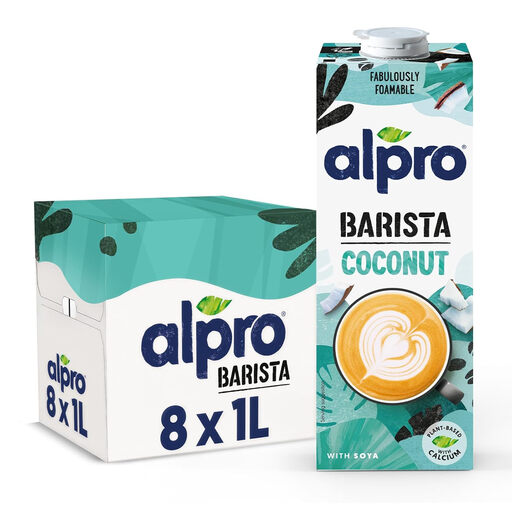
This barista-style coconut drink is an option for coffee use. Its gluten-free listing does not establish a low FODMAP portion for the exact product.
 No image available
For coconut drink in coffee, this barista variant is listed as gluten-free. Its listing also describes soya and sugar in the ingredients; check the current pack and confirm a portion suitable for this exact product before relying on it for a low FODMAP diet.
No. A gluten-free statement addresses gluten, while low FODMAP suitability depends on the product and portion. Monash University rates unsweetened UHT coconut milk as low FODMAP at ¾ cup but moderate at 1 cup (250 ml); check guidance applicable to the product you use.
Choose a pourable coconut drink for cereal or beverages, and canned coconut milk when a recipe calls for a cooking ingredient. Check gluten-free labelling and FODMAP portions separately for either format; guidance for unsweetened UHT coconut milk should not be assumed to apply to a can.
Compare calcium and protein per 100 ml on the drinks’ labels. Monash University advises looking for calcium fortification of at least 120 mg per 100 ml when selecting a plant-based milk alternative.
No. Cambridge University Hospitals describes low FODMAP restriction as temporary, followed by gradual reintroduction. The NHS notes that a dietitian may recommend this diet; seek individual guidance on the stages rather than treating a product label as a dietary plan.