Cooks making a lighter sauce
If you want coconut flavour in a gravy-style sauce, soup or vegetable side, a light culinary tin gives you a reduced-fat option. Compare the saturates declaration as well as the wording on the front of the can.


For a roast-dinner sauce or vegetable side, choose a canned light or reduced-fat coconut milk if reducing fat matters more than retaining a coconut-rich base. Compare saturates on the same nutrition basis and consider how much the recipe uses; if coconut milk supplies much of the dish’s body, check the coconut-extract percentage before switching from a standard cooking tin. A coconut drink is a different format, not an automatic substitute.
If you want coconut flavour in a gravy-style sauce, soup or vegetable side, a light culinary tin gives you a reduced-fat option. Compare the saturates declaration as well as the wording on the front of the can.
If coconut milk is central to the sauce’s texture, compare the coconut-extract percentage of light and standard cooking tins. A reduced-fat label alone cannot tell you how the finished dish will turn out.
If the recipe calls for culinary coconut milk, distinguish a cooking tin from a carton sold as a coconut drink. Check the exact product’s ingredients and any dietary information on its pack.
Start with the product format, then compare nutrition declarations on the same basis and decide how important coconut richness is to the recipe.
| Priority | What to check | Your needs |
|---|---|---|
| Saturates | Compare the saturates line using the same unit, preferably per 100ml for culinary tins. Check the quantity going into the dish rather than relying on “light” alone. Tesco lists Blue Dragon Light at 5.1g saturates per 100ml; Waitrose & Partners lists 5.5g per 100ml for Essential Reduced Fat. | I want to compare reduced-fat cooking tins without treating the front-of-pack description as the whole nutrition picture. |
| Coconut content | Read the coconut-extract percentage in the ingredients list where it is declared. Compare light and standard tins, but do not treat that figure alone as a measure of cooked texture or flavour. | When coconut milk gives my sauce much of its body, I need to know what changes before replacing a standard tin. |
| Cooking format | Check whether the product is sold as canned culinary coconut milk or as a coconut drink. Alpro describes its listed product as a drink; Koko’s listed carton contains 9% coconut milk, according to Sainsbury’s product information. | For a coconut-based vegetable side, I’m looking for a cooking ingredient unless the recipe specifically asks for a plant drink. |
| Pack instructions | Read the current ingredients and allergen information on the exact pack. Check its directions for cold separation, refrigeration and use after opening. | Allergen information and the time I can keep leftovers matter when I’m preparing several dishes for the same meal. |
The NHS identifies coconut milk as a source of saturated fat. A reduced-fat description compares a product with a reference product; it does not replace the saturates declaration on the can.
Compare tins on the same per-100ml basis where possible, then consider how much coconut milk the recipe uses.
Alpro describes its listed product as a coconut drink, while Koko’s listed carton contains 9% coconut milk. Neither description establishes that the drink will replace culinary coconut milk in a sauce.
Choose a culinary tin when the recipe specifies coconut milk for cooking; use a drink when the recipe specifically calls for that format.
Coconut-extract proportions differ between light and standard canned products. That formulation difference matters to consider when coconut milk is a principal ingredient, although it does not predict the finished dish’s taste on its own.
If richness is important, compare ingredient lists and try a smaller batch before changing a recipe you plan to serve to guests.
Culinary coconut milk can separate or solidify when cold, and directions for storing opened contents are product-specific. The current pack is also the place to check its ingredients and allergen statements.
Follow the can’s directions for mixing or warming it and for refrigerating and using any leftovers.
These examples help distinguish cooking tins from coconut drinks; each detail applies to the named product, not every item sold under the brand.
Tesco Light Coconut Milk is a 400ml culinary tin.
Essential Reduced Fat Coconut Milk is a 400ml culinary product.
M&S Reduced Fat Coconut Milk is a 400ml cooking tin.
Sainsbury's standard Coconut Milk is a culinary tin to consider when choosing between standard and light formulations.
Alpro describes its listed coconut product as a drink rather than coconut milk for cooking.
Koko Unsweetened Coconut UHT is a coconut-based drink.
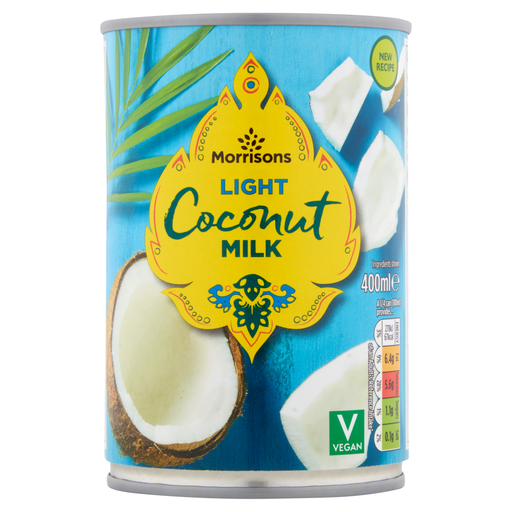
This cooking tin fits the reduced-fat canned route for a roast-dinner sauce or vegetable side. Check its pack against your recipe if coconut richness or allergen information matters.
 No image available
A 400ml canned coconut milk for cooking a sauce or vegetable side when you want a reduced-fat product rather than a coconut drink. Check the pack’s saturates, ingredients and storage directions for your needs.
No such conclusion follows from “light” alone. The NHS identifies coconut milk as a source of saturated fat, so read the saturates declaration on the exact can and compare products using the same unit.
Do not assume the two formats are interchangeable. Alpro describes its listed product as a drink, while Koko’s listed carton contains 9% coconut milk; if the sauce recipe specifies culinary coconut milk, start with a cooking tin unless the recipe gives a drink-based alternative.
Check the directions on the particular can before using it. Tesco and Waitrose note that their listed light or reduced-fat products can separate or solidify in cold conditions; follow the pack’s instructions for mixing or warming the contents.
Follow the exact can’s refrigeration, container and use-after-opening directions. Do not assume that another brand’s storage period applies to the product you bought.
Read the ingredients and allergen statements on the actual pack before use, including any precautionary wording. UK government food-labelling guidance describes ingredient lists including allergens; an older product listing is not a substitute for checking the item you have.