Hosts planning a coconut-forward dish
If the sauce or dessert is meant to have a noticeable coconut flavour, compare cooking tins rather than assuming coconut milk will be a neutral substitute for dairy in an Italian recipe.


For an Italian-night sauce or dessert designed to taste of coconut, choose cooking coconut milk rather than a 1L coconut drink. A standard tin suits a recipe that calls for a richer coconut result; consider a reduced-fat tin if the recipe can accommodate a lighter one. Plan the amount from the recipe, then check the exact pack’s instructions for storing anything left after opening.
If the sauce or dessert is meant to have a noticeable coconut flavour, compare cooking tins rather than assuming coconut milk will be a neutral substitute for dairy in an Italian recipe.
A large coconut drink is not automatically the right family pack for cooking. Check how much the recipe uses: Sainsbury’s labels its 400ml cooking tin as four servings, but serving information is specific to that product.
Compare a reduced-fat cooking tin with a standard one when the recipe can accommodate a lighter coconut result. M&S lists different fat and coconut-extract amounts for its two 400ml tins.
Start with what the dish calls for, then match the pack size and opened-pack instructions to the meal you are making.
| Priority | What to check | Your needs |
|---|---|---|
| Cooking or drinking | Check whether the product is sold for cooking or as a drink. Read the ingredients if the recipe calls for cooking coconut milk rather than a beverage. | My sauce or dessert is meant to taste of coconut, so I need a cooking ingredient. If I’m serving coconut drinks instead, a beverage is the relevant format. |
| Fat and coconut extract | Compare fat on the same per-100g or per-100ml basis, alongside the labelled coconut-extract percentage. M&S lists 17.3g fat and 60% coconut extract for its standard tin, versus 9.3g and 33% for its reduced-fat tin, per 100g. | For a dish that depends on a richer coconut result, I would not assume a reduced-fat tin gives the same texture. A lighter version is an option when the recipe can accommodate it. |
| Recipe quantity | Check the amount in the recipe, the pack quantity and any stated servings. Sainsbury’s labels its 400ml cooking tin as four servings; that does not establish the serving count of other tins. | I’m cooking for several people and want enough for the recipe without choosing a larger drink pack solely for its size. |
| Opened-pack storage | Read the exact product’s refrigeration and use-by instructions after opening. Sainsbury’s says to use its cooking tin within three days; M&S says to use its cited tins within two days. | If the recipe uses only part of a pack, I need a plan for the remainder that follows that pack’s label. |
| Guest ingredients | Read the current pack’s ingredient and allergen information, including any precautionary statement. Check the precise variant rather than relying on the product type. | When serving someone with an allergy, intolerance or particular ingredient requirement, I need to check the pack I will actually use. |
Alpro Coconut Original is a 1L drink made with water, coconut milk and rice; Alpro lists 0.9g fat per 100ml. Its formulation is different from the cited cooking tins, so pack size alone does not make it a substitute in a sauce or dessert.
Choose by the recipe’s intended product type. For a coconut-forward cooked dish, check the cooking tin’s ingredients, coconut extract and fat declaration; choose a drink when the menu calls for one.
M&S lists 9.3g fat and 33% coconut extract per 100g for its reduced-fat tin, compared with 17.3g fat and 60% extract for its standard tin. Do not assume the two will give a recipe the same body.
Decide whether a lighter result suits the dish before choosing the reduced-fat version.
Opened-pack instructions differ: the cited Sainsbury’s cooking tin says three days under refrigeration, the M&S tins say two days, and Joybuy’s Coconut Palm 1L drink says to consume it within 24 hours after opening.
Buy for the recipe quantity and any planned further use, then follow the instructions on the exact pack.
The ingredient and allergen information that matters is for the particular product being served. The Food Standards Agency states that UK labelling rules require the presence of any of the 14 main allergens used as ingredients or processing aids to be indicated.
Check the current physical pack before cooking for a guest with an allergy, intolerance or strict ingredient requirement, including any precautionary allergen statement.
These examples show why it helps to compare specific products and formats, rather than treating every coconut product from a retailer or brand alike.
Its cited 400ml cooking coconut milk provides a product-specific reference for planning a meal.
Its cited standard and reduced-fat 400ml cooking tins allow a comparison within the same range.
Tesco lists cooking coconut milk separately from coconut drinks.
Waitrose lists several coconut formats for different recipe quantities and uses.
Alpro’s cited coconut products are drinks, relevant when the family wants a beverage rather than a cooking tin.
These cooking coconut milk options cover standard and reduced-fat tins and cans for a recipe-based family meal. Check the recipe’s required quantity and the current pack label before choosing.
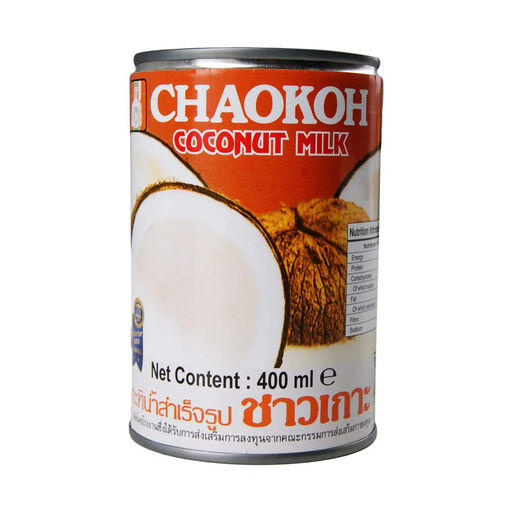 No image available
A cooking tin for a dish intended to have coconut flavour. Compare its 400ml quantity with the recipe and check the pack’s opened-tin instructions.
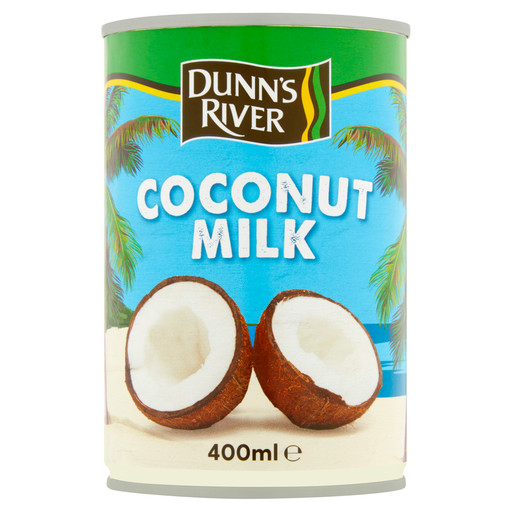 No image available
A cooking coconut milk option for a coconut-forward sauce or dessert. Plan the number of 400ml packs against the recipe rather than assuming a serving count.
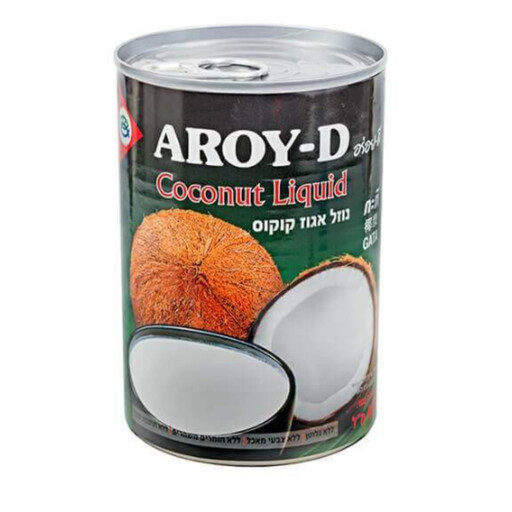 No image available
A 400ml cooking option labelled 17% fat for a recipe intended to use coconut milk. The product information flags possible traces of soy and milk; check the current pack carefully when serving guests with allergies.
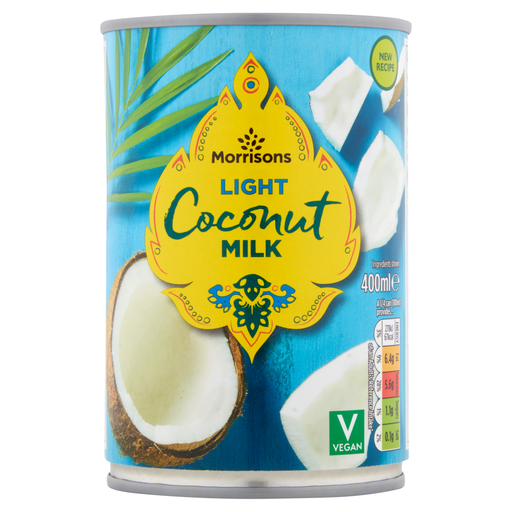 No image available
A reduced-fat cooking tin to consider when the recipe can accommodate a lighter coconut result. Do not assume it will give the same texture as standard coconut milk; check the recipe and the current pack label.
 No image available
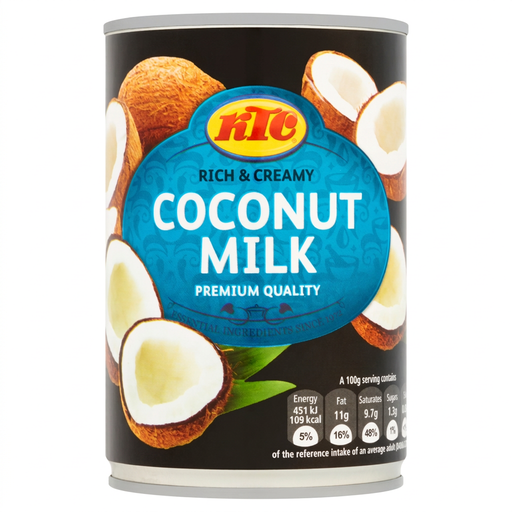
A canned cooking ingredient for a recipe that calls for coconut milk. Its pack is labelled 400g, so check the recipe quantity without treating that weight as a 400ml volume; check the pack’s fat declaration if it matters to the dish.
Use the amount specified by the recipe. Sainsbury’s labels its particular 400ml cooking tin as four servings, but that is not a serving rule for every coconut milk; if the recipe calls for more, plan the required quantity of cooking coconut milk rather than substituting a 1L drink just for its size.
Choose according to the result the recipe calls for, rather than assuming the two are interchangeable. M&S lists 17.3g fat and 60% coconut extract per 100g for its standard tin, compared with 9.3g fat and 33% extract for its reduced-fat tin; consider the latter when a lighter coconut result suits the dish.
Not automatically: a drink is a different product type. Alpro Coconut Original contains water, coconut milk and rice, while Joybuy’s Coconut Palm drink contains water and sugar. Use a drink for beverages or when a recipe specifically calls for that type of product; check a cooking coconut milk when the recipe calls for a tin.
Follow the exact pack’s storage directions. Sainsbury’s says to refrigerate its cited cooking milk and use it within three days; M&S says to refrigerate its cited tins and use them within two days, while Joybuy’s Coconut Palm 1L drink says to consume it within 24 hours after opening.
Read the current pack’s ingredients and allergen information, including any precautionary statement, before preparing the dish. The Food Standards Agency states that UK labelling rules require the presence of any of the 14 main allergens used as ingredients or processing aids to be indicated; still check the particular product and variant you intend to serve.