Choose reduced-fat tinned coconut milk when a snack recipe needs a coconut cooking ingredient, such as a dip, sauce or baked snack. Choose an unsweetened carton coconut drink when it calls for a milk alternative, such as in porridge or a smoothie; the British Heart Foundation distinguishes the more diluted drink from tinned coconut milk. Neither format tells you everything about the finished snack, so check the current pack’s nutrition, ingredients, allergen and storage information.
Who is choosing?
Parents making homemade holiday snacks
If you are making dips, pancakes or baked snacks, choose the coconut ingredient for the recipe rather than treating it as the whole snack. The NHS recommends fruit and vegetables as snacks for children and offers family food-swap guidance on sugar, salt and fat.
Families avoiding dairy
A carton coconut drink can suit a recipe that calls for a milk alternative; tinned coconut milk serves a different cooking role. Check the exact pack’s ingredients and allergen information before serving, especially where someone has a known allergy.
Home cooks adapting creamy recipes
If a recipe was written for regular tinned coconut milk, consider whether its texture depends on that ingredient. The British Heart Foundation distinguishes tinned coconut milk from the more diluted carton drink, so a carton swap may change the result.
What should you check?
Start with the recipe’s required format, then compare the relevant labels and plan how you will use the opened pack.
| Priority |
What to check |
Your needs |
| Recipe format |
Check whether the recipe specifies tinned coconut milk or a carton milk alternative. The British Heart Foundation describes coconut drinks as more diluted than tinned coconut milk. |
I want a cooking ingredient for a dip or sauce, not a thin drink that changes its texture. |
| Fat and saturates |
For reduced-fat tins, read fat and saturates on the current nutrition panel. Compare products on the same stated basis, such as per 100g with per 100g; the words ‘light’ and ‘reduced fat’ do not supply the exact values. |
For a recipe that needs a tin, I want to compare the actual figures before choosing a reduced-fat version. |
| Carton ingredients |
Check the exact variant’s ingredients, sugars declaration and any added calcium or vitamins. Alpro lists a Coconut No Sugars drink; Tesco lists calcium and vitamins D2 and B12 for Koko Unsweetened, while Koko lists concentrated apple juice in its Original drink. |
If I am making porridge, pancakes or a smoothie, an unsweetened milk alternative may suit the recipe; I do not want to mistake an Original variant for an unsweetened one. |
| Allergens and storage |
Read ingredients, allergen statements and opened-pack instructions on the current pack. Tesco and Sainsbury’s warn that product details can change; Sainsbury’s says to refrigerate its Light Coconut Milk after opening and use it within 3 days. |
Before serving a shared family snack, I need to check the pack that will actually be used and plan for any leftovers. |
Common buying mistakes
-
Assuming a carton drink and a cooking tin are interchangeable
The British Heart Foundation distinguishes diluted coconut drinks from tinned coconut milk. A recipe that depends on the tinned ingredient’s texture may turn out thinner with a carton drink.
Match the format named in the recipe: use a reduced-fat tin where it calls for coconut cooking milk, or a carton drink where it calls for a milk alternative.
-
Reading ‘light’ as an exact nutrition value
Reduced-fat tinned coconut milk still contains fat, and the amount depends on the product. The British Heart Foundation notes that even reduced-fat tinned versions contain around 8g fat per 100g as a general guide.
Read the specific pack’s fat and saturates figures, and compare labels using the same per-100g or per-100ml basis.
-
Picking an Original drink when you wanted unsweetened
Koko lists concentrated apple juice in its Original coconut drink. That ingredient list is not interchangeable with an unsweetened variant’s.
For a drink-based recipe where sweetness matters, check both the variant name and the current ingredients and sugars declaration.
-
Overlooking the pack after opening
Opened-pack instructions differ by product. Sainsbury’s says to refrigerate its Light Coconut Milk and use it within 3 days; retailers also advise checking current ingredients and allergen details.
Read the pack before serving and follow its storage period when planning another use for the remainder.
Brand and range references
These examples help distinguish cooking tins from carton drinks; check the exact variant rather than assuming a brand’s whole range has the same ingredients.
Tesco
Tesco lists a Light Coconut Milk 400ml cooking tin.
- A tinned option to consider when a snack recipe calls for coconut cooking milk.
- Tesco advises reading the current label because ingredients, nutrition and allergen details may change.
Sainsbury's
Sainsbury's lists Coconut Milk Light 400g in a cooking tin.
- Its product instructions say to shake before opening.
- Sainsbury's says to refrigerate after opening and use within 3 days; check the current label before use.
Waitrose Essential
Waitrose lists Essential Reduced Fat Coconut Milk 400ml alongside its regular Essential Coconut Milk.
- The two named tinned formats give shoppers a same-range choice for recipes calling for coconut cooking milk.
- Compare the exact cans’ current nutrition panels before judging their values.
M&S
M&S Food lists Reduced Fat Coconut Milk 400ml as a tinned cooking option.
- The named reduced-fat format is relevant to recipes requiring a cooking tin rather than a carton drink.
- Check the current pack’s nutrition information for the recipe you are making.
Alpro
Alpro Coconut No Sugars is a carton coconut drink for recipes that call for a milk alternative.
- Alpro describes this variant as having no sugars or sweeteners.
- Alpro distinguishes its coconut drink from coconut milk; do not assume it will give a tinned-milk recipe the same texture.
Koko
Koko Unsweetened is a carton coconut drink; Koko Original is a different variant.
- Tesco lists added calcium and vitamins D2 and B12 for Koko Unsweetened.
- Koko lists concentrated apple juice in Original. Check the variant and pack if an unsweetened drink is needed.
Joybuy product options
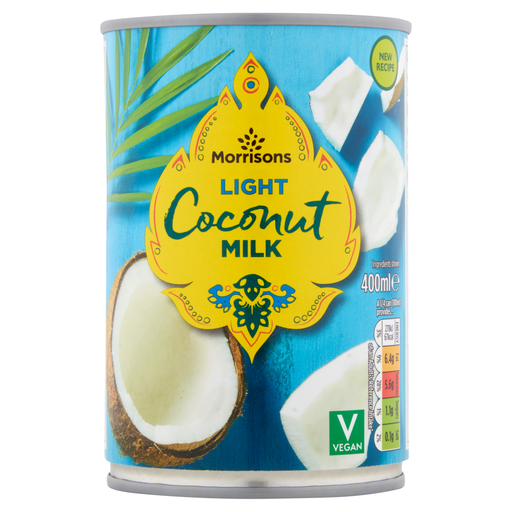
This tinned option is for recipes that call for reduced-fat coconut cooking milk, rather than a carton coconut drink.
 No image available
Morrisons Reduced Fat Coconut Milk 400ml
A tinned coconut ingredient for snack recipes that call for cooking milk, such as a sauce or baked snack. Check the current pack’s fat, saturates, ingredients, allergen information and opened-can instructions before use.
Joybuy
Frequently asked questions
Is reduced-fat tinned coconut milk the same as a coconut drink?
No. Reduced-fat tinned coconut milk is a cooking ingredient, while a carton coconut drink is a more diluted milk alternative, as the British Heart Foundation explains. Choose the format the recipe calls for, particularly when a dip or dessert depends on its texture.
Does reduced-fat coconut milk make a complete children’s snack?
No: it is an ingredient in a snack, not the snack by itself. The NHS recommends fruit and vegetables as snacks for children; if you are using coconut milk in a recipe, check the exact product’s nutrition label rather than relying on ‘reduced fat’ alone.
Can I use an Alpro or Koko coconut drink in a creamy dip?
Use a carton drink only if the recipe allows a thinner milk alternative. Alpro and Koko’s named carton products are drinks, whereas tinned coconut milk is the cooking format to check when a recipe relies on a thicker coconut ingredient.
How should I store opened Sainsbury's Light Coconut Milk?
Sainsbury's says to refrigerate its Light Coconut Milk after opening and use it within 3 days. Follow the instructions on the can you have; another product may give a different period.
What should I check before serving a coconut snack to someone with an allergy?
Read the current pack’s ingredients, allergen information and any precautionary statement before serving. Tesco and Sainsbury’s warn that product details can change, and the Food Standards Agency explains that precautionary allergen wording communicates a possible unintended presence of a regulated allergen.


