Hosts offering a dairy-free drink
If guests will add it to tea or coffee, look at carton coconut drinks rather than assuming a canned cooking milk will give the same result. Koko describes its Original Like Milk as suitable for hot and cold drinks.


Choose a carton coconut drink for guests to pour into tea or coffee, and a light or reduced-fat canned coconut milk when a cake or dessert recipe calls for a cooking ingredient. The products have different formulations, but their labels cannot tell you exactly how mild they will taste; compare the intended use and ingredients, then check the current pack before serving guests with allergies.
If guests will add it to tea or coffee, look at carton coconut drinks rather than assuming a canned cooking milk will give the same result. Koko describes its Original Like Milk as suitable for hot and cold drinks.
If a cake, filling or dessert recipe calls for coconut milk, compare canned products by their coconut extract and fat figures. Check the recipe before replacing its cooking milk with a thinner carton drink.
Check the ingredients and precautionary statements on the packs you use. The Blue Dragon Light listing, for example, states that it may contain peanuts and nuts; do not assume another coconut product carries the same statement.
Decide whether the coconut product is going into cups or into a recipe, then compare the labels of products in that format.
| Priority | What to check | Your needs |
|---|---|---|
| Tea and coffee | Look for a carton drink intended for beverages. Alpro UK lists 5.3% coconut milk and 0.9g fat per 100ml for Coconut Original; Koko Dairy Free lists 11% coconut milk for Original Like Milk. | I want guests to be able to add a coconut-based dairy alternative directly to their drinks. Neither label guarantees how subtle it will taste to them. |
| Baking and desserts | Check the recipe and compare canned products on the same measurement basis. Sainsbury's lists 40% coconut extract and 5.6g fat per 100ml for its Light coconut milk; M&S lists 33% coconut extract and 9.3g fat per 100g for its Reduced Fat product. | For a cake or filling that calls for canned coconut milk, I need to choose a recipe ingredient rather than substitute a carton drink without checking the result. |
| Allergen information | Read the current ingredient list and precautionary statements on each pack. Sainsbury's listing for Blue Dragon Light says it may contain peanuts and nuts. | Before I serve shared food or drinks, I want to know what is in the products I actually used and pass that information to guests. |
| Leftovers | Check storage instructions before opening a can. Sainsbury's Light says to refrigerate and use within three days; M&S Reduced Fat says to refrigerate and consume within two days. | If the party will use only part of a can, I can plan another dish and follow that pack's opened-storage instructions. |
Alpro's carton Coconut Original and Sainsbury's canned Light coconut milk have different stated formulations and uses. A substitution may change a drink or recipe.
Choose the format for the job: a drink to pour into cups, or canned coconut milk when the recipe calls for it.
“Light” does not establish how a product will taste in tea or a delicate dessert. Coconut-extract figures also differ between canned products.
Read the exact product label and consider the recipe; for drinks, start your search among carton alternatives.
Precautionary statements matter when guests have allergies: the Blue Dragon Light listing says it may contain peanuts and nuts.
Check the pack you bought and keep it available so you can tell guests which ingredients and statements apply.
The opened-storage instructions for the reviewed Sainsbury's and M&S cans differ, so one rule will not fit both.
Check your pack's instructions and plan another use within its stated period.
Unused coconut milk may need to be discarded once its opened-storage period has passed.
These brand examples illustrate differences between coconut drinks and cooking milks; they are not a list of products available from Joybuy.
Alpro Coconut Original is a carton drink to consider for the tea table.
Koko has a carton drink and a separate Cuisine coconut milk, so check which product a recipe or drinks table needs.
Its Light and regular canned coconut milks provide two recipe ingredients with different listed compositions.
Blue Dragon Light is a canned option for sweet or savoury cooking.
M&S Reduced Fat Coconut Milk is a canned cooking ingredient rather than a drink for pouring into tea.
This canned, reduced-fat coconut milk is an option to consider when an afternoon-tea baking recipe calls for coconut milk. For tea or coffee service, look for a carton drink instead.
 No image available
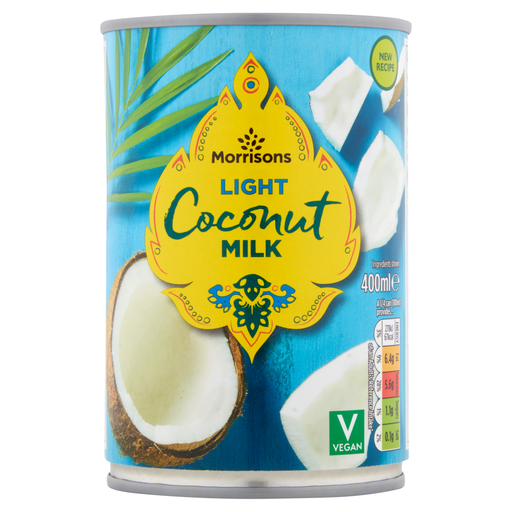
Consider this 400ml canned coconut milk for a baking recipe that calls for a cooking milk, rather than for pouring directly into tea. Reduced fat does not establish how mild it will taste; check the current pack's ingredients and allergen statements before serving guests.
For a mild drink-service option, start with a carton coconut drink intended for beverages. Light canned coconut milk is a cooking ingredient; its “light” label does not establish how it will taste in a cup.
Use a canned coconut milk when the recipe calls for one, and compare the exact product's ingredients and measurements. A carton drink is formulated differently, so check the recipe before substituting it.
Follow the instructions on your can. Sainsbury's says to refrigerate its Light coconut milk and use it within three days of opening; M&S says to refrigerate its Reduced Fat product and consume it within two days.
Read the current ingredients and precautionary allergen statements on every product you use, and tell guests what is in the food and drinks. The Blue Dragon Light listing says it may contain peanuts and nuts; do not assume that statement applies to every coconut milk.