Families cooking several lunches a week
A pack of separate tins may suit curries, soups or pulse dishes made on different days. Check how much each recipe uses so that opened coconut milk does not sit beyond its label’s refrigerated storage period.


For curries and soups, compare reduced-fat tinned coconut milk when saturated fat matters more to you than a rich sauce: Ocado lists 8.2g saturates per 100ml for M&S Reduced Fat and 7.9g for Biona Light, while its Pride standard product lists 12g; Biona lists 15.8g for its standard milk. A six-pack makes sense if you will use the unopened tins across several lunches, but a ready-to-drink coconut drink is a different choice and will give a thinner result in a sauce.
A pack of separate tins may suit curries, soups or pulse dishes made on different days. Check how much each recipe uses so that opened coconut milk does not sit beyond its label’s refrigerated storage period.
If coconut milk is a regular cooking ingredient, compare saturates per 100ml on the exact tin. The reduced-fat and standard products listed by Ocado and Biona have different values, so pack quantity alone does not answer this question.
A coconut drink can accompany cereal or be used in a smoothie. For a recipe that calls for the body of tinned coconut milk, check the product format before buying a drink instead.
Choose the format for the lunch you are making, then compare the nutrition label and the number of tins you can use while they remain sealed.
| Priority | What to check | Your needs |
|---|---|---|
| Saturated fat | Compare saturates per 100ml on like-for-like cooking products. Ocado lists 8.2g for M&S Reduced Fat, 7.9g for Biona Light and 12g for Pride standard; Biona lists 15.8g for its standard milk. | I use coconut milk regularly and want to compare reduced-fat tins with standard ones, rather than assume that every coconut product has the same saturated-fat content. |
| Product format | Check whether the product is tinned cooking milk or a ready-to-drink beverage. Alpro lists 0g sugars and 1.1g saturates per 100ml for Coconut No Sugars; Joybuy’s Coconut Palm drink lists 5g sugars per 100ml. | For a creamy curry, I need a cooking ingredient. For cereal or a drink, I would check the beverage’s sugar declaration instead. |
| Pack and storage | Biona lists a pack of six 400ml standard tins. Ocado’s instructions say to refrigerate opened M&S Reduced Fat and Biona Light and use them within two days; Pride’s period is three days. | Several sealed tins could cover lunches on different days, but I want each opened tin to match the amount I can use promptly. |
A ready-to-drink coconut beverage will give a thinner result than tinned cooking coconut milk in a sauce. Sugar content can differ between drinks too: Alpro lists 0g sugars per 100ml for Coconut No Sugars, while Joybuy lists 5g per 100ml for its Coconut Palm drink.
Decide whether you need a drink or a cooking ingredient, then read the exact product’s fat, saturates and sugars per 100ml.
Biona’s six-pack contains standard coconut milk with 15.8g saturates per 100ml. Its Light product lists 7.9g per 100ml, but the referenced Light listing is for a single 400ml tin.
Compare the nutrition panels before deciding on quantity; choose the pack format separately from the coconut milk formulation.
Ocado’s product instructions give two days of refrigerated storage after opening for M&S Reduced Fat and Biona Light, and three days for Pride. A multipack provides separate sealed tins, not a longer storage period for an opened one.
Check how much the first recipe needs and plan another use for any remainder within the exact product’s label instructions.
Biona lists a standard cooking coconut milk in a six-pack of 400ml tins and a separate Light product.
M&S Reduced Fat Coconut Milk is a 400ml tinned option for cooking.
Pride Coconut Milk is a standard tinned cooking option for dishes such as curries.
Alpro Coconut No Sugars is a coconut drink, rather than a direct substitute for tinned cooking milk in a creamy sauce.
This tinned, reduced-fat option is for cooked lunches made with coconut milk; it is a single tin rather than a family multipack.
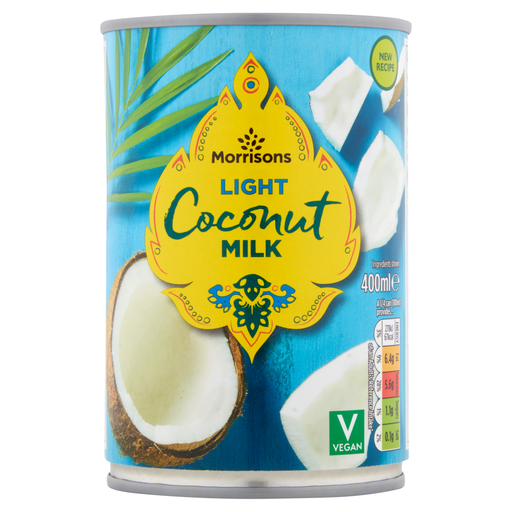 Image unavailable
A tinned cooking option if you want to compare reduced-fat coconut milk for a curry or soup. This is one 400ml tin, not a multipack; its product instructions say to refrigerate the contents after opening and use them within two days.
Compare saturates per 100ml on the tins you are considering. The NHS identifies coconut milk as a food containing saturated fat; among the cited cooking products, Ocado lists 7.9g per 100ml for Biona Light, 8.2g for M&S Reduced Fat and 12g for Pride standard, while Biona lists 15.8g for its standard milk.
You can use one if the recipe can tolerate a thinner, less rich sauce, but it is not a like-for-like swap. Check that you have a cooking product when the recipe calls for the body of tinned coconut milk, and read the sugar declaration if choosing a drink.
Follow the instructions on that tin: Ocado says to refrigerate and use opened M&S Reduced Fat and Biona Light within two days, and Pride within three days. Buying several sealed tins does not extend the storage period once one is opened.
Not necessarily: Pride’s product guidance says it can solidify in cold conditions and suggests shaking or gently warming and stirring it. Check the exact tin’s date, condition and storage instructions before use rather than judging by texture alone.