Hosts making a coconut-based recipe
For a curry, dessert or bake, look for a tinned cooking milk and check how much the recipe uses. Waitrose & Partners describes Duchy Organic Coconut Milk for curries, soups and desserts.


Choose tinned organic coconut milk when it will be an ingredient in a curry or dessert; choose an organic coconut drink when you need something to pour into cups or over cereal. For a children’s party, check the exact pack’s ingredients, allergen information and storage instructions. If the party is at a school, check the setting’s allergy policy before serving or substituting food.
The intended use matters more than the shared word “coconut” on the front of the pack.
For a curry, dessert or bake, look for a tinned cooking milk and check how much the recipe uses. Waitrose & Partners describes Duchy Organic Coconut Milk for curries, soups and desserts.
For cups, cereal or smoothies, look at coconut drinks rather than assuming a tin of cooking milk will serve the same purpose. Check the exact drink’s ingredients and allergen statements before offering it to guests.
Check the setting’s allergy arrangements and the needs of children attending before choosing or changing a product. The Department for Education says schools must publish an allergy safety policy covering known allergens.
Decide whether the coconut product is for a recipe or for pouring, then check the label against the party’s requirements.
| Priority | What to check | Your needs |
|---|---|---|
| Product format | Check the stated use and ingredients. Waitrose & Partners describes Duchy tinned milk for cooking and desserts; Tesco Groceries lists Plenish as a coconut-and-rice drink. | I’m making a coconut-based dish, rather than pouring drinks into cups—or the other way round. |
| Organic claim | Look for an organic claim on the finished product, not just the word “coconut” or a plant-based description. The Department for Environment, Food & Rural Affairs says products labelled organic require certification by an approved organic control body. | Organic status is part of my shopping requirement, so I need to check the exact pack I intend to buy. |
| Allergens | Read the current ingredients and precautionary statements, and check the venue’s arrangements. Tesco Groceries lists a nuts-and-soya production-environment warning for the Plenish drink. | A guest has a known allergy or dietary requirement; I need the product and any substitution checked against their arrangements. |
| Nutrition label | Compare saturated fat per 100g for a tinned milk or per 100ml for a drink, keeping those different measures in mind. Check the amount used in each serving of a shared recipe. | I want to know what is in the portion served, rather than treating a cooking ingredient and a drink as interchangeable. |
| After opening | Read the pack’s refrigeration and use-within instructions before deciding when to prepare the food or open a drink. | Party preparation may start ahead of serving, so I need a storage plan for opened packs. |
Tinned coconut milk is described for dishes such as curries and desserts, while coconut-and-rice drinks are sold for pourable uses. Swapping one for the other can change what you serve or how a recipe turns out.
Choose the format for the planned dish or drink, then check its stated use and ingredients on the exact pack.
An organic claim does not answer an individual allergy question. Tesco Groceries lists a nuts-and-soya production-environment warning for the Plenish coconut drink.
Check every pack’s current ingredient and precautionary statements. For a school party, follow the setting’s allergy policy before serving or making a substitution.
Organic labelling addresses certification; it does not tell you whether a product is intended for cooking or pouring, or what its nutrition label says.
Confirm the finished product’s organic claim, then read its stated use, ingredients, nutrition information and storage directions.
Opened coconut products have pack-specific refrigeration and use-within instructions, which matter if food is prepared before the party.
Check those instructions while planning preparation and refrigerate opened products as directed.
These examples show why the exact product matters: the brands below include cooking milks and drinks with different stated uses.
Waitrose & Partners describes its organic coconut milk as a tinned ingredient for curries, soups and desserts.
Biona Organic lists coconut and water as the ingredients of its Organic Coconut Milk 400ml, with coconut making up 50%.
Tesco Groceries lists Plenish Organic Coconut Drink as a coconut-and-rice drink containing 10% organic coconut milk.
Waitrose & Partners lists spring water, organic rice, organic coconut milk (7.5%) and sea salt for its organic coconut drink.
Sainsbury’s describes Koko Unsweetened Coconut UHT as a drink fortified with calcium and vitamins D2 and B12.
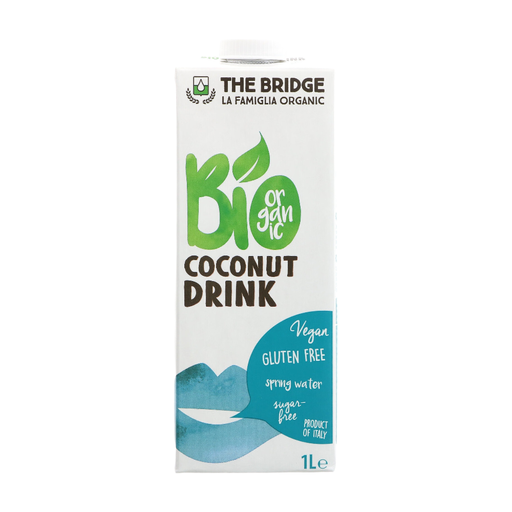
This pourable coconut drink is an option to consider for cups rather than as a tinned recipe ingredient. If the party calls for an organic product, check the finished pack’s organic claim before buying.
 No image available
A pourable coconut drink to consider when serving drinks rather than making a recipe with tinned coconut milk. Check the finished pack for its organic claim, ingredients and precautionary allergen information before serving it at the party.
No. Choose by intended use: Waitrose & Partners describes Duchy tinned coconut milk for curries, soups and desserts, while the Plenish and Rude Health examples are coconut-and-rice drinks. Check the exact product if a recipe specifies one format.
An organic label is a regulated claim. The Department for Environment, Food & Rural Affairs says products labelled organic must meet the applicable requirements, including certification by an approved organic control body. Check the claim on the finished product rather than inferring it from its brand or ingredients alone.
No. Tesco Groceries lists water, organic coconut milk, organic rice and sea salt for the Plenish drink, while Biona Organic lists coconut and water for its tinned milk. Those examples do not establish the ingredients or cross-contact information for every product, so read the current pack before serving.
Check with the school before bringing or substituting food, and follow its arrangements for children with known allergies. The Department for Education says schools must publish an allergy safety policy setting out how they reduce contact with known allergens.
Use the refrigeration and use-within instructions on the exact coconut milk or drink you open. Check them before preparing food ahead of the party, rather than assuming a tin and a drink carton have the same storage directions.