Home cooks making winter curries and soups
If coconut milk forms part of the cooking base, look for a culinary product intended for curries, soups or sauces rather than choosing a coconut drink by name alone.


For a curry, soup or dessert that calls for cooking coconut milk, choose a product intended for cooking, whether it comes in a can or a cooking-specific carton. A coconut drink intended for coffee or cereal serves a different purpose and should not automatically replace the cooking ingredient. The word ‘filtered’ does not establish whether a coconut product suits your recipe; check its intended use, ingredients, nutrition and storage instructions instead.
The dish or drink you have in mind is the starting point: products sold as coconut milk do not all have the same intended use.
If coconut milk forms part of the cooking base, look for a culinary product intended for curries, soups or sauces rather than choosing a coconut drink by name alone.
A coconut drink intended for coffee, cereal or other drinks is a separate choice from culinary coconut milk. Check the use stated on its pack before putting it into a recipe.
If saturated fat or unused coconut milk affects your choice, compare nutrition information on the same stated basis and read the particular pack’s instructions for storage after opening.
Decide whether you need a cooking ingredient or a drink first. Then compare the labels of products intended for that use.
Choose when: Your curry, soup, sauce or dessert calls for coconut milk as a cooking ingredient.
Bear in mind: Plan how you will use any remainder and follow the can’s instructions after opening.
Choose when: You want coconut milk intended for cooking in a resealable format, such as the carton Koko describes for Koko Cuisine.
Bear in mind: A carton is not necessarily a drink; check its intended use rather than relying on the packaging shape.
Choose when: You need a product intended for coffee, cereal or drinking rather than a cooking base.
Bear in mind: Check the recipe before substituting a drink for culinary coconut milk.
| Priority | What to check | Your needs |
|---|---|---|
| Recipe use | Look for a stated cooking use, such as curries, soups, sauces or desserts. For a drink, check whether the pack instead describes coffee or cereal use. | My curry needs coconut milk as part of its cooking base; a carton sold for coffee is not an automatic substitute. |
| Ingredients | Read the full ingredient list and the declared coconut content, where given. Compare products intended for the same use rather than treating one percentage as proof of recipe performance. | I want to know what is in the product before deciding whether it fits my dish or drink. |
| Saturated fat | Check saturated fat per 100g or per 100ml and keep those units distinct. The NHS describes more than 5g per 100g as high in saturated fat; also consider how much the recipe uses. | For a dish I make regularly, I want to compare the nutrition panels on a consistent basis. |
| Allergens | Read the current pack’s ingredients and precautionary allergen statements for the exact product. Do not assume two coconut products have the same recipe. | If I need to avoid an ingredient, the label on the product I buy matters more than its coconut-milk category. |
| Leftovers | Check pack size, refrigeration instructions and the stated use-within period after opening. Plan another use for any remainder. | I may only need part of a pack for one meal, so I want its opened-pack instructions to fit my plans. |
| ‘Filtered’ wording | Check whether the product is intended for your recipe or drink. A Sainsbury’s milk listing uses ‘filtered’ for dairy milk; the word alone does not identify a culinary coconut milk. | When shopping for a winter dish, I need a suitable cooking product, not just a familiar word on a milk listing. |
A coconut drink intended for cereal or coffee has a different stated use from products sold for curries, soups and desserts.
For a dish that calls for coconut milk as a cooking ingredient, check the use statement before comparing ingredients and nutrition.
Words such as ‘organic’ or ‘rich’ do not give you a saturated-fat figure. Nutrition panels may also use different per-100g and per-100ml units.
Read the saturated-fat value and its unit on each pack before comparing products.
Opened-pack storage and use-within instructions differ between products, which matters when a recipe uses only part of a pack.
Check those instructions before buying and plan how to use the remainder.
Unused contents may go to waste if they cannot be used within the pack’s stated period.
Products intended for cooking and drinking can have different ingredient and allergen statements.
If an ingredient matters to your purchase, read the current label on the exact pack rather than relying on a different product’s listing.
These examples illustrate cooking and drink formats; a brand name alone does not tell you which type of coconut product is in the pack.
Sainsbury’s lists a 400ml coconut milk for cooking.
Koko has distinct products for cooking and for use as a drink.
Its coconut milk is presented for curries, soups, sauces and desserts.
Waitrose & Partners presents Duchy Organic Coconut Milk for curries, soups and desserts.
Tesco lists Alpro products in its coconut-drinks category, including a long-life drink.
These options cover a coconut milk for cooking and a long-life coconut drink for coffee. Choose according to the use your recipe or drink calls for.
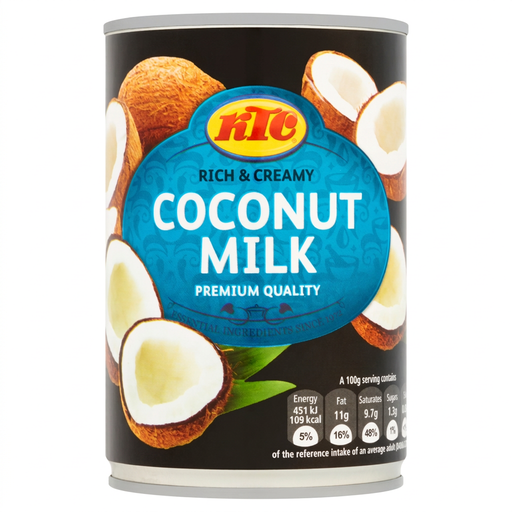 No image available
A coconut milk option for cooking when a curry or dessert calls for that ingredient. The listed pack size is 400G; check the current pack for ingredients, nutrition and instructions for any contents left after opening.
 No image available
A coffee-oriented coconut drink rather than a direct choice for a curry base. The listed bundle contains 8 x 1L; check the current ingredients if you need to avoid soya, and check your recipe before substituting it for culinary coconut milk.
Not on its own. A Sainsbury’s milk listing uses ‘filtered’ for dairy milk, while its coconut milk is listed as a separate cooking product. For a curry, soup or dessert, look for a stated cooking use and check the pack’s ingredients and instructions.
Do not assume it will serve the same role. Coconut drinks are sold for uses such as coffee and cereal, while culinary coconut milks are presented for dishes including curries and soups. If you are considering a substitution, check what your recipe requires and the intended use on the drink’s pack.
Follow the refrigeration and use-within instructions on the particular pack. Check them before opening if your recipe needs only part of the contents, and plan another use for the remainder.
Compare values stated on the same basis and account for the amount your recipe uses. The NHS describes more than 5g of saturated fat per 100g as high; a value stated per 100ml is a different labelling basis and should not be read as though it were per 100g.
Yes. Read the current ingredients and allergen statements on the exact product you buy, particularly if you need to avoid an ingredient. Do not assume that another coconut milk or drink has the same recipe.