Dairy-free cream tea hosts
If you are serving scones and hot drinks, choose the drink and the scone topping separately. The National Trust's vegan cream-tea recipe makes a cream-style topping rather than using a coconut drink for that role.


A coconut drink is a pourable option for hot drinks, but it will not take the place of a cream-style topping on scones. For a cream tea, choose a separate spoonable topping; for packed portions, check whether a multipack contains individual cans or pots, then check storage and ingredients. Coconut-flavoured products are not necessarily dairy-free: the Chunguang cans shown below contain a milk-derived ingredient.
If you are serving scones and hot drinks, choose the drink and the scone topping separately. The National Trust's vegan cream-tea recipe makes a cream-style topping rather than using a coconut drink for that role.
Individual portions matter if you do not want to pour from a larger carton. Tesco Groceries lists coconut drinks in 1L cartons, while the M&S Coconut Pot is a chilled, spoonable product; check each multipack's unit size and storage instructions.
Check the exact product's ingredients and nutrition label rather than treating every coconut product alike. NHS guidance includes unsweetened, calcium-fortified plant alternatives in its dairy-and-alternatives food group.
Decide whether you need a drink, a spoonable pot or a topping for scones before comparing pack sizes and labels.
| Priority | What to check | Your needs |
|---|---|---|
| Portion format | Read the unit count and size. Distinguish individual cans or pots from a multipack of larger cartons. | I want portions that can be packed or served individually, without decanting a 1L drink. |
| Role at a cream tea | Check whether the product is pourable, spoonable or intended as a cream-style topping. The National Trust's vegan cream-tea recipe prepares its topping separately. | For hot drinks, I need something pourable. For scones, I want a separate topping rather than a coconut drink. |
| Storage | Follow the exact pack's unopened and opened storage directions. M&S says its Coconut Pot must be refrigerated at 0°C to +5°C. | If I am packing lunch or serving food away from home, I need to know how the chosen item must be kept. |
| Ingredients | Read the received pack's ingredient and allergen label. Do not assume a coconut drink is dairy-free; the Chunguang cans listed below contain milk-derived sodium caseinate. | A dairy-free cream tea needs products without dairy ingredients, including any drink served alongside the scones. |
| Nutrition label | Check sugars, fat and saturates per 100ml for drinks or per 100g for spoonable products. If calcium fortification matters to you, check the exact label. | I want to compare products that serve the same purpose, rather than assuming a coconut drink and a coconut pot have the same composition. |
A pourable drink serves a different purpose from a cream-style topping. The National Trust's vegan cream-tea recipe makes the topping separately.
Choose a drink for cups or recipes, and arrange a separate topping if you want one for scones.
Several cartons sold together are not the same format as individually packed lunchbox portions.
Check both the number of units and the size of each unit before choosing a pack.
A coconut-based pot may need chilling: M&S specifies 0°C to +5°C for its Coconut Pot.
Read the storage directions for the exact product and plan transport around them.
Coconut in the product name does not establish that it is dairy-free or calcium-fortified. The Chunguang coconut drink on this page contains milk-derived sodium caseinate.
Check the received pack's ingredients and nutrition label against the reason you are buying it.
These examples show different coconut-product formats; they are not all individual-portion multipacks.
Alpro's Coconut No Sugars is a pourable coconut drink for shoppers considering a dairy alternative for cups or recipes.
Koko describes its Unsweetened No Sugar Milk as a drink that can also be used in sweet or savoury cooking.
Tesco Groceries lists own-label and branded coconut drinks in its coconut-drinks category.
M&S describes its Coconut Pot as a spoonable, coconut-cream-based alternative to yoghurt.
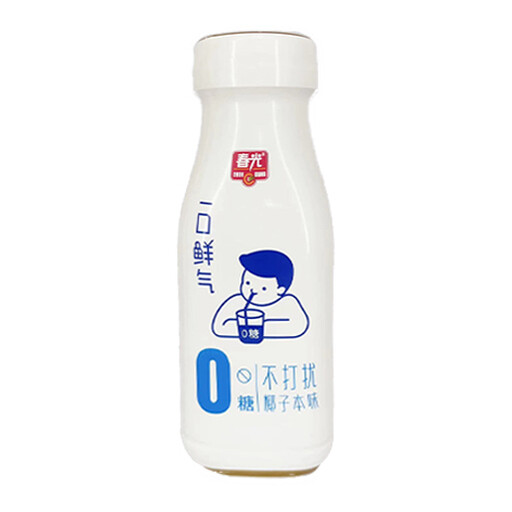
This selection is an individually portioned coconut drink in cans, not coconut pots or a topping for scones. Its milk-derived ingredient also rules it out for a dairy-free cream tea.
 No image available
Fifteen individual 245ml cans provide drink portions rather than spoonable pots. The listing identifies milk-derived sodium caseinate, so this product is not suitable for a dairy-free cream tea; check the received pack's allergen label. Check its unopened storage directions before choosing it for a packed lunch.
No, a pourable coconut drink does not serve the same role as a cream-style topping. The National Trust's vegan cream-tea recipe makes a separate topping with plant-based margarine, icing sugar, vanilla and oat milk.
Check the exact pot's storage directions before packing it. M&S says its Coconut Pot must be refrigerated at 0°C to +5°C, so transport needs to maintain those conditions.
Compare the exact packs' ingredients, sugars, fat and calcium fortification. NHS guidance includes unsweetened, calcium-fortified plant alternatives in its dairy-and-alternatives food group; do not assume every coconut drink meets those conditions.
Read the label on the pack you receive. M&S warns that ingredients and allergen information can change, and the Chunguang coconut drink shown here is listed with milk-derived sodium caseinate.