
24/7 Customer Support

Free returns

Same-day & Next-day Delivery

Quality Guaranteed

Unlock Your Welcome Offers: FREE Delivery | Up to 80% OFF | Free 30-day JoyPlus trial
Download the APP
A coconut water multipack can be a practical addition to a weekly shop, gym bag or family fridge. It offers a ready-to-drink alternative to fizzy drinks and can be used in smoothies, breakfast recipes or as a refreshing post-workout hydration drink.
However, the front of a carton does not always tell the whole story. “Natural”, “electrolyte” and “low-calorie” can describe very different products. Before buying in bulk, check the ingredients, serving size, storage instructions and total volume.
Some products contain coconut water alongside fruit sugar, vitamin C or other ingredients. For example, Vita Coco products listed here contain 99% coconut water, less than 1% fruit sugar and an antioxidant, vitamin C. That is different from a product labelled 100% coconut water, such as Kara or Grace varieties in this selection.
Neither format is automatically right for every shopper. If your priority is no added sugar coconut water or a short ingredients list, read the full declaration rather than relying on front-of-pack wording.
A six-pack of 1L cartons contains 6 litres, while a 12-pack of 330ml cartons contains 3.96 litres. The larger number of cartons does not necessarily represent better value.
For a fair comparison, calculate:
This avoids paying more for smaller, individually portioned coconut water drinks when a family may prefer 1L cartons.
Shelf-stable coconut water cartons are convenient before opening, but most need refrigeration afterwards. Instructions vary by product. Vita Coco recommends consuming opened 1L cartons within 24 to 48 hours, while Grace and FOCO advise using opened cartons within two to three days. Kara recommends refrigerating any remainder and consuming it promptly.
If you live alone or usually drink coconut water in small amounts, 330ml cartons may reduce opened-carton waste. For families, smoothies or shared meals, a coconut water 1L format may be more practical.
Look for the exact percentage of coconut water and whether the drink is from concentrate, not from concentrate or made with additional ingredients. A product can contain naturally occurring sugars even when it has no added sugar.
The nutrition panel is the clearest comparison point. In the products listed here, energy is approximately 19–22 kcal per 100ml, although the figure varies by product. A 330ml carton will naturally contain more calories and sugar than a 100ml serving, so compare like for like.
Coconut water naturally contains minerals such as potassium. For instance, Vita Coco lists 185mg potassium per 100ml, while its 330ml serving lists 611mg. Chaokoh provides nutrition per 330ml, including 630mg potassium.
This makes coconut water an appealing electrolyte drink for everyday refreshment, but it should not automatically be treated as a complete sports drink. If you need a drink for a specific training plan, compare the full nutrition panel, including carbohydrate and sodium, rather than focusing on potassium alone.
Choose the format around your routine:
Most of the options below are suitable for vegetarians or vegans, but always check the current packaging if dietary suitability is essential.
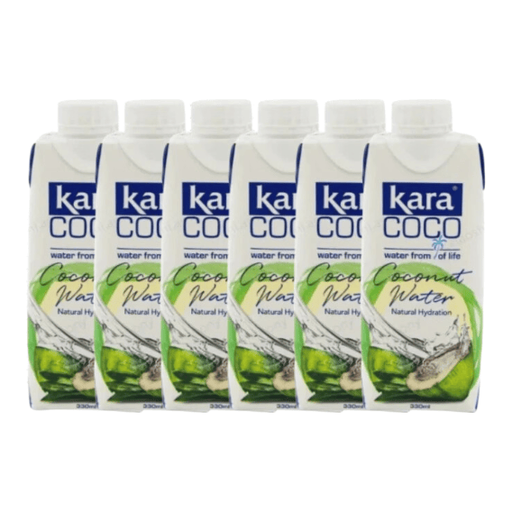
Why This Fits Their Persona: A six-pack of individual 330ml cartons provides a smaller commitment for shoppers trying natural coconut water for the first time, while also working for packed lunches and daily refreshment.
The 330ml format makes portion size clear and avoids opening a large carton that may not be finished promptly.
Listed as 100% coconut water, with 19 kcal per 100ml and no added sugars.
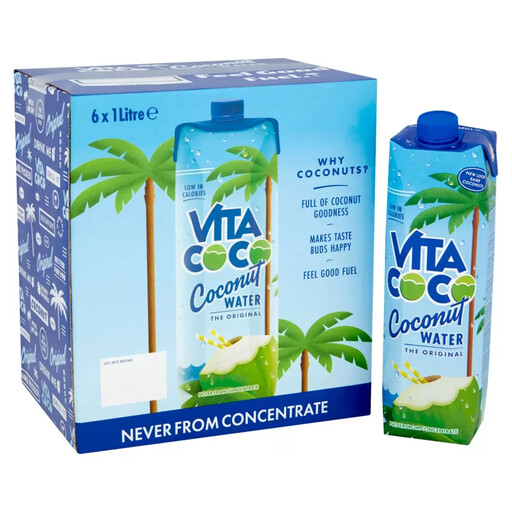
Why This Fits Their Persona: This six-litre format suits regular drinkers who want larger cartons for breakfast, meal preparation or blending into smoothies.
The ingredient list is visible for comparison: 99% coconut water, less than 1% fruit sugar and vitamin C.
Provides 19 kcal per 100ml, 185mg potassium per 100ml and a vegan-friendly recipe according to the supplied product information.
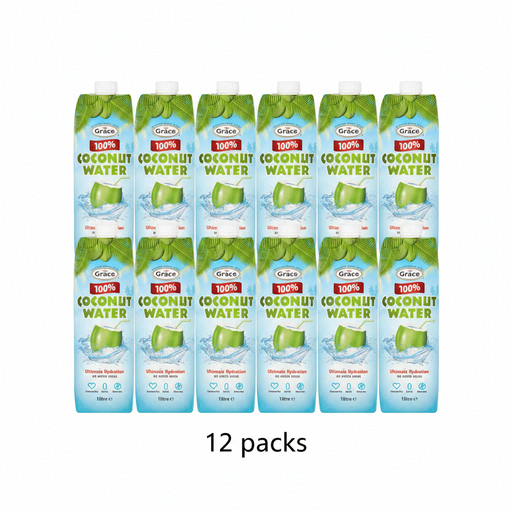
Why This Fits Their Persona: Twelve 1L cartons are suited to households, frequent users and shoppers who regularly use coconut water drinks in smoothies or shared meals.
The product information states 100% coconut water and no added sugar, so shoppers can distinguish it from recipes containing fruit sugar or flavour additions.
A 12-litre total pack, 22 kcal per 100ml, zero fat and a carton format designed for storage before opening.
Keep unopened cartons according to the label, generally in a cool, dry place away from direct sunlight. Chilling improves the drinking experience, particularly for a low-calorie drink served after exercise or on a warm day.
Shake gently if the packaging advises it, then refrigerate leftovers promptly. Use the stated post-opening period rather than assuming every coconut water has the same lifespan. Coconut water can also replace part of the liquid in a smoothie, but remember that adding banana, mango or other ingredients changes the overall nutritional profile.
We have compiled a complete, real-time list of products that fully satisfy these strict selection criteria and UK safety regulations.
It can be convenient after light or moderate exercise because it contains fluid and naturally occurring minerals such as potassium. Its carbohydrate and sodium levels vary, so check the nutrition panel and choose a drink that matches your activity and wider diet. Water may remain sufficient for many everyday activities.
This depends on the product. Supplied guidance ranges from 24 hours to three days for the products listed here. Refrigerate immediately after opening and follow the carton’s instructions rather than relying on the best-before date, which generally applies to the unopened product.
A 1L carton often suits repeated household use, while 330ml cartons can reduce waste and provide controlled portions. Compare the cost per litre, total pack volume and how quickly your household will finish an opened carton before choosing a multipack.