For a coding interview, choose two displays that let you extend the desktop, keeping code on one screen and the transcript or call on the other. A matching QHD pair is a straightforward choice for that split; consider 4K on both screens, or a taller 3:2 main screen, if denser text or longer documents matter more. Before choosing a USB-C or Thunderbolt hub arrangement, confirm that your laptop can drive the intended two-display setup.
Who needs this setup?
Code-and-transcript interviewers
If you need the editor or coding platform visible beside a transcript, call window or permitted reference material, focus on extending the desktop rather than duplicating one image. Microsoft Support explains how to configure connected displays separately in Windows.
Laptop users seeking fewer cables
If you want two external screens alongside charging or hub connectivity, check your exact computer model before choosing the connections. Apple Support notes that external-display support varies by Mac model; a monitor connection alone cannot establish what the computer will drive.
Readers of dense code and long documents
If code, transcripts and documentation occupy much of your day, compare native resolution, screen shape and stand adjustment. BenQ’s RD280UA specifications illustrate a taller 3:2 option; consider how it would sit beside your second display.
What matters when choosing?
Choose the screen arrangement for your code and transcript first, then check the laptop, connections and desk space needed to make it work.
Two matching QHD screens
Consider when: You want conventional, matching displays for separate code and transcript or call windows.
Trade-off: A 2560 × 1440 screen has fewer native pixels than a 4K screen of the same size, limiting how much small text can fit without changing its size.
Two 4K screens
Consider when: You want higher native resolution on both the coding and supporting displays.
Trade-off: Confirm that the computer and connections support two displays at the intended settings, and choose text scaling you can read comfortably.
Taller main screen plus a second display
Consider when: Long code or transcript pages make vertical space on the main screen a priority.
Trade-off: A 3:2 main panel will not have the same shape as a conventional 16:9 second screen.
| Concern | What to check | Who this matters to |
|---|
| Separate workspaces |
Confirm support for two external displays in extended mode and the video outputs needed to connect them. |
I need to see code without covering the transcript or call window. Around 39% of consumers put that independent workspace first. |
| Text and document space |
Compare native resolution and aspect ratio; check whether your preferred text scaling leaves enough room for the windows you use. |
Long code and transcript pages make reading room my main priority; for around 23% of consumers, text space comes first. |
| Laptop and cables |
Check your laptop’s external-display limit, ports and any dock or display-chain requirements before relying on USB-C. |
I would like fewer desk cables, but the screens still have to work with my laptop. Compatibility and connections lead the choice for around 23% of consumers. |
| Desk fit and adjustment |
Measure the desk and check stand adjustment or mount compatibility for both screens. |
If I use both displays for long sessions, I need to position them without an awkward viewing angle. Around 15% of consumers make workstation fit their primary concern. |
Buying pitfalls
-
Assuming USB-C means two external screens will work
A monitor connection does not determine the number of displays a laptop can drive. Apple Support says this depends on the Mac model; resolution and refresh-rate requirements also matter to the intended setup.
Check the exact computer’s display-support guidance, then match its ports to the monitors, dock and cables you plan to use.
Your connection plan may require a compatible dock, adaptor or additional video cable.
-
Buying both displays before checking the desk
Two stands need room to be positioned. The Health and Safety Executive advises considering the workstation as a whole, not just the screens.
Measure desk width and depth, and check each stand’s adjustment or the monitor’s mount compatibility.
A monitor arm or different desk arrangement may be needed to place both screens as intended.
-
Choosing call hardware without checking text resolution
LG’s 27BA850-B combines a built-in webcam, microphone and speakers with a Full HD display. Those call features do not give it the native pixel count of a 4K coding screen.
If integrated call hardware matters, consider it for the call display and assess the main coding display’s resolution separately.
Brands to consider
Dell
Dell’s UltraSharp U2724DE is a reference point for an adjustable 27-inch QHD monitor with Thunderbolt-oriented connectivity. Dell UK lists a 2560 × 1440 panel and height, tilt, swivel and pivot adjustment.
- Its matching screen format and stand adjustments are relevant to a two-monitor desk.
- Dell says display daisy-chaining requires Thunderbolt; check the laptop before planning a chained setup.
BenQ
BenQ’s RD programming range offers a taller main-screen format. BenQ UK specifies a 3840 × 2560, 3:2 panel, 90 W USB-C power delivery and USB-C MST output for the RD280UA.
- The 3:2 shape is worth considering when vertical code or document space is the priority.
- A taller main panel will not visually match a conventional 16:9 second display; confirm host compatibility before relying on MST output.
LG
LG offers different screen priorities within its monitor range. LG UK lists a built-in Full HD webcam, microphone, speakers and 90 W USB-C power delivery for the 27BA850-B, which has a Full HD display.
- Integrated call hardware may be useful on a screen dedicated to the interview window.
- Choose the coding screen’s resolution separately if fitting dense text on screen matters more than integrated call hardware.
Joybuy monitors for this setup
These individual monitors offer QHD or 4K options for the code-and-transcript arrangement. If you plan to buy a matching pair, check the quantity for each purchase and confirm that your computer can run both screens.
 No image available
ASUS ProArt PA278CFRV QHD IPS 100Hz
Consider this QHD screen for one side of a separate code-and-transcript workspace.
Check the exact unit’s connections if USB-C is part of your setup, and confirm your computer can drive the intended pair.
View on Joybuy
 No image available
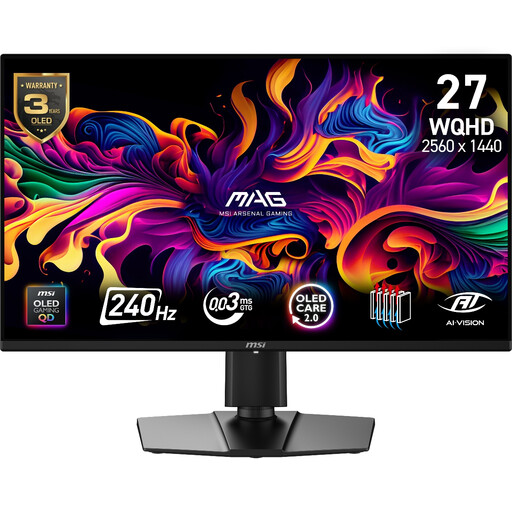
MAG 274QP QD-OLED X24, 27-inch QHD
This is another QHD option for one of the two independent workspaces.
The product title specifies a QD-OLED panel, 2560 × 1440 resolution and 240 Hz refresh rate; check the connections and your computer’s two-display support for the planned arrangement.
View on Joybuy
 No image available
BenQ MA270UP 27-inch 4K UHD USB-C
Consider this 4K display when higher native resolution on one screen is a priority for code or documents.
Its title specifies a Nano Glossy IPS panel and height-adjustable stand. Check the particular computer’s display and charging requirements before planning a two-screen USB-C arrangement.
View on Joybuy
 No image available
MSI MD272UPSW 27-inch 4K UHD Smart Monitor
This 4K model is an option for a higher-resolution coding or transcript screen.
The title specifies an IPS panel, Google TV and USB-C 65 W. Confirm that the computer supports the planned displays and that its charging needs suit the stated USB-C power delivery.
View on Joybuy
 No image available
LG 27UP650K 27-inch 4K IPS
Consider this 4K display for the code or document side of a two-screen desk.
The title specifies 60 Hz, HDMI and DisplayPort. Check the exact port arrangement against your connection plan, as well as the computer’s support for both displays.
View on Joybuy
Common questions
Will two USB-C monitors work with any laptop?
No: USB-C connectors on the monitors do not establish how many external displays the laptop can run. Apple Support says Mac display support depends on the model; check your exact computer’s supported display count, settings and ports before choosing cables or a dock.
How do I keep code and a transcript on separate screens in Windows?
Use an extended desktop rather than duplicating the same image on both displays. After connecting the screens, Microsoft Support advises configuring each external display in Windows display settings; then place the code and transcript windows where you need them.
What should I check before placing two monitors on a work desk?
Check that both screens and their stands fit at useful viewing positions, with room for the adjustments you need. The Health and Safety Executive’s display-screen guidance considers the whole workstation, including equipment and furniture; measure the desk before committing to two stands or a mount.


