Transcript-and-code multitaskers
If you keep an editor, interview transcript and notes visible together, prioritise readable workspace and a screen you can position comfortably over features intended mainly for gaming.


A 27-inch QHD IPS monitor with an adjustable stand is a sensible starting point for reading code beside interview transcripts in a quiet study. Consider 4K if you also need finer visual detail; if you want a one-cable laptop setup, check USB-C video compatibility and whether the monitor can supply enough power for your laptop. Screen positioning matters during regular desk sessions, whatever resolution you choose.
If you keep an editor, interview transcript and notes visible together, prioritise readable workspace and a screen you can position comfortably over features intended mainly for gaming.
If you want fewer cables on the desk, check whether your laptop can send video over USB-C and whether the monitor’s charging output meets its needs. A USB hub may also be useful if you connect peripherals.
If you regularly spend extended periods reading and coding, make sure the screen can be positioned for your desk and chair. The Health and Safety Executive identifies poor workstation design and incorrect display-screen use as contributors to discomfort and fatigue.
Start with the space you need for code and transcripts, then check screen positioning and laptop connections. A 4K model is worth considering when finer detail serves another part of your work, not simply because it has more pixels.
| Concern | What to check | Who this matters to |
|---|---|---|
| Readable workspace | Compare the native resolution and screen size, then check that your preferred display scaling leaves text readable. | If I keep a transcript beside code and notes, I need enough usable space without making the text difficult to read. Around 36% of consumers put that workspace need first. |
| Screen positioning | Check the stand’s height and angle adjustments; for an arm, confirm the mounting pattern and supported weight. | During long desk sessions, I need to place the screen to suit my chair and desk. For around 29% of consumers, positioning is the primary concern. |
| Laptop connection | Check USB-C video support, the monitor’s power-delivery rating and the cable required for your laptop. | If I connect a laptop for each study session, I want video and adequate charging without separate connections. That one-cable need comes first for around 21% of consumers. |
| Desk fit and features | Measure the available desk space and compare the inputs and features you will actually use. | On a compact study desk, I would rather leave room to work than choose extra features without a clear use. Around 14% of consumers prioritise desk fit and avoiding unnecessary capability. |
A USB-C socket alone does not establish that a monitor can carry video or provide enough power for your laptop. BenQ specifies 65 W power delivery for the GW2790QT, while LG specifies up to 90 W for the 27UP850K-W; either figure needs checking against the individual laptop.
Before choosing a one-cable setup, confirm the laptop’s USB-C video output, its charging requirement and the cable needed for the monitor’s stated functions.
More pixels do not solve a screen-positioning problem. The Health and Safety Executive notes that poor workstation design or incorrect display-screen use can contribute to discomfort, fatigue and eye strain.
Check the adjustments you need in the stand, or confirm mounting compatibility before using an arm. Set up the screen for your desk and take appropriate breaks during regular sessions.
For reading code beside transcripts, an adjustable 27-inch QHD model is a reasonable starting point. A 27-inch 4K model offers more pixels, but that alone does not establish that it will suit your preferred text scaling or workflow better.
Consider 4K when you also work with finer visual detail, and check how readable your usual applications will be at your preferred scaling.
Dell’s UltraSharp U2724D and U2725QE illustrate adjustable 27-inch QHD and 4K routes for this desk-based task.
The GW2790QT is a QHD option for a laptop-based desk where adjustment and USB-C connectivity both matter.
The 27UP850K-W represents a 27-inch 4K route for people who pair transcript work with tasks requiring finer visual detail.
These QHD and 4K monitors offer different starting points for reading code alongside transcripts. Compare each model’s screen, connections and positioning against your own study desk and laptop.
 No image available
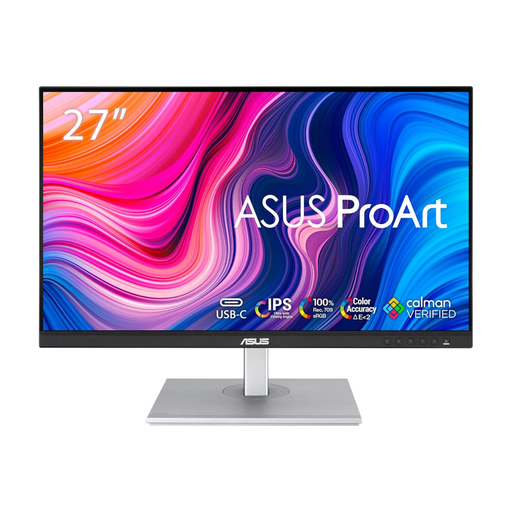
Consider this QHD option if your main task is reading code alongside a transcript; check its stand and connections against your desk and computer.
 No image available
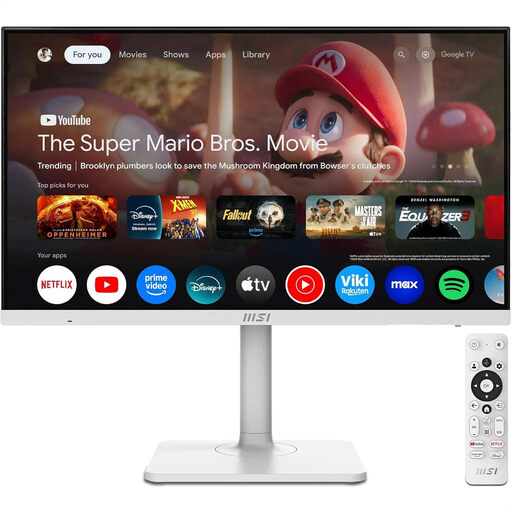
Consider its 4K screen if transcript work sits alongside tasks where finer visual detail matters; check whether its additional smart features are useful to you.
 No image available
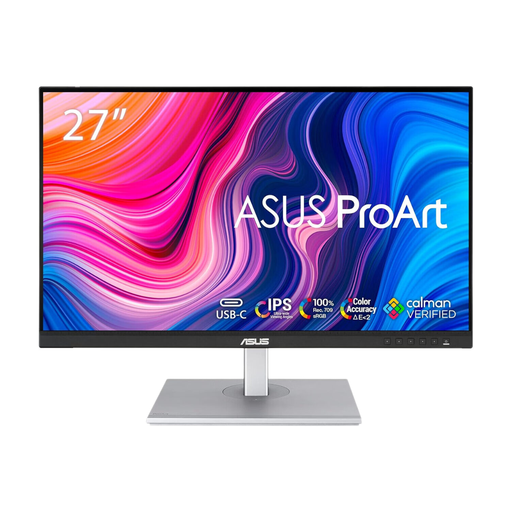
This QHD model is an option when readable code and transcript space is the priority rather than 4K detail.
 No image available
Consider this 4K option for a compatible MacBook desk setup that also calls for finer visual detail; assess whether a glossy screen suits your study lighting.
 No image available
Consider this 4K screen if you need finer visual detail alongside transcripts and can connect through an input that suits your computer.
Yes, if the laptop supports the required USB-C video output and the monitor supplies enough power for it. BenQ specifies 65 W power delivery and DisplayPort Alt Mode for the GW2790QT, while LG specifies display, data and up to 90 W charging for the 27UP850K-W. Check your laptop’s requirements and the cable needed for the connection.
An adjustable stand is useful when it lets you place the screen appropriately for your chair and desk, particularly during regular sessions. The Health and Safety Executive identifies poor workstation design and incorrect display-screen use as contributors to discomfort and fatigue; compare actual adjustment ranges rather than assuming every stand offers the same movement.
Check your local authority’s electrical-equipment recycling instructions and ask the retailer about any take-back arrangement. UK government guidance on waste electrical and electronic equipment explains the aim of reducing equipment sent to landfill or incineration.