What should you check?
Start with the exact pack’s gluten-free declaration. Then assess other allergens and decide whether you want a plain topping base or a coated snack.
| Priority |
What to check |
Your needs |
| Gluten-free labelling |
Look for “gluten free” or “free from cereals containing gluten” on the exact variant. Read the ingredients and allergen advice too: a rice-based name alone does not settle the question. The Food Standards Agency states that food labelled gluten free must contain no more than 20 mg/kg gluten as sold to the final consumer. |
I need a rice cake I can select for coeliac shopping without assuming that every rice-based snack has the same gluten status. |
| Other allergens |
Read both “contains” and “may contain” statements for each flavour. ASDA Groceries lists milk, soya and sesame in the may-contain advice for Kallo’s 130g lightly salted wholegrain rice cakes; its gluten-free milk-chocolate rice cakes contain milk and soya. |
If I avoid another allergen as well as gluten, I need the advice for this particular pack, not just its gluten-free claim. |
| Format and nutrition |
Check whether the cake is plain or coated, then compare energy, sugars, saturates and salt using matching per-cake or per-100g figures. ASDA Groceries lists 84 kcal, 4.8g sugars and 2.3g saturates per cake for its gluten-free milk-chocolate version. |
For toppings, I want a plain or lightly salted base. If I choose a chocolate-coated cake instead, I want to judge it by its own ingredients and nutrition label. |
| Current pack |
Check the physical pack when buying, particularly if the flavour or packaging has changed. Marks & Spencer advises customers to read its product labels rather than rely solely on online information. |
Even when I have bought the product before, I want to confirm that the ingredients and allergen advice still meet my needs. |
Brand and range references
Gluten-free status belongs to the individual product, not the brand name. These retailer listings illustrate why the exact variant matters.
Kallo
Kallo has a listed 130g lightly salted wholegrain rice cake with a gluten-free claim, but its rice-cake listings are not interchangeable.
- ASDA Groceries lists the 130g lightly salted wholegrain product as gluten free, with 99.8% organic wholegrain rice and sea salt.
- That listing says it may contain milk, soya and sesame. A separate Kallo Rice Cakes 110g listing at ASDA declares barley, oats, rye and wheat; check the precise variant.
ASDA Free From
The range includes listed gluten-free plain and milk-chocolate rice cakes for different uses.
- ASDA Groceries lists brown rice and sea salt as the ingredients of its gluten-free Slightly Salted Rice Cakes 100g.
- Its gluten-free milk-chocolate rice cakes contain milk and soya; check the coated product’s own nutrition and allergen label.
Sainsbury’s
Sainsbury’s lists a 135g lightly salted wholegrain rice cake with a gluten-free declaration.
- The product listing also identifies it as suitable for vegans.
- Sainsbury’s says this product is not suitable for customers with a milk allergy because of its manufacturing methods.
M&S
Marks & Spencer lists both lightly salted and dark-chocolate rice cakes as gluten free.
- Its Lightly Salted Rice Cakes listing gives wholegrain brown rice and salt as ingredients.
- Its Dark Chocolate Rice Cakes contain soya and are not suitable for people with a milk allergy. Read the label on the product selected.
Snack a Jacks
The brand includes flavoured rice-based snacks whose allergen advice needs checking by product.
- ASDA Groceries lists a may-contain warning for cereals containing gluten and wheat on Jumbo Caramel Sharing Rice Cake Crisps. Do not substitute that listing for an explicitly gluten-free product.
Tesco
Tesco Groceries search results include rice cakes alongside products described as gluten free.
- The results include Kallo Organic Lightly Salted Wholegrain Rice Cake 130g and Nature’s Store gluten-free rice-cake products.
- A search result does not establish the gluten status of every rice cake in the range. Check the individual product and its physical pack.
Rice cakes on Joybuy
This lightly salted rice-cake option is relevant if you want a plain base for toppings. Confirm the gluten-free declaration and allergen advice on the exact pack before using it for coeliac shopping.
 No image available
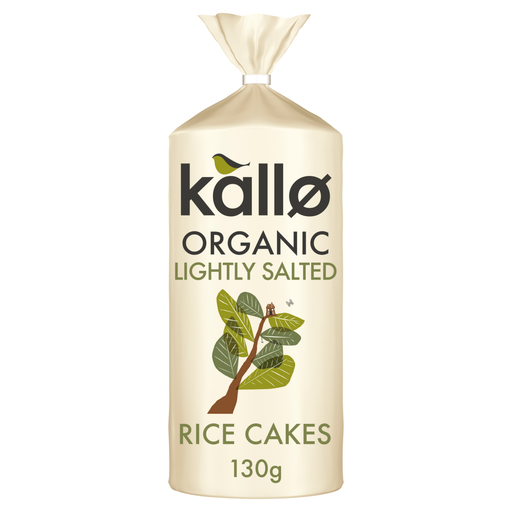
Kallo Organic Lightly Salted Rice Cakes 130g
A lightly salted option to consider when you want a rice-cake base for toppings. Check the exact pack for its gluten-free declaration and for any milk, soya or sesame warnings that matter to you.
View on Joybuy
Frequently asked questions
Are rice cakes automatically suitable for someone with coeliac disease?
No. Coeliac UK identifies rice as a grain people with coeliac disease can eat, but a rice-based snack may have other ingredients or allergen advice. Choose an exact product labelled gluten free or free from cereals containing gluten, and check that variant’s pack.
What does a UK “gluten free” label mean?
The Food Standards Agency states that food labelled gluten free must contain no more than 20 mg/kg gluten as sold to the final consumer. The claim applies to the labelled food, not to every product made mainly from rice.
Can I choose any Snack a Jacks product for coeliac shopping?
No; check the precise product and flavour. ASDA Groceries lists a may-contain warning for cereals containing gluten and wheat on Snack a Jacks Jumbo Caramel Sharing Rice Cake Crisps, so do not treat that listing as an explicitly gluten-free choice.
What if I also avoid milk, soya or sesame?
Read the separate allergen advice after checking the gluten-free declaration. ASDA Groceries says Kallo’s 130g lightly salted wholegrain rice cakes may contain milk, soya and sesame; its gluten-free milk-chocolate rice cakes contain milk and soya. Check the exact pack against the allergens relevant to you.
Is a supermarket webpage enough to check allergens?
Use the webpage to narrow your choices, then read the physical pack before eating. Marks & Spencer advises customers not to rely solely on its online product information, and a different flavour or pack may carry different advice.


