Coeliac shoppers checking suitability
Start with the exact tin’s gluten-free wording, ingredients and allergen information rather than treating its size or shelf position as evidence of suitability.


A tinned soup is worth considering for coeliac shopping only after you have checked the current pack for suitability; a larger tin cannot make uncertain allergen information acceptable. Look for a gluten-free claim or review the exact tin’s ingredients and precautionary wording, then compare pack size, servings and availability among suitable options.
Start with the exact tin’s gluten-free wording, ingredients and allergen information rather than treating its size or shelf position as evidence of suitability.
Once the tins meet your requirements, compare their pack sizes, stated servings and availability for the meals you intend to make.
Check whether a condensed soup works for the intended recipe, while reading its current label for gluten-related wording and any other allergens relevant to your household.
Establish suitability on the current pack before comparing how much usable soup each tin provides.
| Priority | What to check | Your needs |
|---|---|---|
| Gluten-free wording | Look for a gluten-free claim on the current tin. For UK food labels, the Food Standards Agency defines this claim as no more than 20 mg/kg gluten in the food as sold. | I want a clear suitability signal. Coeliac Commercial’s January 2026 summary of Coeliac UK’s Shopping Habits 2025 survey reports that 74% of its 3,785 member respondents trusted the Crossed Grain Trademark more than a gluten-free statement; this measured trust, not soup purchases. |
| Ingredients and precautions | Read the full ingredients list for emphasised cereals containing gluten and check any precautionary wording. Coeliac UK advises contacting the manufacturer if suitability remains unclear. | Before choosing an ordinary tin, I need to understand both its declared ingredients and any stated cross-contact risk. |
| Pack and servings | Check the can’s weight and stated serving basis. Compare tins intended as a bowl of soup separately from those you plan to use as a recipe ingredient. | A tin needs to cover the portions I intend to serve, not merely look substantial on the shelf. |
| Other allergens | Check the whole allergen declaration, not just gluten-related wording. Campbell’s UK lists milk and celery for its Cream of Tomato Condensed Soup. | If someone in my household avoids another allergen, a gluten-related check alone will not answer their question. |
| Availability and current label | Confirm the tin is available and read its present label, particularly when changing flavour or pack format. Tesco and Campbell’s UK warn that product information can change. | For a repeat purchase, I need a tin I can obtain and check each time. |
A pack-size comparison does not establish whether an ordinary soup meets a coeliac shopper’s requirements.
Read the current gluten-free wording, ingredients and precautionary statements first; compare pack sizes only among tins you can use.
Retailer and manufacturer information can differ from a current pack if ingredients or allergen information change.
Read the can in hand when buying a different batch, flavour or format, even if the soup is familiar.
Gluten-related wording does not answer questions about other allergens. Campbell’s UK, for example, lists milk and celery for its Cream of Tomato Condensed Soup.
Check the complete allergen declaration against everyone’s relevant requirements.
A product page can describe a suitable soup without establishing that you can obtain it for the meals planned.
Confirm current availability and check the pack before making it a regular choice.
These examples illustrate label and availability checks; a brand name or retailer listing does not establish the suitability of every soup it offers.
Tesco’s listing for Amy's Kitchen Gluten Free Mushroom Soup 400g states “Suitable for Coeliacs” and “Free From: Gluten, Wheat”.
Campbell’s UK presents its Cream of Tomato Condensed Soup for use as soup or a cooking ingredient.
Tesco’s soup listings show pack sizes across ordinary tins and specialist gluten-free products.
Heinz tinned soups, including Cream of Tomato, appear in Tesco’s UK soup listings.
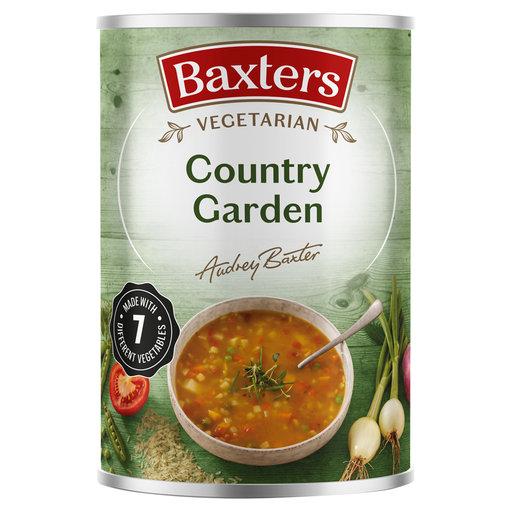
This vegetable soup is an option to assess for coeliac shopping, not a confirmed gluten-free choice. Check its current can before deciding whether it belongs in your shortlist.
 No image available
For coeliac shopping, check this vegetable soup’s current can for a gluten-free claim, its ingredients and any precautionary wording before treating it as suitable. Check the pack weight on the can when comparing portions, and read the full allergen declaration if milk is relevant to your household.
The Food Standards Agency defines a gluten-free label as applying to food containing no more than 20 mg/kg gluten in the food as sold to the final consumer. It does not mean the soup is free from other allergens.
Do not decide from that observation alone. Coeliac UK explains that cereals containing gluten must be emphasised in prepacked-food ingredients lists; also check the current tin for precautionary wording and contact the manufacturer if suitability is unclear.
Treat it as a material warning, not as proof that the soup is suitable. Coeliac UK says such wording indicates the manufacturer has identified an unavoidable cross-contamination risk; contact the manufacturer if you need clarification about that product.
Compare the pack weight, stated servings, intended use and current availability of the suitable tins. An ordinary soup whose suitability remains uncertain does not belong in that like-for-like shortlist.
Yes, if they matter to your household. Campbell’s UK lists milk and celery for its Cream of Tomato Condensed Soup; a gluten-related check does not replace reading the complete allergen declaration on the current can.