Hosts serving an occasional single cup
A coffee bag steeps in the cup, while a one-cup filter sits on top of it. Either avoids setting up a coffee machine, but the filter needs a suitably sized, stable cup and a pouring step.


For one coffee after dinner, choose a coffee bag if you want to steep it directly in a cup, or a cup-top filter if you prefer to pour water through ground coffee; loose ground coffee calls for suitable brewing equipment. These are different formats, and the products discussed here should not be assumed to have pyramid-shaped bags. If decaf matters, check the exact pack rather than relying on its roast or flavour description.
The useful distinction for a dinner table is how each cup is prepared, not whether every single-cup product is called a coffee bag.
A coffee bag steeps in the cup, while a one-cup filter sits on top of it. Either avoids setting up a coffee machine, but the filter needs a suitably sized, stable cup and a pouring step.
Check the variant before serving. Tesco Groceries lists Taylors Decaffe Coffee Bags, and Rombouts offers a decaf one-cup filter; neither name makes other coffee bags or filters decaffeinated.
Read the instructions for the particular bag or filter and check local collection rules. A compostability statement on a pack does not establish that a council accepts it in a food-waste caddy.
Choose the brewing format first, then check the exact pack for its shape, caffeine label and preparation instructions.
Choose when: You want to steep one serving directly in a cup, as with Taylors’ tea-bag-style coffee bags.
Trade-off: The bag format does not establish a pyramid shape; wrapping and decaf options also depend on the pack.
Choose when: You want to pour water through a single serving of ground coffee without a machine.
Trade-off: The filter must sit securely on a suitable cup while you pour and let the coffee drain.
Choose when: You already have a suitable filter brewer or another compatible brewing method.
Trade-off: Brewing involves separate equipment, portioning and grounds to clear away.
| Priority | What to check | Your needs |
|---|---|---|
| Brewing method | Check whether the product steeps in the cup, hangs over it for drip brewing, or needs a separate brewer. For a cup-top filter, check the required cup size and pack directions. | I want to make one coffee after dinner without setting up a machine; steeping a bag and pouring through a filter involve different steps. |
| Bag shape | Read the description and inspect the pack for an explicit shape claim. A coffee bag and a cup-top filter should not be treated as confirmed pyramid bags. | If the pyramid shape is important to me, I need confirmation for the exact product rather than relying on a search term. |
| Decaf variant | Look for an explicit decaf or decaffeinated label on the chosen pack. Roast and flavour descriptions do not identify its caffeine status. | For a later dinner, I may want decaf, but I do not want to assume that the standard version is decaffeinated. |
| Disposal | Compare the pack instructions with your council’s accepted materials. Percol directs its coffee bags to local-authority food waste, while Rombouts describes home composting or food-waste disposal for its relevant filters. | I want to know where the used bag or filter can actually go in my area, rather than treating every compostable label as the same instruction. |
A steeped coffee bag and a filter that rests on a cup require different preparation, and neither name confirms a pyramid shape.
Check the exact format and shape in the product description and pack images before buying.
A roast or flavour description does not tell you that the coffee is decaffeinated.
If decaf matters for dinner, select an explicitly labelled variant and check that the same variant is in your basket.
The filter needs to sit securely while water is poured through it. Rombouts and Tesco Groceries instruct users of their one-cup filters to use hot, not boiling, water.
Use a stable cup of suitable size and follow the directions on the particular filter pack.
Product instructions and council collections can differ. Cornwall Council, for example, directs residents to put compostable packaging in the rubbish bin.
Check both the selected product’s instructions and your own council’s current rules before using a food-waste caddy or home compost bin.
These brand examples distinguish brewing formats; they do not establish that every product from a brand uses the same bag or filter.
Tesco Groceries describes Flying Start as ground coffee in bags that work like tea bags and lists a separate Taylors Decaffe coffee-bag product.
Percol offers ground-coffee bags with a string and tag for single-cup preparation.
Rombouts’ one-cup filters sit on top of a cup rather than steeping like coffee bags.
Lavazza UK includes coffee for filter brewing in its ground-coffee range, a route for people using suitable brewing equipment.
These options cover coffee bags and cup-top drip filters for an after-dinner cup. Check the exact product if a pyramid-shaped bag or a decaf variant is essential.
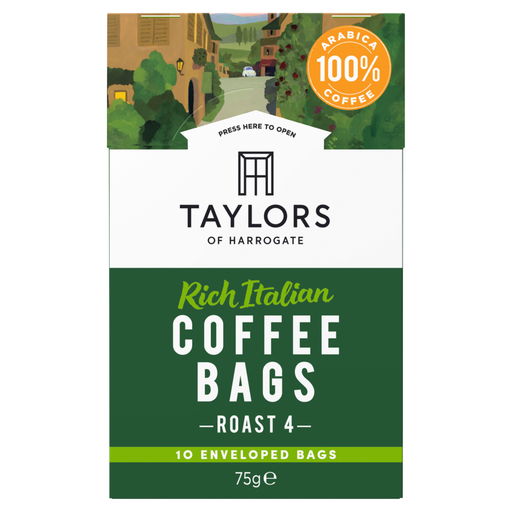 Image unavailable
A coffee-bag option for steeping a single cup after dinner. The pack is 75g; check its bag shape and decaf label if either is important to your choice.
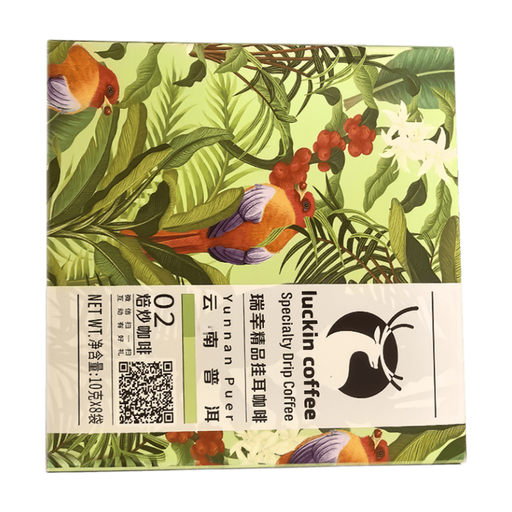 Image unavailable
A drip-bag option for a single cup: the bag hangs over the cup while water passes through it. The title specifies eight 10g bags; check the pack for its shape, decaf status and brewing directions.
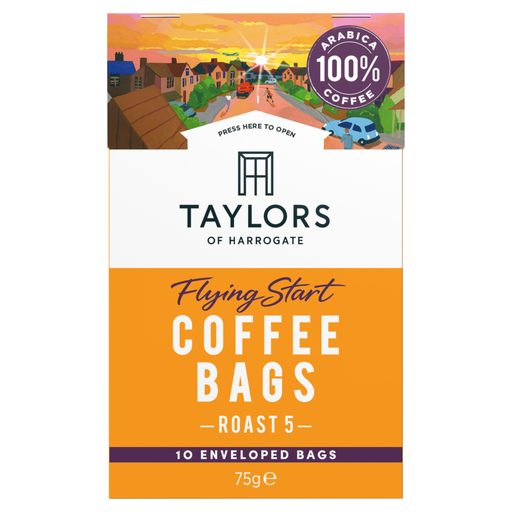 Image unavailable
A 75g coffee-bag pack for making a cup without loose grounds. Tesco Groceries describes Flying Start bags as individually wrapped and working like tea bags; follow the directions on the selected pack and check its shape and decaf label separately.
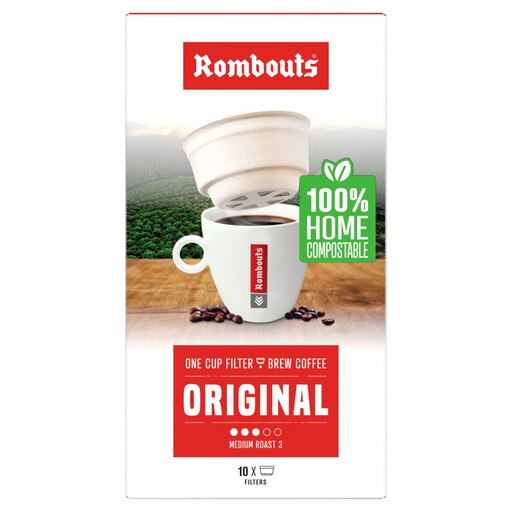 Image unavailable
This 70g product is a cup-top filter, not a bag to steep. Rombouts instructs users of its Original one-cup filter to secure it on a suitable cup and use hot, not boiling, water; check local disposal rules and the exact pack if decaf matters.
No shape should be assumed from the term ‘coffee bag’. Taylors and Percol describe steeped coffee bags, whereas Rombouts and Tesco Groceries describe cup-top one-cup filters. If a pyramid shape matters, confirm it on the exact pack.
A tea-bag-style coffee bag steeps directly in the cup. A cup-top filter avoids a machine too, but needs a suitable cup, a secure fit and water poured through the filter; follow its pack instructions.
Choose a pack explicitly labelled decaf or decaffeinated. Tesco Groceries lists Taylors Decaffe Coffee Bags, and Rombouts has a decaf one-cup-filter variant; a roast name alone does not identify a decaf product.
Check both the product instructions and your council’s rules before putting them in a food-waste caddy. Percol directs its bags to local-authority food waste, and Rombouts describes home composting or food-waste disposal for its relevant filters, but local guidance differs. Cornwall Council, for example, tells residents to put compostable packaging in the rubbish bin.
Not for a tea-bag-style coffee bag or a cup-top one-cup filter. Loose ground coffee is a different choice: use it with a suitable filter brewer or another compatible brewing method.