Hosts serving different caffeine preferences
Making coffee cup by cup lets you offer a decaffeinated bag alongside standard coffee, rather than preparing one type for everyone. Check each pack before serving so guests can make their own choice.


For an afternoon tea where guests prefer to reduce caffeine and cups are made one at a time, individually wrapped decaffeinated coffee bags offer a straightforward mug-brewing option. Choose a standard coffee bag when a guest wants caffeinated coffee, or a one-cup filter when a pour-through cup and the filter’s disposal instructions matter more than steeping a bag. Check the exact format and preparation directions: a coffee bag or one-cup filter is not necessarily pyramid-shaped.
Making coffee cup by cup lets you offer a decaffeinated bag alongside standard coffee, rather than preparing one type for everyone. Check each pack before serving so guests can make their own choice.
Coffee bags avoid measuring loose grounds for each mug. A one-cup filter is also pre-portioned, but it rests on the cup and needs a controlled pour of hot water.
Rombouts describes its bagasse one-cup filter as home compostable. If that matters to you, check the instructions for the used filter and each packaging component separately.
Start with each guest’s caffeine preference, then choose between a bag that steeps in the mug and a filter that sits over it. Roast description and disposal instructions can help distinguish the remaining options.
Choose when: a guest prefers to reduce caffeine and you want to make a single mug without a coffee machine.
Allow for: steeping time; Tesco instructs a four-minute brew for Taylors Decaffé.
Choose when: a guest wants caffeinated coffee in the same mug-steeped format.
Consider: the roast as well as the format; Tesco describes Taylors Flying Start as dark and bold.
Choose when: a pour-through filter cup is preferred and the filter can rest securely on a suitable mug.
Allow for: placing the filter and pouring carefully, rather than leaving a bag to steep.
| Priority | What to check | Your needs |
|---|---|---|
| Caffeine choice | Read the product name for a decaffeinated option; do not use roast level or pack colour as a substitute. Keep standard and decaffeinated packs distinct when serving. | I would like guests to be able to choose whether to have decaffeinated or standard coffee. |
| Brewing format | Check whether the pack contains coffee bags that steep in a mug or one-cup filters that sit over it. For a filter, check the cup fit and pouring instructions. | For several cups made separately, I want a method the person preparing them can manage comfortably. |
| Roast and flavour | Compare the roast and flavour descriptions on the exact packs. Tesco describes Taylors Flying Start as a dark, bold roast; flavour descriptions are not independent taste tests. | A guest may prefer a gentler-tasting cup, while another may specifically ask for a bolder coffee. |
| Disposal | Read the instructions for the used bag or filter and for its separate packaging. Rombouts describes its bagasse filter as home compostable; check local collection rules for council bins. | If I plan to compost a used filter, I need to know which component the instruction applies to. |
A one-cup filter rests on a suitable mug while water passes through it. That takes different handling from steeping a coffee bag in the mug.
Look for “coffee bags” or “one-cup filters” on the pack and check the brewing steps before choosing.
Taylors Flying Start is a standard coffee bag; Taylors Decaffé is a decaffeinated product. A similar bag format does not make the contents interchangeable.
Keep the packs separate, read their names before brewing and offer the guest a clear choice.
Tesco describes Taylors Flying Start as dark and bold. Someone asking for a less intense flavour may prefer a different roast description.
Ask guests what sort of coffee they would like, then compare the descriptions on the available packs.
A composting instruction for a used Rombouts filter does not automatically apply to its outer packaging or to a different coffee bag.
Check each component’s disposal instructions and the rules for your local collection.
Taylors has both decaffeinated and standard coffee bags for brewing individual mugs.
M&S lists decaffeinated and House Blend coffee bags for single cups.
Tesco lists coffee bags as well as a separate own-label one-cup-filter format.
Sainsbury's lists branded coffee bags and one-cup filters.
Lavazza’s UK ground-coffee range includes coffee ground for filter brewing.
Its Filter Blend is a ground-coffee option for a filter machine.
These options cover mug-steeped coffee bags and pour-through filters for making individual cups. Check the pack for decaffeinated status where that is important to a guest; the format alone does not establish it.
 No image available
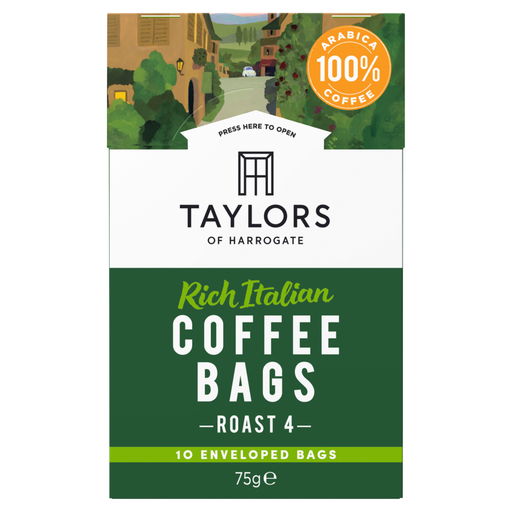
A coffee-bag option for making one mug without measuring loose grounds. Check the pack’s brewing directions and decaffeinated status if either matters to your guests.
 No image available
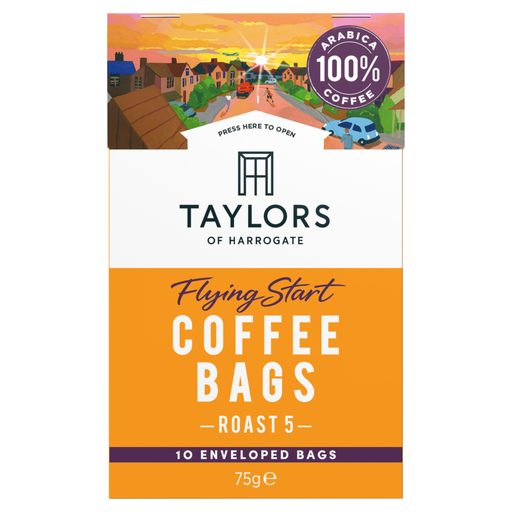
A standard coffee-bag choice for a guest who wants caffeinated coffee. Tesco describes Flying Start as a dark, bold roast; follow the directions on the pack when brewing.
 No image available
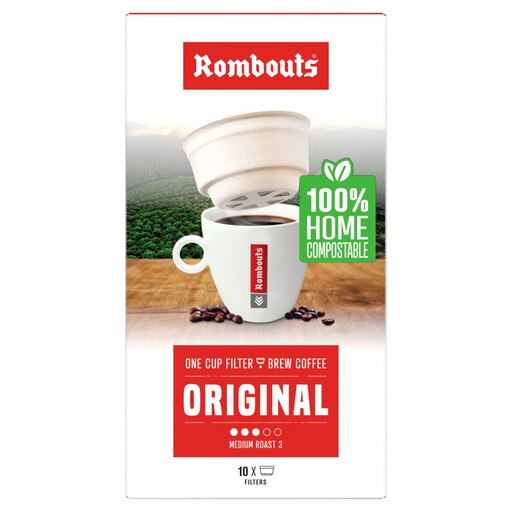
This is a pour-through filter for one suitable cup, not a bag that steeps in the mug. Rombouts describes its bagasse filter as home compostable and instructs users to pour hot, not boiling, water up to the marked line. Check the pack if decaffeinated coffee is required.
 No image available
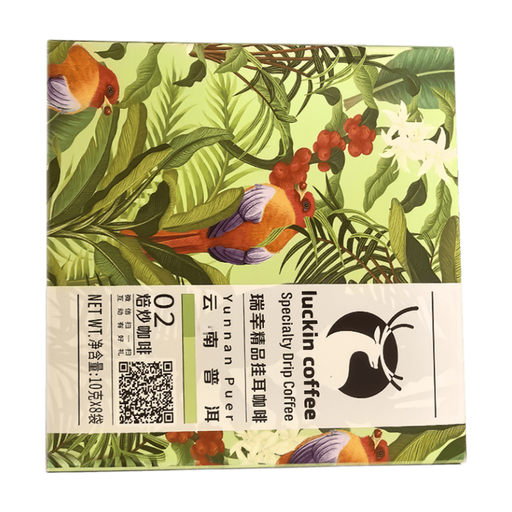
A single-serving drip-filter format for brewing over a cup rather than steeping in it. Allow for opening and positioning the filter before pouring; check the pack’s directions and decaffeinated status for your guests.
Not necessarily. “Coffee bag” describes a bag that steeps in a mug, while a one-cup filter sits over a cup for pour-through brewing. If the shape matters, check the exact pack rather than assuming either format is pyramid-shaped.
For Taylors Decaffé, Tesco instructs users to brew the bag in a mug for four minutes. Follow the directions on the particular pack you are serving, including its water and bag-removal steps.
For Rombouts Original, place the filter securely on a suitable cup, then add hot, not boiling, water up to its marked line and let it filter through. Unlike a coffee bag, it needs stable placement and careful pouring.
No: age alone does not determine a guest’s coffee preference. Offer a clearly labelled decaffeinated choice when someone prefers to reduce caffeine, and let guests tell you what they would like; individual medical questions should be addressed with their clinician.
Rombouts states that its used bagasse one-cup filters can be home composted. Check the separate packaging instructions and local collection rules before placing anything in a council food- or garden-waste bin.