Who each format suits
The useful distinction is between how the coffee is prepared and how you want to serve it.
Cold-brew drinkers who want a warm cup
A concentrate labelled for hot or cold serving lets you make a warm drink from cold-brew coffee. Check its dilution directions and ingredients: a chilled ready-to-drink bottle may have different serving instructions.
Single-mug coffee drinkers
A conventional coffee bag can brew directly in a mug without loose grounds. Joybuy’s directions for Taylors Flying Start use hot water; they do not establish that the bag is suitable for cold brewing.
Shoppers checking milk, sugar or caffeine
Read the ingredients and serving information for the exact product. A milk-based latte, a sweetened concentrate and a black cold brew are different choices. During pregnancy, NHS guidance says not to exceed 200mg of caffeine a day from all sources.
Brands and retailers to recognise
These examples show why the format and exact product name matter more than finding coffee in a particular retailer’s range.
Tesco
Tesco lists both Taylors coffee bags and cold-brew concentrates.
- Its listed options include Grind Espresso Cold Brew Coffee Concentrate and Tesco Finest Sweetened Cold Brew Coffee Concentrate.
- The sweetened concentrate contains demerara sugar; a coffee-bag listing does not establish pyramid shape or cold-water suitability.
Waitrose
Waitrose & Partners lists one-cup coffee bags, including Colombian and Italian Style varieties.
- Its coffee-bag selection offers a starting point for shoppers seeking an individual cup.
- Check the pack before treating any of these bags as pyramid-shaped or suitable for cold brewing.
Sainsbury’s
Sainsbury’s coffee category lists ground coffee bags and other coffee formats.
- Its listings include Taylors ground coffee bags, including a decaffeinated variety.
- A ground coffee bag and an iced coffee listing serve different purposes; check each product’s brewing directions.
M&S
M&S describes its 250ml Classic Latte Cold Brew Coffee as ready to enjoy from the fridge.
- It is a ready-to-drink latte made with semi-skimmed milk.
- It is not a coffee bag, and its stated serving description does not provide a heating method.
Sandows
Sandows London describes making cold-brew coffee in London.
- Coffee Friend UK lists a Sandows ready-to-drink product made with coffee and filtered water, described as dairy-free and sugar-free.
- That cited product is a ready-to-drink coffee, not a brew-in-the-mug bag.
Joybuy options for a warm mug
These options cover two different routines: mixing a portioned coffee liquid for a warm drink, or brewing a conventional coffee bag in a mug. Neither product’s name establishes a pyramid-shaped bag suitable for cold-water brewing.
 Image unavailable
J.ZAO Extra-Strong Americano Cold Brew Coffee Liquid, 10 × 25ml pouches
For a portioned warm drink, the product directions describe mixing this coffee liquid with hot or cold water. The named variant contains 10 × 25ml pouches and is labelled zero sugar and zero fat. It is a liquid, not a coffee bag; if the extraction method or caffeine per pouch matters to you, check the pack.
View on Joybuy
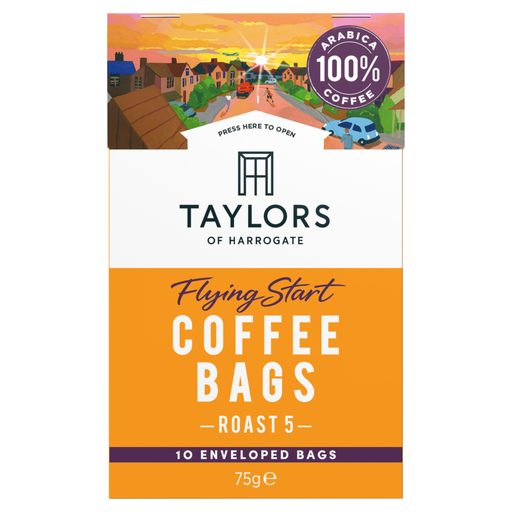 Image unavailable
Taylors of Harrogate Flying Start Coffee Bags 75g
These coffee bags are an option for brewing an individual hot mug rather than mixing coffee liquid. Joybuy’s Flying Start preparation directions describe using boiled, but not boiling, water and brewing for 2–4 minutes. Check the exact pack if pyramid shape, cold-water brewing or caffeine per serving is important to your choice.
View on Joybuy
Questions about coffee bags and cold brew
Can I use an ordinary coffee bag to make cold brew?
Do not assume so. Joybuy’s Taylors Flying Start directions call for boiled, but not boiling, water and a 2–4 minute mug brew. If cold-water steeping is essential, look for explicit instructions on the product you buy.
How can I make a warm drink from cold-brew concentrate?
Choose a concentrate whose maker gives hot-serving directions. Grind says its 500ml cold-brew concentrate can be served hot or cold after mixing it 1:1 with water or milk; follow the directions for the exact concentrate you buy.
What should I check if I avoid milk or added sugar?
Check the exact product’s ingredients. Coffee Friend UK lists its Sandows ready-to-drink cold brew as dairy-free and sugar-free, while M&S Classic Latte contains semi-skimmed milk and Tesco Finest Sweetened concentrate contains demerara sugar.
Does a coffee bag or diluted cold brew contain little caffeine?
Neither the bag format nor dilution establishes the caffeine amount in your serving. Check the product’s caffeine and serving information. During pregnancy, NHS guidance says not to exceed 200mg of caffeine a day from all sources.


