Kettle-and-mug coffee drinkers
If your break gives you access to hot water but not a cafetière or filter equipment, a coffee bag lets ground coffee brew in the mug. Check the pack instructions to see whether its brewing time fits your break.


Choose a portioned coffee bag when elevenses means a mug, a kettle and no cafetière; choose loose ground coffee when you have a compatible brewer and want to measure each dose yourself. If you specifically want a pyramid bag, check the shape and coffee weight of the exact product: an ordinary coffee bag or one-cup filter is not necessarily a pyramid bag.
If your break gives you access to hot water but not a cafetière or filter equipment, a coffee bag lets ground coffee brew in the mug. Check the pack instructions to see whether its brewing time fits your break.
Decaf coffee bags retain the single-serve format, while half-caff and decaf loose ground coffees are options for a compatible brewer. Anyone following NHS pregnancy caffeine guidance needs to consider caffeine from the whole day, not just the elevenses cup.
A compostability claim does not, by itself, tell you where a used bag, filter or wrapper can go. Check the exact pack and your council’s collection instructions before choosing a disposal route.
Start with how you can brew coffee at elevenses, then compare the exact portion, preparation instructions and disposal guidance for the format you choose.
| Priority | What to check | Your needs |
|---|---|---|
| Brewing setup | Check whether the product is a bag that steeps in a mug, a one-cup filter that sits on it, or loose ground coffee requiring a compatible brewer. Check the number of portions in the pack. | I have only a mug and kettle during my break, so I want a portioned format rather than loose coffee that I must measure and brew separately. |
| Bag shape and dose | If pyramid construction matters, look for an explicit description on the exact product. Compare its stated grams of coffee per bag and any recommended water volume; shape alone does not establish cup strength. | For a larger mug, I want to know how much coffee is in each bag before deciding whether its suggested brew suits me. |
| Brewing method | Read the product’s water and brewing instructions. A steeping bag and a one-cup filter use different methods, so do not transfer directions from one format to the other. | My break is short, and I want to know how the coffee is prepared before taking a pack to work. |
| Caffeine option | Check whether the exact product is regular, decaf or a reduced-caffeine blend. Sainsbury’s describes its half-caff ground coffee as a blend of regular and decaffeinated Arabica; it is not a decaf coffee bag. | I may want a decaf single serve, or a half-caff ground coffee if I have brewing equipment. If I am following caffeine guidance, this cup is only part of the day’s intake. |
| Disposal | Read separate instructions for the used coffee portion and its packaging. WRAP distinguishes composting methods, and Barnet Council, for example, excludes packaging from food-waste bins even when it is labelled compostable. | I want to put the used portion and wrapper in the right place rather than assuming a compostable label means my food-waste caddy accepts them. |
| Loose-coffee compatibility | For a conventional ground-coffee pack, check the grind guidance against your cafetière, filter machine or other brewer. Check its dosing instructions if you intend to make more than one cup. | I already have brewing equipment and would rather measure coffee for my mug or make several cups at once. |
A coffee bag need not be pyramid-shaped, and one product’s stated coffee weight does not apply to other bags. Raw Bean states that its pyramid Bean Bags contain 12 g of coffee; that is a detail of its range, not a standard for the category.
Check the exact product’s shape, grams per bag, suggested water volume and brewing directions, particularly if you use a large mug.
Collection rules can differ from a manufacturer’s compostability claim. Barnet Council, for example, tells residents not to put packaging in its food-waste bins even when the packaging says it can be composted.
Follow the exact product’s disposal instructions and your own council’s rules. Only use home composting where the product expressly identifies that route.
A half-caff blend contains regular as well as decaffeinated coffee. Choosing either format does not account for caffeine consumed elsewhere during the day.
Check the blend on the pack. If pregnancy caffeine guidance applies to you, the NHS advises considering total daily caffeine intake rather than judging a single cup in isolation.
These brand references cover coffee bags, one-cup filters and loose ground coffee; the formats are not interchangeable.
Taylors presents its coffee bags as ground coffee prepared without a cafetière, a relevant format for a mug-and-kettle break.
Rombouts offers one-cup filters for brewing over a cup, alongside conventional ground coffee.
Raw Bean explicitly describes its Bean Bags as pyramid coffee bags.
Sainsbury’s describes its half-caff ground coffee as a blend of medium-roast Arabica and decaffeinated Arabica.
Illy’s UK catalogue includes ground and filter coffee as well as other preparation formats.
These options include Taylors coffee bags for mug brewing, a Rombouts one-cup filter and a Taylors decaf loose ground coffee for use with a compatible brewer. Check the exact bag construction if a pyramid shape is essential to your choice.
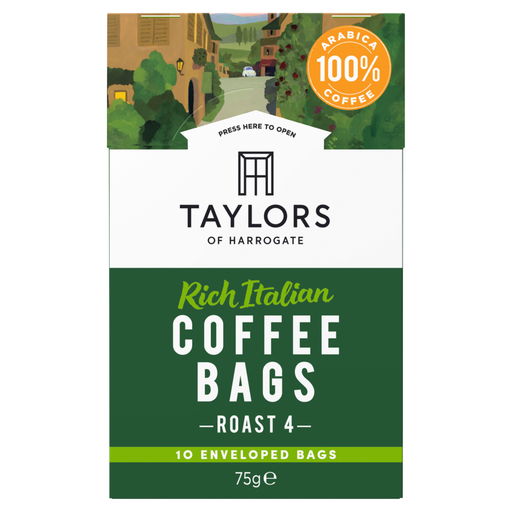 No image available
These individually wrapped coffee bags suit a mug-and-kettle break without a cafetière. Check the pack’s bag shape, coffee dose and brewing directions if you have a particular mug size in mind; follow its disposal instructions alongside local collection rules.
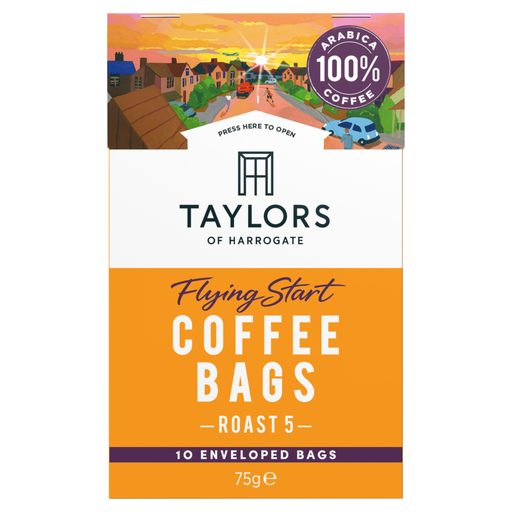 No image available
This 75g coffee-bag product is an option when you want a portioned mug brew at elevenses. If shape or cup strength matters, check the exact bag construction, coffee weight and pack brewing directions rather than assuming they match another Taylors variant.
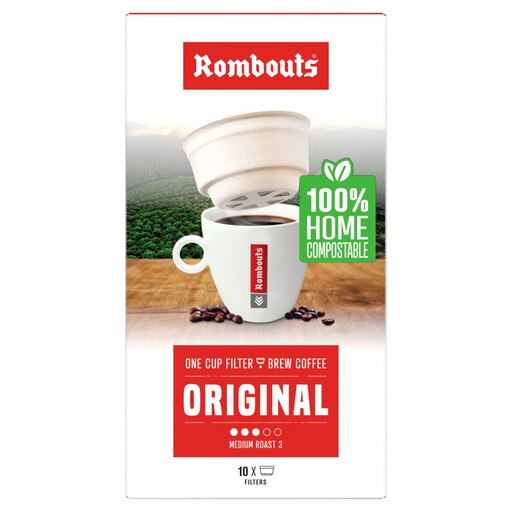 No image available
This 70g product uses a one-cup filter rather than a bag that steeps in the mug. Rombouts identifies its Original filters as a pack of 10. Follow the exact pack’s brewing method, and check its disposal directions against local collection rules.
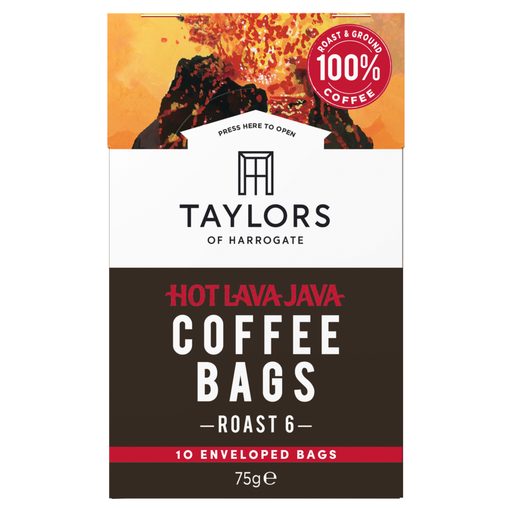 No image available
These 75g coffee bags offer another portioned format for a mug-based elevenses break. Check the exact pack for bag shape, coffee dose, brewing instructions and disposal guidance before relying on any of those details.
 No image available
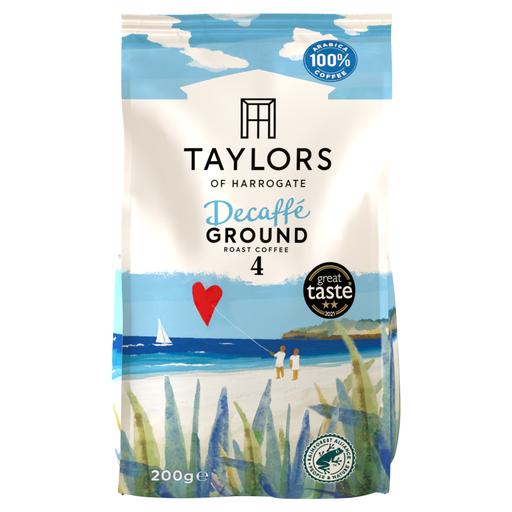
This 200g decaf product is loose ground coffee, not a single-serve bag. It suits an elevenses routine with a compatible brewer; check the pack’s grind and preparation guidance against the equipment you use.
Both contain ground coffee, but a coffee bag is portioned for brewing in a mug. Taylors describes its bags as a way to prepare ground coffee without a cafetière; loose ground coffee instead needs a measured dose and a compatible brewing method.
No. Shape alone does not establish the coffee dose or the result in your mug. Compare the stated grams in the exact bag with its water and brewing instructions; Raw Bean states that its own pyramid Bean Bags contain 12 g, which should not be assumed for other products.
Follow the directions on the exact pack. Howden Coffee instructs users of its coffee bags to add water just off the boil and brew for four minutes; a Rombouts one-cup filter is a different format with its own directions, not a bag to steep by the same method.
Not automatically. Check both the product label and your council’s instructions: WRAP distinguishes composting methods, while Barnet Council excludes packaging from its food-waste bins even if it is labelled compostable.
No. Decaf coffee bags provide a portioned option, while Sainsbury’s describes a half-caff loose ground coffee made with regular and decaffeinated Arabica for use with brewing equipment. If pregnancy guidance is relevant, the NHS advises accounting for caffeine across the day rather than considering this cup alone.