Who is each format for?
The useful distinction is how people will make and use the coffee, not simply how large the order looks.
Offices and shared kitchens making single cups
When several people make coffee at different times, portioned bags avoid measuring loose grounds or keeping a cafetière available. Staples UK and Paperstone identify Taylors Rich Italian as an 80-count box of individually wrapped coffee bags; check that the roast and caffeine status suit the people using the supply.
Households buying ahead for convenience
If you make coffee intermittently, consider how many portions or opened packs will be in use at once. Coffee bags separate individual cups; with loose coffee, follow the storage directions on each pack and choose a quantity you expect to use while its quality suits you.
People who brew with their own equipment
If you use a cafetière, filter brewer, Chemex or V60, match loose coffee to that method rather than ordering coffee bags solely because they contain ground coffee. Taylors of Harrogate describes its conventional pre-ground coffee as intended for those four methods.
What should you check before bulk buying?
Decide how each cup will be made first. Then check the quantity, storage directions and flavour description on the exact pack you intend to order.
Coffee bags
Choose when: people want separate cups without dosing loose coffee; Staples UK lists Taylors Rich Italian in an 80-bag, individually wrapped format.
Trade-off: bags are an immersed, portioned format, not loose grounds for a brewer; check the exact count and roast before committing to a large supply.
Cup-top filters
Choose when: you want a single cup made by placing a pre-filled filter over a cup and adding hot water, as Rombouts describes its one-cup system.
Trade-off: a cup-top filter is neither an immersed coffee bag nor loose coffee; confirm the pack count if you need 80 portions.
Loose ground coffee
Choose when: you have a brewer suited to the stated grind and want to measure coffee for individual cups or a larger batch.
Trade-off: an opened pack needs appropriate storage, and grounds labelled for one brewing method should not automatically be treated as suitable for another.
| Priority |
What to check |
Your needs |
| Preparation format |
Read whether the pack contains immersed coffee bags, cup-top filters or loose grounds. For loose coffee, match the stated grind or brewing method to your equipment. |
I want anyone using the supply to be able to make a cup with the equipment available. Rombouts says its cup-top filter needs hot water but no machine; Taylors describes its conventional pre-ground coffee for cafetière, filter, Chemex and V60 use. |
| Pack quantity |
Check the number of portions in a bag or filter pack. For loose coffee, check the net weight and the product’s serving guidance rather than treating grams as a portion count. |
For a specific 80-cup order, I need to know the count of usable portions. An 80-bag box and a pack labelled by weight answer different quantity questions. |
| Storage and dates |
Check the best-before date and the pack’s instructions for storage before and after opening. Consider how many packs will be opened at once. |
If I make coffee only occasionally, I would rather keep unopened packs sealed until needed. GOV.UK explains that a best-before date concerns quality, while illy advises keeping its coffee away from light and heat. |
| Flavour and caffeine |
Check the named blend, roast or flavour description and whether the exact product is labelled caffeinated or decaffeinated. Do not use an intensity number as a caffeine measure. |
A bulk supply means repeated cups of the same choice, so I want a flavour that suits its regular drinkers and a clearly labelled decaf product if decaf is required. Lavazza’s 5/10 intensity for Qualità Rossa is its product-line description, not a caffeine figure. |
Brand and format references
These brands illustrate different ways ground coffee is packaged or prepared; the brand name alone does not identify the format of a particular pack.
Taylors of Harrogate
Staples UK and Paperstone list Taylors Rich Italian as 80 individually wrapped coffee bags. Taylors separately describes its conventional pre-ground coffee as intended for cafetière, filter, Chemex and V60 brewing.
- The documented 80-bag format is relevant to an order specified by portion count.
- Check whether a particular Taylors listing is for coffee bags or loose grounds; they are not interchangeable formats.
Rombouts
Rombouts describes a one-cup filter placed over a cup and brewed by pouring hot water through it, without a machine.
- The cup-top method offers a distinct way to make one cup without measuring loose grounds.
- Check the count on the exact pack; the preparation method does not establish that it contains 80 filters.
Lavazza
Lavazza lists Qualità Rossa ground coffee for filter, French press and moka preparation, with a stated intensity of 5/10.
- The named brewing methods help buyers check whether this loose-coffee line fits their equipment.
- Its intensity scale describes this product line; it is not a caffeine measurement.
Illy
illy’s 250g classic-roast ground coffee is identified as a filter-coffee product. Its storage directions say to keep it away from light and heat, preferably refrigerating after opening.
- The stated filter use gives buyers a clear brewing-method check for that product.
- Follow the directions on the specific illy pack rather than assuming every ground-coffee format has identical storage instructions.
Tesco Finest
Tesco Groceries lists Tesco Finest Peruvian, Colombian Supremo, Sumatra Mandheling, Brazilian and Kenyan ground coffees in 227g packs.
- The named variants give buyers several loose-ground options to compare by their individual pack descriptions.
- A 227g loose-coffee pack is measured by weight, not by a stated count of coffee bags.
Sainsbury's
Sainsbury's ground-coffee listings include weight-labelled packs in several sizes, including 227g and 454g.
- Different pack weights allow a buyer to choose a loose-coffee quantity that fits their likely use.
- Check the format and brewing directions of the individual product; pack weight does not establish a single-cup portion count.
Joybuy options for each format
These options cover coffee bags, loose ground coffee and a cup-top filter. If your order specifically requires 80 portions, check the count on the product you choose rather than treating a weight-labelled pack as an 80-count box.
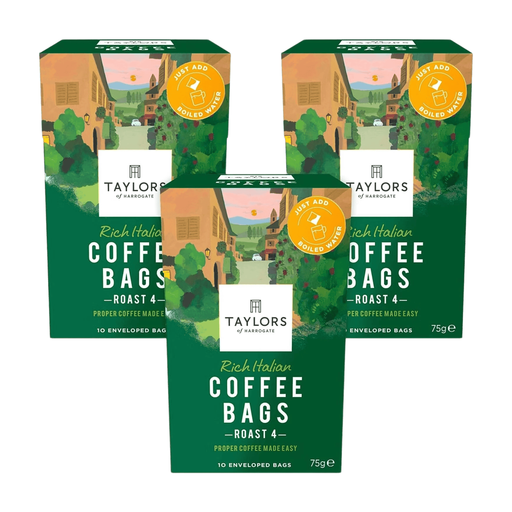 Image unavailable
Taylors of Harrogate Rich Italian Coffee Bags 75g x 3
A coffee-bag option for making individual cups rather than measuring loose grounds. The listed quantity is three 75g packs; check the number of bags in each pack before using it to meet an 80-bag requirement.
View on Joybuy
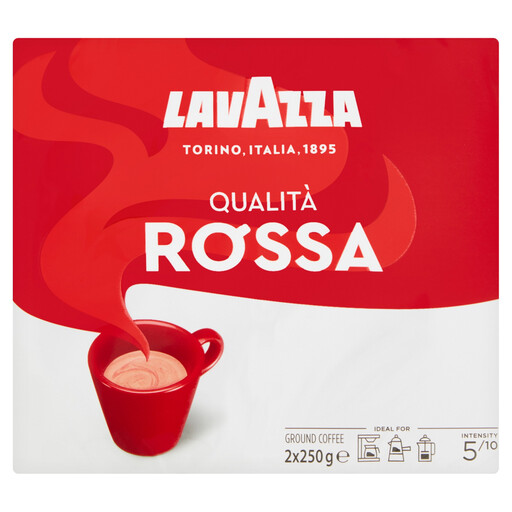 Image unavailable
Lavazza Qualità Rossa Ground Coffee 500g
A 500g loose-ground option for someone using a compatible brewer rather than portioned coffee bags. Lavazza lists Qualità Rossa ground coffee for filter, French press and moka preparation; check the pack’s storage directions before opening a larger quantity.
View on Joybuy
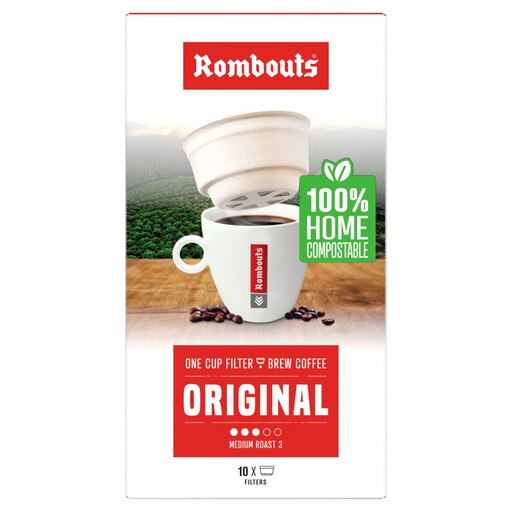 Image unavailable
Rombouts Original Compostable One Cup Filter Coffee 70g
A 70g one-cup-filter option for people who prefer a cup-top filter to an immersed coffee bag or loose grounds. Rombouts says its one-cup method uses hot water without a machine. Check the number of filters in the pack before comparing it with an 80-count box, and follow the specific pack and local guidance for disposal.
View on Joybuy
Frequently asked questions
Does a box of 80 ground-coffee portions contain loose coffee?
Not in the documented Taylors Rich Italian example: Staples UK and Paperstone identify it as 80 individually wrapped coffee bags containing ground coffee. Loose ground coffee is packaged for use with suitable brewing equipment, while a Rombouts one-cup filter sits over a cup. Check the product form as well as the coffee description.
Can coffee bags replace loose grounds in my cafetière or espresso machine?
Do not assume so: coffee bags are a separate preparation format, whereas equipment needs coffee in the form and grind specified for its brewing method. Taylors describes its conventional pre-ground coffee for cafetière, filter, Chemex and V60 use. Check both your brewer’s instructions and the exact coffee pack before ordering.
How should I store ground coffee bought in bulk?
Follow the instructions on each pack, particularly after opening it. illy advises keeping its coffee away from light and heat and says its 250g filter coffee is preferably refrigerated after opening. If you have several sealed packs, consider opening them one at a time where practical.
What does a best-before date mean for a bulk coffee order?
A best-before date concerns quality, not the same food-safety rule as a use-by date, according to GOV.UK. Check the date before committing to a large quantity, and follow the product’s storage instructions; coffee may not retain the same aroma or flavour throughout a long storage period.


