Families brewing coffee regularly
If you repeatedly open one supply of beans, a compatible vacuum container lets you access and reseal it without making a new heat-sealed bag each time. Check that its capacity suits the amount you keep in use.


For beans opened regularly, a vacuum container with a compatible pump makes repeated access more practical; a compact handheld system suits occasional portions when storage space is limited. Choose a countertop bag sealer if you want to divide a larger bean purchase into custom-sized portions or use the machine for other foods. In each case, check the accessories and capacity needed to make the system useful for your household.
If you repeatedly open one supply of beans, a compatible vacuum container lets you access and reseal it without making a new heat-sealed bag each time. Check that its capacity suits the amount you keep in use.
A countertop sealer with rolls is worth considering when you want several separately sealed portions, particularly if you will also use it for other food-storage tasks. FoodSaver UK lists roll storage and cutting among the FFS005’s features.
A compact handheld tool avoids storing a larger countertop appliance. Lakeland’s StayFresh model is USB-C rechargeable, but needs compatible bags or containers to store the beans.
Decide whether you will keep reopening one active supply, seal several portions, or store beans only occasionally; then check the complete storage system, not just the appliance.
| Concern | What to check | Who this matters to |
|---|---|---|
| Easy resealing | Check pump-and-lid compatibility and whether the container holds your usual active supply of beans. | I open the same beans for regular brews and want to reseal them without making another bag; around 45% of consumers put repeat access first. |
| Bulk portioning | Look for compatible rolls and a cutter if you need custom bag lengths; check the available sealing controls. | When I buy more beans at once, I want to divide them into portions before opening each one. About 33% of consumers prioritise portioning. |
| Compact storage | Check the handheld tool’s charging method, compatible accessories and bag or container capacity. | I seal beans occasionally and would rather put the tool away between uses than store a countertop machine; roughly 22% of consumers make compactness their main concern. |
Lakeland specifies StayFresh bags or containers for its handheld sealer and sells them separately. The pump alone cannot package the beans.
Check which compatible bags, containers or lids you need for your usual quantity before choosing the tool.
Bags, lids and containers can be model-specific. FoodSaver UK, for example, says its 700 ml FFC021X container fits FoodSaver machines except the FFS010X.
Match the exact appliance model to the accessory range before ordering either part.
The Specialty Coffee Association describes physical and chemical changes in coffee after roasting. A manufacturer’s freshness-duration claim does not establish how long beans will suit every household’s taste.
Choose a format for the access and portioning routine you need, rather than relying on a promised number of storage days.
Dry roasted coffee and vacuum-packed chilled foods raise different storage considerations. UK government guidance warns that removing oxygen can create conditions in which Clostridium botulinum may grow in certain chilled foods.
If you also seal chilled foods, follow the relevant food-safety guidance and appliance instructions; vacuum sealing alone does not make them safe.
A countertop-sealer and accessory range to consider if you want to portion beans in bags and use the system for other foods.
A pump-led range to consider when you prefer reusable containers or bags for an active supply of beans.
A compact handheld system to consider for occasional portions when a countertop machine would take up more storage space.
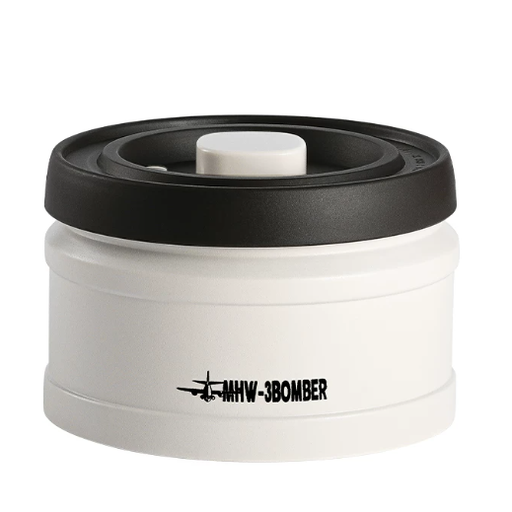
This canister is a choice for keeping coffee beans in one container rather than making separate heat-sealed portions. Check its capacity and resealing steps against your household’s routine.
 No image available
Consider this canister if you prefer to keep an active supply of coffee beans in a container instead of making sealed bags.
Its title identifies manual vacuum storage. Before buying, confirm the usable capacity and how you evacuate and reseal it after opening.
No: the Specialty Coffee Association describes roasted coffee as shelf-stable. For dry beans, choose vacuum storage to manage air exposure and access to portions, not as a food-safety requirement or a way to stop all ageing.
No—check compatibility with the exact appliance. FoodSaver UK specifies a model exception for its 700 ml FFC021X container, ZWILLING UK identifies FRESH & SAVE lids for its pumps, and Lakeland specifies StayFresh bags or containers for its handheld tool.
It may be suitable if the appliance supports that use, but follow its instructions and the relevant chilled-food safety guidance. UK government guidance warns that oxygen removal alone does not make chilled food safe and that Clostridium botulinum can grow without oxygen under certain conditions.
Selling repacked coffee involves food-business requirements beyond ordinary home storage. The Food Standards Agency advises registering a food business with the local authority at least 28 days before trading or food operations start; check the requirements that apply to your proposed activity before selling.