Hosts serving freshly ground coffee
If you have a grinder or bean-to-cup machine, you can prepare whole beans for your chosen brewer. Check the grind guidance if you plan to serve espresso, filter coffee or cafetière coffee.


Buy whole coffee beans for an afternoon tea party if you have a grinder or bean-to-cup machine, then choose beans suited to the brewer you will use. Match pack size to the drinks you expect to make, consider a separately labelled decaf option, and follow the chosen pack’s storage instructions rather than assuming a display jar will suit it.
Whole beans make sense when you can grind them for the coffee equipment you plan to use at the party.
If you have a grinder or bean-to-cup machine, you can prepare whole beans for your chosen brewer. Check the grind guidance if you plan to serve espresso, filter coffee or cafetière coffee.
Choose a stated flavour profile you want to serve, and consider a separately labelled decaf bean if guests may prefer that option. A roast description is not a reliable substitute for a decaf label.
A larger pack may suit several rounds of drinks or use after the party. Choose its size alongside a realistic plan for finishing and storing the beans once opened.
Start with the brewer and guest preferences, then decide how much coffee you will use and where the opened pack can be stored.
| Priority | What to check | Your needs |
|---|---|---|
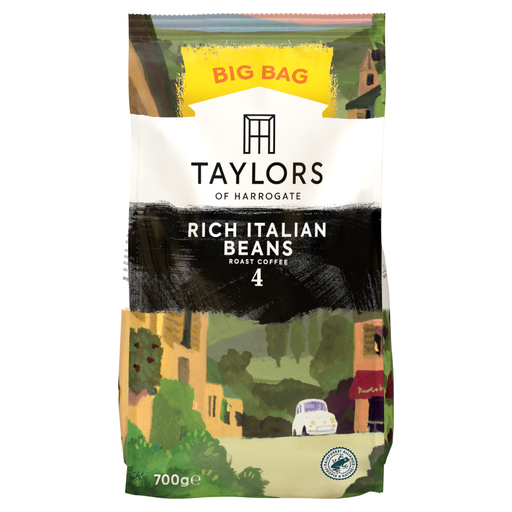
| Brewing equipment | Confirm you can grind whole beans. Check the product’s guidance for your brewer and grind setting; Taylors of Harrogate Rich Italian Beans, for example, have espresso, filter and cafetière grind guidance in the Waitrose listing. | I want to make coffee with the equipment available at the party, rather than buy beans I cannot prepare. |
| Flavour | Read the producer’s roast and tasting descriptions. Union Coffee describes its House Roast as medium roast with chocolate and caramel notes, while illy describes Classico with caramel and floral notes; neither description predicts every guest’s preference. | For a group with varied tastes, I would rather choose a profile I can describe to guests than rely on an intensity number alone. |
| Decaf choice | Look for an explicit decaffeinated label and confirm that the product is whole bean. illy states that its 250 g Whole Bean Decaffeinated Coffee contains no more than 0.1% caffeine. | Some guests may want decaf, so I need to identify it separately from the regular beans. |
| Pack size | Estimate drinks using guidance for the brewing method, then consider likely use after the party. Waitrose gives 15 g per 250 ml filter or cafetière cup for its Espresso Beans; that dose is guidance for that product, not every coffee. | If coffee service is limited to a few cups, I may prefer a smaller pack. A larger pack makes more sense if I expect to keep brewing afterwards. |
| Storage and jars | Check the exact pack’s instructions before decanting. Marks & Spencer advises airtight refrigerated or frozen storage for its Espresso Blend, whereas Waitrose specifies airtight ambient storage for its 1 kg Espresso Beans after opening. | I want a container and storage spot that follow the beans’ label, not just a jar that looks good on the worktop. |
Whole beans need grinding, and espresso, filter and cafetière preparations call for different grind settings. A pod machine on its own does not prepare whole beans.
Check that you have a grinder or bean-to-cup machine and that the beans have guidance relevant to your brewing equipment.
A large pack may remain open after a small gathering. Storage instructions differ between products, so a jar should not replace the directions on the pack.
Plan for coffee you will make after the party and follow the chosen beans’ instructions when opening, portioning or transferring them.
For its 1 kg Espresso Beans, Waitrose advises using the beans within two weeks of opening for the intended taste.
Words such as “dark” and “intense” describe a coffee’s stated style; they do not establish that it is decaffeinated.
If you intend to serve decaf, buy beans explicitly labelled decaffeinated and keep them clearly identified when serving.
Chocolate, caramel, floral and nutty notes are product descriptions, not promises about a guest’s taste.
Choose a profile that fits the coffee you plan to serve, and consider offering a separate option if you know guests have differing preferences.
These brand ranges illustrate different whole-bean formats and brewing guidance; a brand name alone does not establish which pack suits your party.
Lavazza describes a whole-bean range for home grinders, including manual, electric and built-in models.
illy offers whole-bean Classico and Decaffeinated variants. It describes its 500 g Classico as suitable for moka, filter, espresso and lungo coffee.
Waitrose lists Taylors of Harrogate Rich Italian Beans in a 700 g pack as a 100% Arabica medium roast.
Union Coffee offers House Roast in 200 g and 1 kg sizes and particularly recommends it for cafetière and filter brewing.
M&S lists whole-bean choices including espresso blends and Italian-style beans in 227 g and 454 g formats.
Waitrose lists own-label whole beans in several pack sizes, including its 1 kg Espresso Beans 100% Arabica.
These whole-bean options cover different pack sizes and flavour descriptions for afternoon tea, including a labelled decaf choice. Check each pack against your brewer and expected use.
 No image available
Consider this 700 g pack if you expect several rounds of coffee. The Waitrose listing for Taylors Rich Italian Beans describes a 100% Arabica medium roast with dark-chocolate and almond notes and gives grind guidance for espresso, filter and cafetière use. Check the pack’s storage instructions after opening.
 No image available
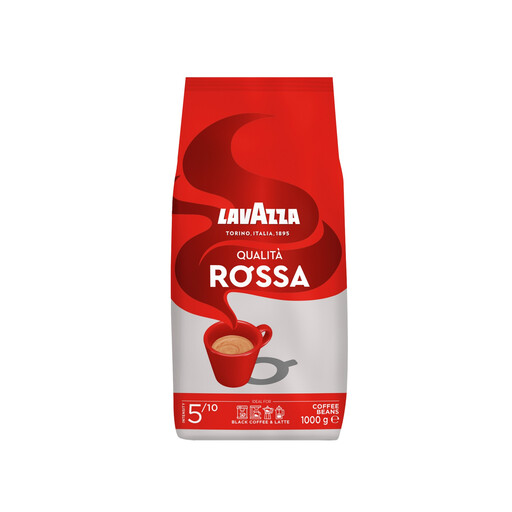
The 1000 g pack is worth considering if coffee service will continue after the party. Check its brewing guidance against your equipment and plan how you will store the opened beans.
 No image available
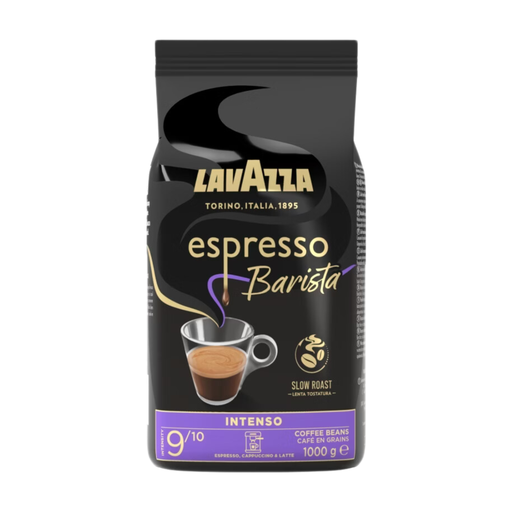
This 1 kg pack is another option when you expect to use beans beyond one gathering. “Intenso” is part of the product name, not a caffeine measure; check brewing compatibility and the pack’s storage directions.
 No image available
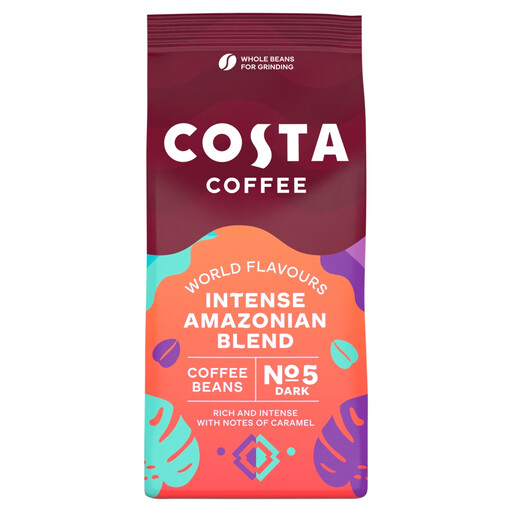
The 200 g pack offers a smaller quantity for a gathering with limited coffee service. Its name identifies an intensely dark style; choose it with guests’ flavour preferences in mind and check that it suits your brewer.
 No image available
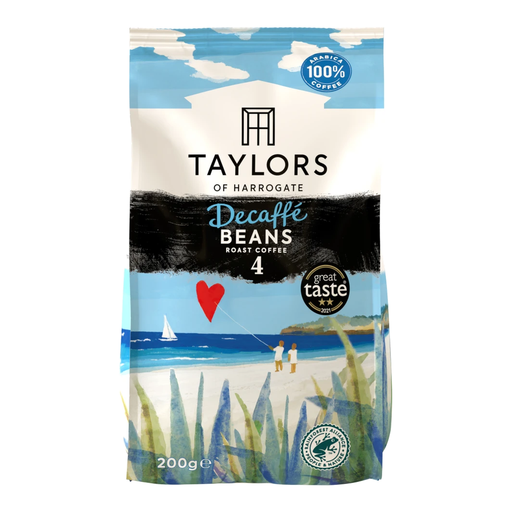
This labelled decaf bean is an option when guests want decaf coffee. The 200 g pack can be considered separately from regular beans; check that it matches your grinder and brewer, and follow its storage directions.
Not with the pod machine alone. Whole beans need grinding, so check that you also have a grinder and compatible brewing equipment before buying them for the party.
Estimate the number and type of drinks you expect. For its Espresso Beans, Waitrose gives 15 g per 250 ml filter or cafetière cup and 16–17 g for a 50 ml double espresso; use the guidance for the beans and brewer you choose, and account separately for any decaf servings.
Only use a jar if its closure and storage location suit the instructions on the particular pack. A clear jar left in sunlight is not a substitute for following the label: post-opening directions differ between products, including airtight ambient storage, refrigeration and freezing.
No: an intensity description is not a precise caffeine measurement. If you need a decaf option, choose explicitly labelled decaffeinated beans; illy states that its Whole Bean Decaffeinated Coffee contains no more than 0.1% caffeine.
No. Words such as “almond” or “chocolate” may describe flavour rather than ingredients. If a guest has an allergy or intolerance, check the exact pack’s ingredient and allergen information before serving, including anything added to the prepared drink.