What should you check before buying?
Start with the brewer used most often, then choose a flavour direction and pack size the household can live with day to day.
| Priority |
What to check |
Your needs |
| Brewing method |
Compare the maker’s recommended methods with your main brewer. Lavazza specifies Qualità Rossa for espresso and moka; Union recommends House Roast for cafetiere and filter. |
I mainly make coffee in one brewer, but would like to know whether the same beans are also recommended for the others at home. |
| Flavour direction |
Read the roast, blend composition and tasting notes together. Union describes its medium-roast House Roast with chocolate, caramel and citrus notes; treat intensity figures as cues for that brand’s products, not a universal quality scale. |
For cups we make repeatedly, I would rather choose a flavour direction everyone accepts than rely on an Italian-style name alone. |
| Espresso with milk |
Look for explicit espresso and milk-use guidance. Waitrose describes its No.1 Italian Espresso as a 50% Arabica and 50% Robusta blend suitable black or with milk. |
Most of our coffee goes into lattes or cappuccinos, so the blend’s intended use matters more to me than having one bag for every brewer. |
| Pack size and storage |
Compare pack weight with how quickly you use beans, then read that product’s opened-pack instructions. Waitrose advises using its No.1 Italian Espresso within two weeks of opening; M&S gives refrigerated and frozen storage periods for its Italian Style beans. |
A smaller pack may suit me if coffee use is slow or several blends are open at once; a 1 kg bag needs a realistic plan for use after opening. |
| Decaf choice |
Check that the beans themselves are labelled decaffeinated and choose a pack size that suits how often they are used. The illy UK whole-bean range includes a decaf option. |
Someone in the household sometimes wants decaf, so I would keep it as a separate option rather than expect one blend to cover both preferences. |
| Grind and pack label |
Set the grind for the brewer; Waitrose recommends coarse for cafetiere, medium for filter and fine for stovetop or traditional espresso. For ingredients or allergens, read the current physical pack rather than interpreting flavour notes as ingredients. |
I need beans that work with our grinder and brewer, and clear pack information for anyone who must check ingredients or allergens. |
Brand and range references
These examples show how pack sizes and stated brew guidance can differ; a brand’s wider range should not be treated as one interchangeable blend.
Lavazza
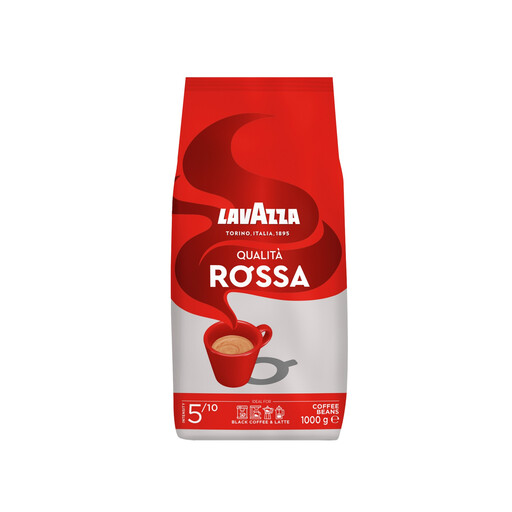
Qualità Rossa is an Arabica-and-Robusta whole-bean blend offered in a 1 kg format, with intensity marked 5/10 by Lavazza.
- Lavazza identifies it as a medium roast and recommends espresso and moka preparation.
- For a household mainly using cafetiere or filter, check the guidance for the specific beans rather than assuming the espresso and moka recommendation covers those methods.
Illy
The illy UK whole-bean range lists Classico, Intenso and decaffeinated options.
- Classico is a 250 g, 100% Arabica option; illy lists moka, filter, espresso and lungo preparation for it.
- A 250 g pack needs replenishing more often than a 1 kg bag in a household that uses beans quickly.
Taylors of Harrogate
Rich Italian beans are offered in 200 g, 454 g and 1 kg packs.
- Taylors describes this particular blend as rich and smooth, giving shoppers a stated flavour direction across several pack sizes.
- Check the selected pack and its brew guidance; the Italian-style name does not specify one preparation method by itself.
Union
Union’s House Roast is a medium-roast blend offered as whole beans in 200 g and 1 kg formats.
- Union describes chocolate, caramel and citrus notes and recommends cafetiere and filter brewing.
- If short espresso drinks are the household’s main use, compare that method-specific guidance with an espresso-oriented blend before choosing a large pack.
M&S
Its listed bean options include 454 g Italian Style beans and Collection single-origin Colombian beans.
- M&S describes the Italian Style beans as Arabica with chocolate and nougat notes, and the Colombian beans as Fairtrade single-origin Arabica with nutty-caramel notes.
- M&S advises checking the current pack label because product and allergen information can change.
Waitrose
No.1 Italian Espresso is a 250 g blend specified for espresso drinks, black or with milk.
- Waitrose identifies the blend as 50% Fairtrade Arabica and 50% Fairtrade Robusta and provides opened-pack storage guidance.
- Its two-week opened-pack use instruction applies to this product; read the pack when choosing another blend.
Joybuy coffee-bean options
These whole-bean packs offer different pantry quantities, including larger everyday bags and smaller decaf or dark-labelled options. Choose by your usual brewer and expected rate of use, then check the selected pack’s instructions.
 No image available
Lavazza Qualità Rossa Coffee Beans 1 kg
For regular espresso or moka use, this 1 kg pack matches Lavazza’s preparation guidance for Qualità Rossa. Lavazza identifies the blend as a medium roast of Arabica and Robusta; consider how quickly your household will use the bag after opening.
View on Joybuy
 No image available
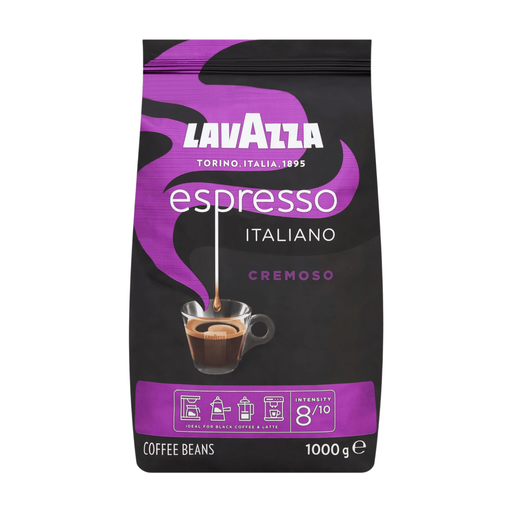
Espresso Italiano Cremoso Beans 1 kg
If espresso is your main drink, compare this 1 kg option with the preparation guidance on its pack. Before stocking up, consider whether the household will finish an opened bag promptly.
View on Joybuy
 No image available
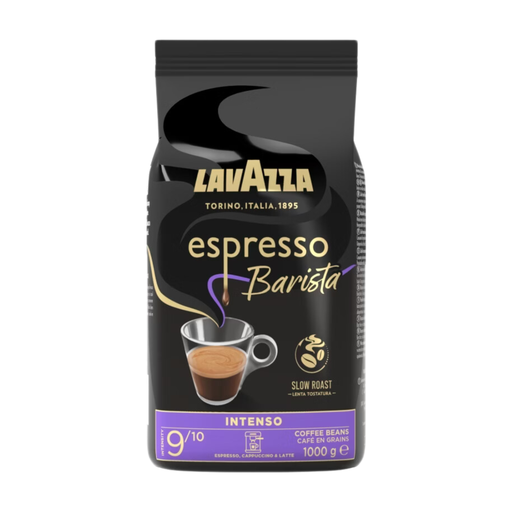
Lavazza Barista Intenso Beans 1 kg
This 1 kg bag is a pantry-quantity choice for households using beans regularly. Check its brewing instructions against your main machine and plan how you will store the beans after opening.
View on Joybuy
 No image available
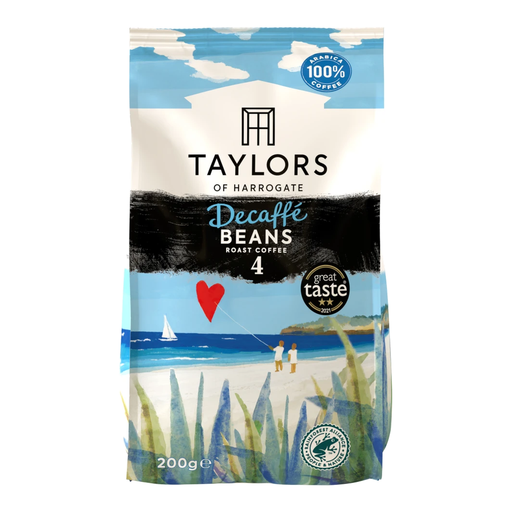
Taylors Decaf Coffee Beans 200 g
A separate 200 g decaf pack lets a household keep that preference alongside its regular beans without buying a larger decaf bag. Check the pack’s preparation and opened-storage instructions for your brewer and rate of use.
View on Joybuy
 No image available
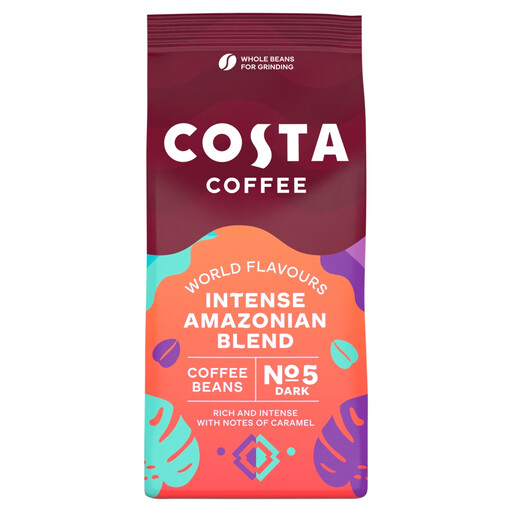
Costa Intensely Dark Amazonian Blend Coffee Beans 200 g
This 200 g dark-labelled blend offers a smaller pack when the household wants to try that flavour direction. Compare its pack guidance with your brewing method before making it the everyday cupboard choice.
View on Joybuy
Coffee-bean pantry questions
When does a 1 kg bag make sense for a home pantry?
Choose 1 kg when household use and the product’s opened-pack instructions make that quantity practical. For comparison, Waitrose advises using its No.1 Italian Espresso beans within two weeks of opening; check the guidance for the particular bag rather than applying that period to every coffee.
Can one medium blend cover espresso and filter coffee?
Check the preparation guidance for the specific blend before relying on one bag for both. Lavazza specifies medium-roast Qualità Rossa for espresso and moka, whereas Union recommends its medium-roast House Roast for cafetiere and filter; sharing a roast category does not make their stated uses identical.
Do milk drinks require a separate coffee blend?
Not necessarily, but a blend explicitly intended for espresso with milk is relevant if those drinks dominate. Waitrose says its No.1 Italian Espresso can be served black or with hot or cold milk; compare that stated use with the beans already in your pantry.
How should I grind whole beans for different brewers?
Set the grind for the brewer rather than keeping one setting for every cup. Waitrose recommends coarse for cafetiere, medium for filter machines and fine for stovetop or traditional espresso, and advises grinding only the amount needed.
Do chocolate or nut tasting notes tell me about allergens?
No: tasting notes alone cannot establish the ingredients or allergen information for a product. Read the current physical pack, particularly when an allergy or intolerance matters; M&S says its product information can change.


