For a mid-morning coffee with a snack, start with the way you brew and whether you drink it black or with milk, then compare roast and flavour notes. Lavazza positions its light-roast Espresso Italiano Classico for espresso and moka, while Union recommends its medium-roast House Roast for cafetière and filter; if you usually add milk, Waitrose describes its fuller-bodied No.1 Italian Espresso as suitable for that use. No single blend suits every brewing method or preference, and decaffeinated beans are worth considering when you want to reduce caffeine intake.
Who these choices suit
The useful starting point is your usual cup: its flavour, brewing equipment and place in your daily caffeine intake.
Everyday mid-morning coffee drinkers
If you want a cup alongside a biscuit, pastry or savoury snack, compare the stated flavour notes rather than choosing by a roast name alone. The featured blends range from Lavazza’s floral light roast to Union’s chocolate-and-caramel medium roast.
Home brewers choosing for their equipment
Espresso machines, moka pots, cafetières and filter brewers call for different preparation. Check the recommendation for the exact beans you plan to buy and grind them for your brewing method.
Shoppers keeping track of caffeine
If you want to reduce caffeine in your routine, compare decaffeinated whole-bean options as well as flavour and brewing fit. Account for caffeine from other drinks and foods when it matters to your choice.
What to check before choosing
Settle on your brewing method and whether the cup will have milk, then use flavour notes, pack size and caffeine considerations to narrow the choice.
| Priority |
What to check |
Your needs |
| Flavour and roast |
Compare the stated roast level and flavour notes on the exact beans. Lavazza describes Espresso Italiano Classico as light and floral; Union describes House Roast as medium-roasted with chocolate and caramel notes. |
I want a cup whose flavour works alongside my usual snack, without choosing a stronger-tasting roast than I enjoy. |
| Brewing method |
Look for a recommendation that fits your equipment and check the required grind. Lavazza specifies espresso and moka for Espresso Italiano Classico; Union recommends cafetière and filter for House Roast. |
My beans need to fit the brewer I already use, whether that is a moka pot, espresso machine, cafetière or filter brewer. |
| Black coffee or milk |
Check whether the producer describes the blend for your usual serving style. Waitrose lists No.1 Italian Espresso as a full-bodied, dark-chocolate blend of 50% Arabica and 50% Robusta that can be served black or with milk. |
If I usually add milk, I want to choose a profile intended for that drink; for black coffee, the stated flavour notes matter more to me. |
| Pack size and storage |
Choose a size that fits how quickly you use beans. Read the pack’s directions for resealing, storage and use after opening; those instructions can differ between products. |
A smaller bag may suit me if I make only occasional mid-morning coffees and would otherwise leave beans open for longer. |
| Caffeine |
Compare regular and decaffeinated beans, and check serving information if you track caffeine. The illy UK range includes decaffeinated whole beans; a roast or intensity label does not give the caffeine amount in a prepared cup. |
I may prefer decaf for this cup if I am reducing caffeine across the rest of my day. |
Common buying mistakes
-
Choosing by roast name without checking the brewer
A flavour description does not tell you whether a bean is recommended for your usual preparation. Lavazza specifies Espresso Italiano Classico for espresso and moka, while Union recommends House Roast for cafetière and filter.
Check the brewing recommendation first, then compare roast and flavour within options that fit your equipment.
-
Expecting every Italian-style blend to taste alike
Products carrying similar style names can have different compositions and profiles. Lavazza describes Espresso Italiano Classico as light-roasted and 100% Arabica; Waitrose No.1 Italian Espresso contains equal proportions of Arabica and Robusta and is described as full-bodied.
Read the composition and flavour notes for the exact product, particularly if you are choosing between black coffee and a milk drink.
-
Buying a large bag without checking storage instructions
Directions after opening differ by product. Waitrose advises using its No.1 Italian Espresso beans within two weeks of opening, while M&S gives separate refrigerator and freezer guidance for its Collection Colombian beans.
Match the pack size to how often you brew, reseal it as directed and follow the instructions on that pack.
-
Using roast intensity to judge caffeine intake
An intensity rating describes a product profile, not the caffeine in your prepared serving. Other foods and drinks also contribute to daily intake.
Consider decaffeinated beans if you want to reduce caffeine. During pregnancy, the NHS advises no more than 200 mg of caffeine a day from all sources.
Brand references
These examples show the different product profiles and preparation guidance worth comparing; a brand name alone does not determine the flavour of every bean in its range.
Lavazza
Lavazza UK positions Espresso Italiano Classico as a lighter, aromatic option for espresso and moka.
- Its product information specifies a light roast, 100% Arabica composition and intensity of 5/10.
- That espresso-and-moka recommendation does not establish how the bean will suit a cafetière or filter brewer.
Illy
The illy UK whole-bean range includes Classico, Intenso and decaffeinated options.
- The range gives shoppers a regular-versus-decaf choice within whole beans.
- Check the exact product’s flavour and preparation details before treating the range names as interchangeable.
Taylors of Harrogate
Taylors describes Rich Italian as a smooth, multi-origin whole-bean blend.
- A Waitrose listing specifies 100% Arabica, roast level 4 and dark-chocolate and almond notes for Rich Italian.
- Check the pack size and brewing guidance for the particular format you choose.
Union
Union describes House Roast as a medium-roast everyday blend with chocolate and caramel notes.
- Union specifically recommends House Roast for cafetière and filter brewing.
- That recommendation applies to House Roast, not necessarily to every coffee in Union’s range.
M&S
The M&S whole-bean range includes espresso-style blends and single-origin coffees.
- Its Collection Colombian beans are identified as Fairtrade single-origin coffee with nutty-caramel notes.
- Follow the storage instructions for the chosen product rather than applying the Colombian bean guidance across the range.
Waitrose
Waitrose No.1 Italian Espresso offers a clearly specified, full-bodied whole-bean option.
- Waitrose states that this blend contains 50% Arabica and 50% Robusta and can be served black or with milk.
- Its stated dark-chocolate, full-bodied profile is a different choice from a light, floral roast.
Joybuy whole-bean options
These whole-bean options cover lighter and medium roasts, an espresso-oriented profile and a decaffeinated choice for a mid-morning cup. Compare each product’s stated flavour and pack size, then check that its brewing guidance fits your equipment.
 No image available
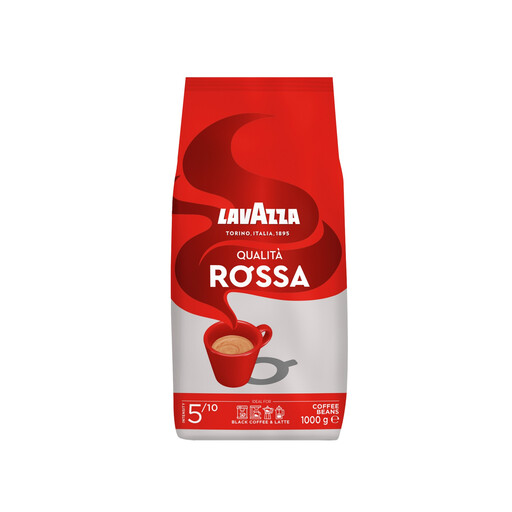
Lavazza Qualita Rossa Coffee Beans 1000g
For a mid-morning cup made by espresso, filter or French press, this 1000g whole-bean blend offers several stated preparation options. Joybuy’s product description identifies a medium roast, Arabica and Robusta beans, and chocolate and dried-fruit notes. If the proportion of each bean matters to you, check the blend details on the pack.
View on Joybuy
 No image available
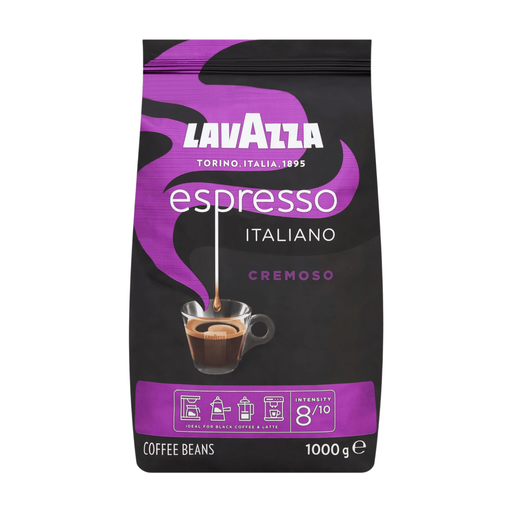
Espresso Italiano Cremoso Beans 1kg
Consider this 1kg whole-bean option if you make espresso or a milk coffee and want to compare a more intense stated profile. Its product description specifies a medium-roast Arabica–Robusta blend, chocolate notes and intensity level 8, with espresso, bean-to-cup, filter, French press and moka among the listed uses. Check whether that intensity suits your taste; the bean proportions are worth confirming if they affect your choice.
View on Joybuy
 No image available
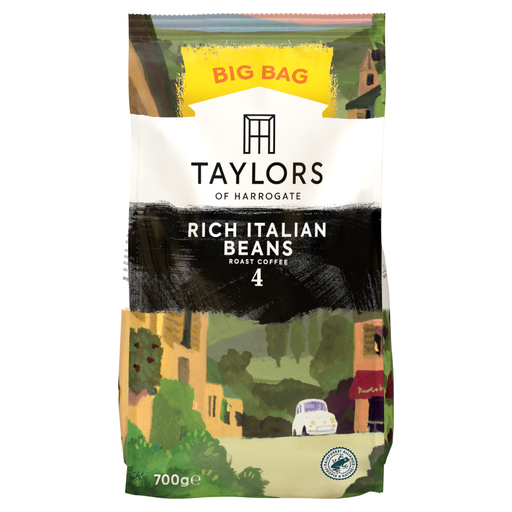
Taylors of Harrogate Rich Italian Coffee Beans 700g
For a mid-morning cup with chocolate and almond notes, this Rich Italian listing is a 700g whole-bean option. The product information describes a medium roast made from 100% Arabica beans; Taylors describes the blend as rich and smooth. Check the brewing recommendation for your equipment and whether the pack’s advice to use the beans within two weeks of opening fits your routine.
View on Joybuy
No image available
Taylors Decaf Coffee Beans 200 g
This decaffeinated whole-bean option suits a mid-morning routine in which you want to reduce caffeine. The 200 g product is described as 100% Arabica with caramel and malt notes. Check its brewing guidance against your equipment and the pack information if you need to track residual caffeine closely.
View on Joybuy
 No image available
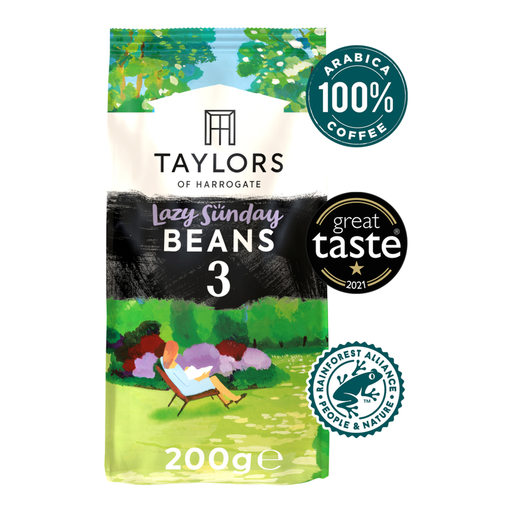
Taylors of Harrogate Lazy Sunday Coffee Beans 200g
For a lighter-roast mid-morning cup, this 200g whole-bean option has stated milk-chocolate and citrus flavour notes. Its description identifies 100% Arabica beans and a light roast. Check the brewing recommendation and storage instructions on the pack before choosing it for your equipment and routine.
View on Joybuy
Frequently asked questions
Which coffee beans should I consider for a mid-morning snack?
Start with a flavour profile you enjoy and a bean recommended for your brewing method, rather than assuming one roast suits every snack-time cup. Lavazza positions its light, floral Espresso Italiano Classico for espresso and moka, while Union recommends its chocolate-and-caramel medium-roast House Roast for cafetière and filter.
Should I choose 100% Arabica or an Arabica–Robusta blend?
Choose by the particular product’s stated flavour and how you serve it, not bean composition alone. Lavazza describes its 100% Arabica Espresso Italiano Classico as light and aromatic; Waitrose describes its 50% Arabica, 50% Robusta No.1 Italian Espresso as full-bodied and suitable black or with milk.
How should I store coffee beans after opening?
Reseal the beans and follow the instructions for the exact product. Waitrose advises using its No.1 Italian Espresso within two weeks of opening; M&S specifies two weeks in a refrigerator or four weeks in a freezer for its Collection Colombian beans. Do not apply one product’s storage directions to every bag.
When might decaffeinated beans fit a mid-morning cup?
Decaffeinated beans are an option if you want to reduce caffeine while keeping a coffee in your routine; the illy UK whole-bean range includes a decaffeinated choice. If you track caffeine, consider all sources rather than relying on a roast name. For pregnancy, the NHS advises no more than 200 mg of caffeine a day.


