Housemates dividing bulk coffee
If the household buys larger bags, a bag-sealing system lets you make labelled portions instead of repeatedly opening the full supply.


Choose a bag-sealing machine if housemates want to divide a bulk purchase into several closed portions. A compact pump with compatible bags or containers suits a kitchen with little storage space, while a vacuum canister suits the beans opened each day. Reducing air exposure does not stop coffee ageing, so keep stored beans dry and away from heat and direct light.
If the household buys larger bags, a bag-sealing system lets you make labelled portions instead of repeatedly opening the full supply.
A compact pump may be easier to put away between uses than a full-width sealing machine. Check which reusable bags or containers work with the pump you choose.
If the same beans are opened for daily brewing, a vacuum canister offers a place to keep that working portion without making a new sealed bag each time.
Choose when: Several housemates need separate portions from one large bean purchase.
Bear in mind: Each portion needs a compatible bag or roll, and the machine needs somewhere to be stored.
Choose when: A small appliance and reusable portion containers matter more than making heat-sealed bags.
Bear in mind: The pump works with its compatible valve bags and containers, not generic sealing rolls.
Choose when: The household mainly wants access to one working supply of beans each day.
Bear in mind: Opening it reintroduces air, and one canister does not divide a bulk purchase into sealed portions.
| Concern | What to check | Who this matters to |
|---|---|---|
| Separate portions | Check whether a bag-sealing machine takes rolls or ready-made bags and what comes with it. | If we buy one large bag for the house, I want to close smaller portions while keeping just one in use. Around 42% of consumers would put bulk portioning first. |
| Kitchen space | Check where the appliance will be stored and which valve bags or containers fit a compact pump. | With little room in a communal kitchen, I need a storage system we can put away and use again. For around 33% of consumers, space and reusable storage would be the primary concern. |
| Daily access | Compare canister capacity with the amount kept open, and check its lid-care instructions. | When we brew from the same supply every day, I want to close that container between uses without making another bag. Protecting the active beans would come first for around 25% of consumers. |
A sealing machine makes more sense when the household will close several portions. For beans opened each day, a canister may be simpler to use.
Decide how many portions you will actually make before choosing a bag-sealing machine over a canister or compact pump.
Making new sealed portions also uses compatible bags or rolls.
FoodSaver bag-sealing systems and ZWILLING FRESH & SAVE pump accessories use different connection methods; a container or bag should not be assumed to fit another system.
List the portion sizes you need, then check the exact bags, containers and accessories compatible with the model.
The Specialty Coffee Association identifies oxygen availability, temperature and moisture as factors in roasted-coffee ageing. Reducing air exposure does not prevent flavour from changing over time.
Keep stored beans dry and out of direct sunlight, and make the active portion small enough to use without repeatedly opening the rest.
Care instructions differ between products. Fellow says its Atmos canister is not dishwasher safe.
Check the instructions for the exact lid and container, and agree on a cleaning routine if several housemates use them.
FoodSaver offers countertop bag-sealing systems, including models with connections for compatible accessories.
This compact pump system uses compatible valve bags and glass or plastic containers.
Fellow's Atmos range is a coffee canister with a vacuum pump in its lid, suited to an active supply opened regularly.
These choices cover a manual canister for the beans currently in use and a household bag-sealing machine for making separate portions. Check the machine's bag compatibility and suitability for your intended use before choosing it for coffee.
 No image available
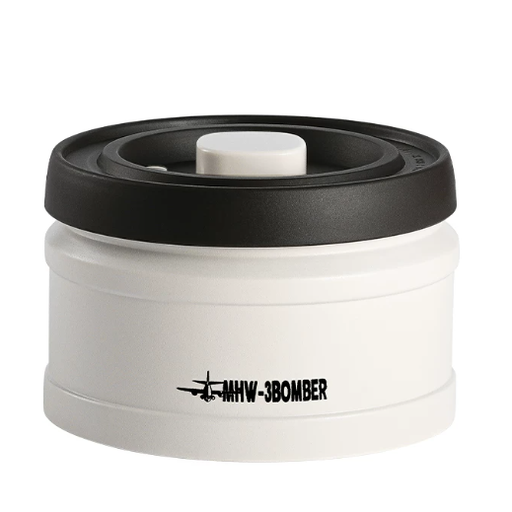
A canister format for housemates sharing one active supply of beans, rather than making several sealed bags. Check its capacity against the amount you normally keep open and follow its cleaning instructions.
 No image available
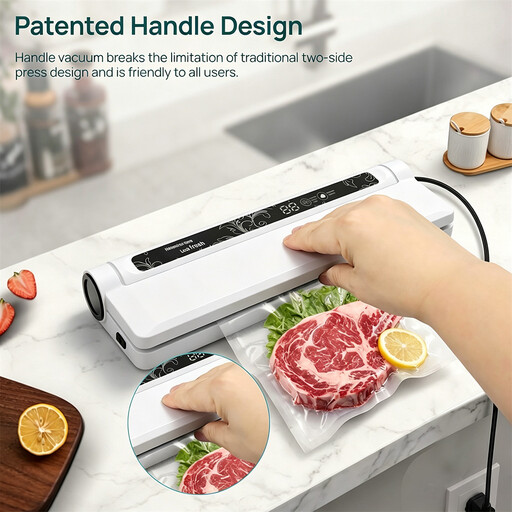
A household bag-sealing machine to consider if you want to make separate portions. It comes with 20 bags measuring 17 × 25 cm and has a built-in storage pocket. Check its sealing options, replacement bag compatibility and dimensions against your coffee-packing plans and kitchen space.
You can divide beans into portions when you are ready to store them, but vacuum storage will not stop them ageing. The Specialty Coffee Association identifies oxygen availability, moisture and temperature as factors in roasted-coffee shelf life; keep stored portions dry and away from heat and direct light.
A canister suits the portion opened each day; a bag sealer suits the remaining portions if the household buys beans in bulk. This lets you access the working supply without repeatedly opening every portion.
Check compatibility with the exact system before buying accessories. FoodSaver's VS0100 uses vacuum-seal rolls and bags and has an accessory port, while the ZWILLING FRESH & SAVE pump works with compatible valve bags and containers.
Follow the instructions for the exact canister and keep its sealing areas clear of coffee grounds. Fellow says its Atmos canister is not dishwasher safe, so do not assume its lid or container can be machine-washed.