Kettle-and-mug coffee drinkers
Coffee bags offer a single-cup route without grinding beans. Check the chosen pack’s brewing directions and caffeine description, particularly if you are buying it for use away from your usual kitchen.


Choose whole beans if you have a grinder and want to select the grind for your brewing method; choose coffee bags if you want a kettle-and-mug cup without grinding. If the pyramid shape matters, check that the exact product identifies its bags as pyramid-shaped: the words “coffee bags” alone do not confirm it.
The equipment you will use is a more useful starting point than a winter-themed flavour description.
Coffee bags offer a single-cup route without grinding beans. Check the chosen pack’s brewing directions and caffeine description, particularly if you are buying it for use away from your usual kitchen.
Whole beans let you choose a grind for your brewing equipment, but add a grinding step. Lavazza UK describes its whole beans as suitable for manual, electric and built-in automatic grinders.
Settle on beans or bags first, then compare flavour descriptions on the exact products. Notes such as the chocolate and caramel described for Union Coffee’s House Roast are product descriptions, not a promise that every drinker will taste the same thing.
Start with how you will make the coffee. Once the format fits, compare the details on the individual pack rather than assuming that all bags or all beans are alike.
Choose when: You have a grinder or bean-to-cup machine and want to select a grind for your brewer.
Bear in mind: Beans need grinding and are not a ready-to-steep substitute for a coffee bag.
Choose when: A portioned, kettle-and-mug cup suits how you will make coffee.
Bear in mind: The coffee is already ground and portioned, so you have less control over those choices than with whole beans.
| Priority | What to check | Your needs |
|---|---|---|
| Brewing equipment | Check whether you can grind whole beans or need a bag that brews in a mug. Follow the directions for the chosen product. | At home I can use my grinder, but for a cup made with just a kettle I would look at coffee bags. |
| Bag shape | Look for an explicit pyramid-bag description on the exact listing or packaging. Raw Bean names its range “Pyramid Coffee Bags”; an ordinary coffee-bag listing does not establish the same shape. | If I specifically want pyramid bags, I would confirm the shape before choosing a pack. |
| Roast and flavour | Compare the roast and tasting notes stated for the exact variant. For example, illy describes caramel notes for its Classico beans, while Union Coffee describes chocolate and caramel notes for House Roast. | For a winter cup, I might use those descriptions to narrow the choice without assuming the flavour will taste identical to everyone. |
| Pack and preparation | Check the pack count or weight, caffeine description and brewing instructions. M&S gives a four-minute brew instruction for Jump Start Coffee Bags; that timing belongs to that product. | When making one cup at a time, I want to know how many bags I am buying and how the chosen bag should be brewed. |
Whole beans require grinding, whereas coffee bags contain ground coffee for brewing in the bag. Buying beans for a kettle-only setting leaves you without the equipment needed to prepare them.
Choose between grinder-based brewing and a kettle-and-mug bag first. If the bag’s pyramid shape is important, confirm it on the exact product listing or packaging.
M&S lists different coffee-bag variants, including Jump Start and a decaffeinated option. Its four-minute brew instruction is for Jump Start, not a general instruction for every bag.
Read the chosen variant’s roast and caffeine description, then use its own brewing directions.
These brand and retailer ranges help distinguish whole-bean choices from coffee-bag choices; check the individual product when a particular bag shape matters.
A whole-bean option for grinder-based brewing.
Whole beans with named roast variants.
A brand with separately listed whole beans and coffee bags.
A whole-bean route for shoppers choosing coffee to grind.
A coffee-bag route with different named variants.
A retailer with separate whole-bean and coffee-bag listings.
These Taylors of Harrogate coffee bags are options for the kettle-and-mug route. If you specifically want pyramid-shaped bags, check the shape on the individual listing or packaging before choosing either one.
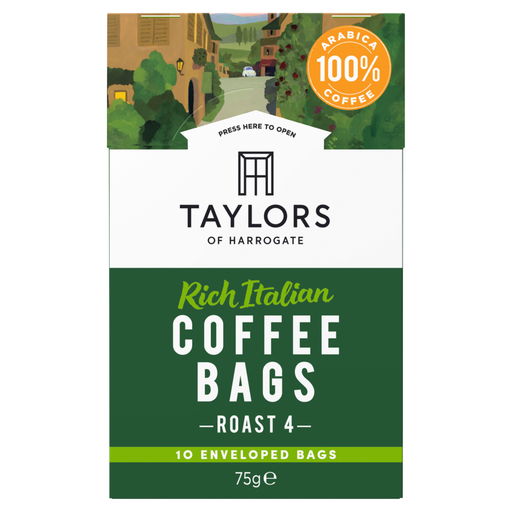 No image available
A coffee-bag option to consider for making a cup with a kettle and mug. The pack is labelled 75g; check its bag count, brewing directions and shape if those details affect your choice.
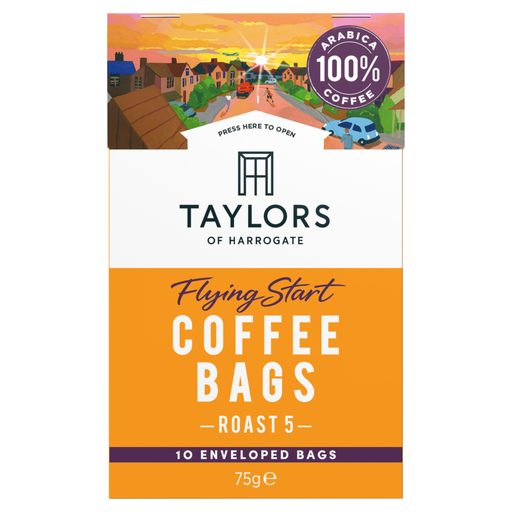 No image available
A separate Taylors coffee-bag variant for the kettle-and-mug route. The pack is labelled 75g; check its bag count and own brewing directions, and confirm the bag shape if you want pyramid bags.
No. Whole beans need grinding before brewing and are not a ready-to-steep substitute for a coffee bag. Choose beans when you have suitable grinding equipment, or coffee bags for a kettle-and-mug cup.
No. “Coffee bags” describes the format without establishing the bag’s shape. Raw Bean explicitly names Pyramid Coffee Bags, while the M&S, Taylors and Waitrose coffee-bag listings cited here do not establish that shape; check the exact product if it matters to you.
Follow the directions for the bag you choose. M&S instructs shoppers to brew its Jump Start Coffee Bags for four minutes, but that product-specific timing should not be applied to other bags.
Check the exact product packaging and current manufacturer or retailer information before consumption, rather than relying on a category description. Waitrose advises affected shoppers to use prepacked products whose packaging details allergen information.