Home workers using a cafetière or filter brewer
Union recommends its House Roast blend for these methods. It is a starting point if you want to make lunch-time coffee without choosing an espresso-focused blend.


For a working-from-home lunch, start with your brewer: Union recommends House Roast for cafetière or filter coffee, and Revelation for espresso or bean-to-cup machines. If flavour is the deciding factor, illy describes its 100% Arabica Classico as aromatic, while Lavazza’s medium-roast Qualità Rossa is an Arabica–Robusta option for espresso or moka. If you want to reduce caffeine, choose a clearly labelled decaf product rather than relying on roast or intensity wording.
Your usual lunch-time brewing method is a useful starting point; flavour and caffeine considerations can narrow the choice further.
Union recommends its House Roast blend for these methods. It is a starting point if you want to make lunch-time coffee without choosing an espresso-focused blend.
Look at blends recommended for your machine, then compare their stated flavour profiles. Union recommends Revelation for espresso and bean-to-cup brewing; Waitrose positions No.1 Italian Espresso for espresso and drinks with milk.
Roast and intensity labels do not give a caffeine amount per cup. A decaf-labelled pack offers a clearer basis for choosing beans when reducing caffeine matters; consider caffeine from other drinks and foods too.
Choose for the brewer you actually use, then compare flavour, caffeine labelling and a pack size you can use as directed after opening.
| Priority | What to check | Your needs |
|---|---|---|
| Brewing method | Check the producer’s recommended brewer and whether you can grind whole beans appropriately. Union recommends House Roast for cafetière and filter brewing, but Revelation for espresso or bean-to-cup machines. | I make coffee with the equipment already in my kitchen, so I want beans and a grind setting that fit it. |
| Flavour profile | Compare descriptions for the particular blend, not just its roast name. illy describes Classico with caramel and floral notes; Union positions House Roast as chocolate-and-caramel-led and Revelation as a darker espresso blend. | For a lunch-time cup, I might prefer aromatic notes, a chocolate-led blend or a darker espresso profile. |
| Caffeine | Check for an explicit decaf designation if reducing caffeine is the goal. Bean type, roast and intensity do not establish the amount in a prepared cup. | I want to account for caffeine from lunch coffee alongside other sources, rather than guessing from how strong the coffee tastes. |
| Pack and storage | Check pack size, storage directions and any use-after-opening advice on the specific product. Instructions can differ between blends. | If I make only one cup at lunch, I want a pack I can use while following its storage guidance. |
A blend may work in several brewers while its producer recommends one method in particular. Union points cafetière and filter users towards House Roast, and espresso or bean-to-cup users towards Revelation.
Check the recommended brewing method first, then set your grinder for the brewer you use.
An intensity label describes a product’s stated cup character, not its caffeine per prepared cup. Dose and preparation also matter when considering caffeine intake.
If reducing caffeine is important, compare clearly labelled decaf products and check the pack rather than choosing by roast or intensity.
Storage instructions vary by product, so advice for one blend should not automatically be applied to another.
Choose a pack size that fits how often you make coffee, reseal it as directed and follow its own storage and use-after-opening instructions.
A larger pack may be harder to use within its stated after-opening period if lunch is your only daily cup.
These examples show how individual brands describe particular blends; check the specific pack rather than assuming every coffee from a brand has the same composition or brewing recommendation.
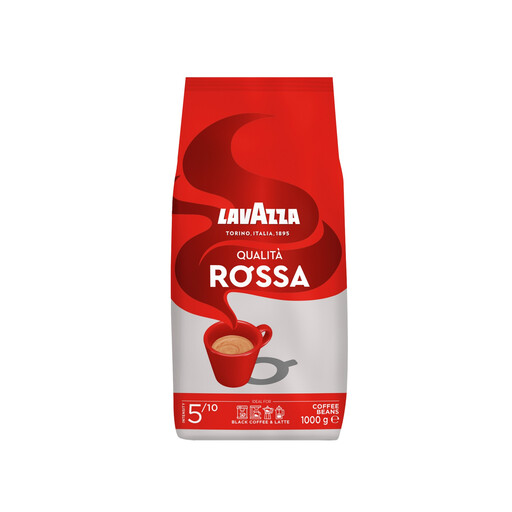
Qualità Rossa is a medium-roast Arabica–Robusta blend that Lavazza recommends for espresso and moka.
Classico is illy’s 100% Arabica whole-bean blend, described by the brand with caramel, orange-blossom and jasmine notes.
Union distinguishes between House Roast for cafetière or filter brewing and Revelation for espresso or bean-to-cup machines.
M&S describes its Roast & Ritual house blend as 100% Fairtrade Arabica.
Waitrose No.1 Italian Espresso is a Fairtrade blend of 50% Arabica and 50% Robusta, according to the retailer’s product information.
Taylors of Harrogate is another whole-bean brand to consider when comparing packs for lunch-time use.
These whole-bean packs offer options for a working-from-home lunch, including a decaf-labelled choice. Check each product’s brewing guidance against your equipment before buying.
 No image available
For espresso or moka at lunch, Lavazza identifies Qualità Rossa as a medium-roast Arabica–Robusta blend with chocolate and dried-fruit notes. This is a 1000 g pack; check its storage directions if you make coffee infrequently.
 No image available
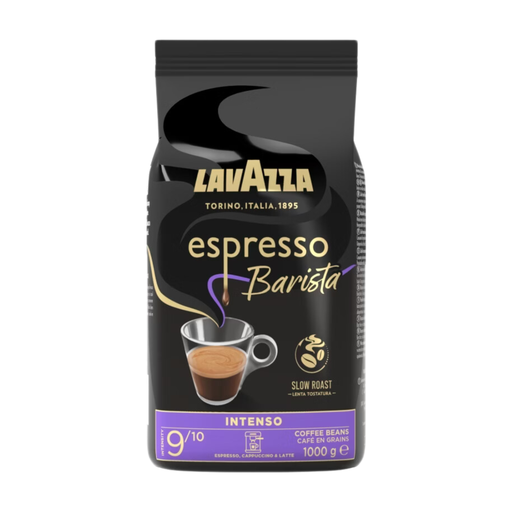
If you use an espresso or bean-to-cup machine at lunch, compare this 1 kg whole-bean pack’s brewing directions with your setup. Check the pack’s flavour description and storage advice before choosing it over a smaller option.
 No image available
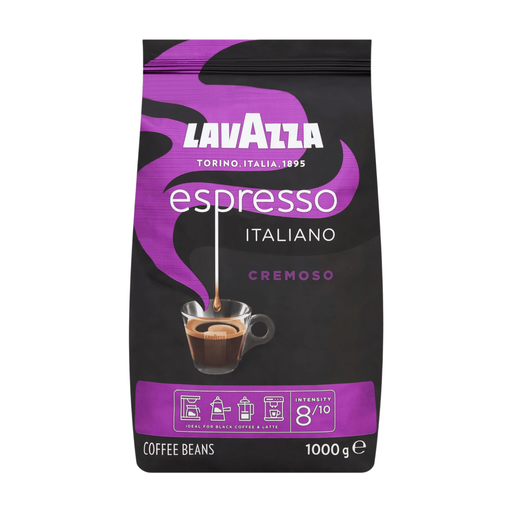
For an espresso-style lunch coffee, compare this 1 kg whole-bean pack with the brewing method you use. Check its pack directions for the appropriate preparation and storage conditions.
 No image available
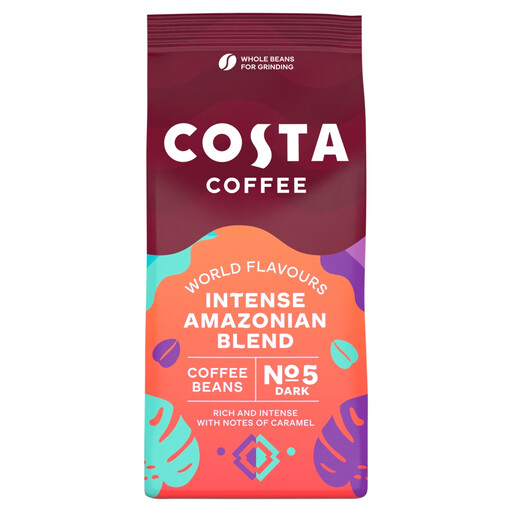
If a smaller pack suits your lunch-time routine, this named blend comes in a 200 g whole-bean pack. Check its brewing directions and flavour description against your usual method and preferences; the name alone does not indicate caffeine per cup.
 No image available
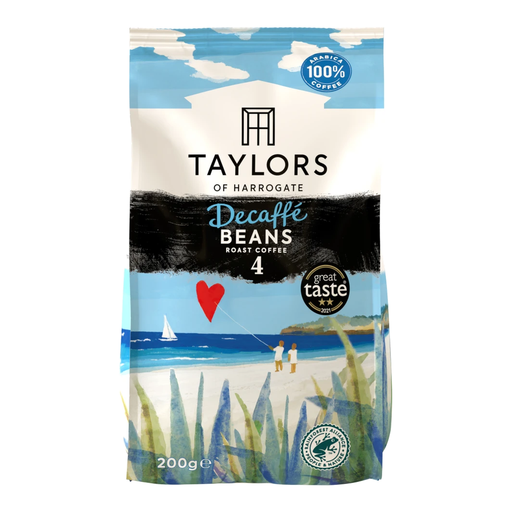
This 200 g decaf-labelled whole-bean pack is an option to compare when reducing caffeine matters at lunch. Check the pack for brewing instructions and caffeine information if you need to account for a specific intake.
Start with your brewer and the flavour you want. Union recommends House Roast for cafetière or filter coffee and Revelation for espresso or bean-to-cup machines; illy lists its 100% Arabica Classico for several methods, including moka, filter and espresso. Those recommendations describe different starting points, not a blend that suits everyone.
Match the grind to your brewer. Waitrose’s preparation guidance for No.1 Italian Espresso specifies a coarse grind for cafetière, medium for filter machines and a finer grind for stovetop or traditional espresso preparation. Check your own brewer’s instructions when setting the grinder.
Follow the instructions on the particular pack rather than applying one rule to every blend. For example, M&S directs buyers of its Italian Style Coffee Beans to store them in an airtight container in the refrigerator and use them within two weeks of opening.
No: roast or intensity wording is not a caffeine measurement for the prepared cup. If reducing caffeine is important, check an explicitly labelled decaf product and account for other caffeine sources. For pregnancy, the NHS advises no more than 200 mg of caffeine a day from all sources.