Who is choosing these beans?
The useful meaning of “strong” changes with the drink you make and whether you mean flavour or caffeine.
Espresso and bean-to-cup drinkers
If breakfast is a quick espresso or an automatic-machine coffee, begin with beans recommended for that method. Then use the maker’s roast description and intensity label to choose the flavour profile you enjoy; the number is not a caffeine reading.
Milk-coffee drinkers
For a latte or another milk drink, look for an explicit milk-drink recommendation rather than assuming every dark bean will taste the way you expect. Lavazza, for example, describes Crema e Gusto Classico as suitable for both espresso and a milky latte.
Buyers paying attention to caffeine
Check bean composition separately from flavour intensity. Waitrose & Partners says robusta can contain up to double the caffeine of arabica, making the distinction relevant whether you seek more caffeine or need to limit it.
What matters when choosing?
Decide what “strong” means in your cup, match the beans to your brewer, then choose a pack size you can use comfortably.
| Priority | What to check | Your needs |
|---|
| Bold flavour |
Read the roast description and the maker’s intensity scale. Lavazza describes intensity as aroma and overall coffee character; scores from different roasters are not a shared caffeine scale. |
I want a pronounced breakfast flavour, not necessarily more caffeine. A darker roast or a blend described as full-bodied may fit the taste I have in mind. |
| Brewing method |
Check the stated methods and the grind your equipment needs. For its own Espresso Beans, Waitrose & Partners suggests a fine grind for espresso, medium for filter and coarse for cafetière. |
My weekday brewer is the deciding factor: beans intended for espresso are not automatically the right choice for my filter machine or cafetière. |
| Milk drinks |
Look for a maker’s recommendation for latte or other milk-based coffee. Check whether the described flavour still appeals to you without milk. |
When I add milk, I want a coffee chosen for that preparation rather than one selected solely for a high strength number. |
| Caffeine |
Check whether the blend contains arabica, robusta or both; do not calculate caffeine per cup from an intensity label. Waitrose & Partners says robusta can contain up to double the caffeine of arabica. |
If caffeine intake matters to me, flavour alone cannot settle the choice. During pregnancy, NHS guidance says to have no more than 200 mg of caffeine a day from all sources. |
| Pack size and storage |
Consider how quickly you use beans, whether you can grind them when needed and the exact pack’s storage instructions. Directions after opening differ between products. |
A large bag suits my routine only if I can use it while the coffee tastes as I expect; otherwise, I would choose a smaller pack. |
Brand and retailer references
These examples show how makers describe particular beans and brewing uses; a brand name alone does not establish the strength of every product in its range.
Lavazza
Lavazza UK labels Espresso Barista Intenso 9/10 and Crema e Gusto Classico 8/10 on its own intensity scale.
- Crema e Gusto Classico is described as a dark arabica-and-robusta blend for espresso and milky latte.
- Lavazza’s intensity ratings describe coffee character, not caffeine content.
illy
illy describes its Intenso 500 g whole beans as 100% arabica, full-bodied and rated 7/9 on its intensity scale.
- illy lists espresso, moka, filter and lungo among the intended preparations.
- A full-bodied flavour does not establish the caffeine content of a prepared serving.
Taylors of Harrogate
Taylors describes its Rich Italian beans as rich and smooth, without the bitterness it associates with some darker roasts.
- An option to examine if “strong” means a rich flavour rather than the darkest roast.
- That description should not be read as an extra-bold intensity or caffeine rating.
Union
Union calls its House Roast a medium roast with bold everyday flavour and names cafetière and filter as preferred methods.
- The stated brewing methods help narrow a choice for a filter or cafetière routine.
- A medium-roast House Roast should not be treated as equivalent to a dark espresso blend; Union lists espresso-focused selections separately.
M&S
M&S describes its Italian Style Coffee Beans as arabica with a deep, rich aroma.
- The product’s own storage directions give a practical check for opened-pack use.
- Check the label on the pack you buy, as product details can change.
Waitrose
Waitrose & Partners lists its own Espresso Beans as 100% arabica, strength 4 and medium-dark roast.
- Its product instructions distinguish espresso, filter and cafetière grinds.
- The strength 4 label describes that product; it is not a caffeine figure or a cross-brand standard.
Joybuy coffee options
These coffee choices cover weekday espresso, bean-to-cup, filter and cafetière routines. For the Costa No. 5 listing, check the pack’s bean or grind description before choosing it for your equipment.
 No image available
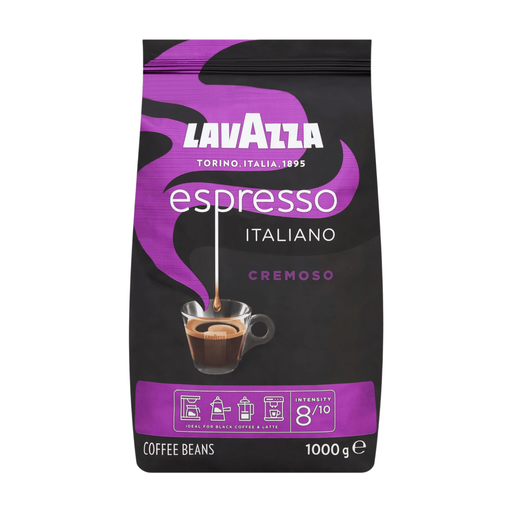
Espresso Italiano Cremoso Beans, 1 kg
A choice to consider for espresso, bean-to-cup coffee or a breakfast drink with milk. The listing describes an arabica-and-robusta blend, medium roast and intensity 8; that rating does not state caffeine per cup.
View on Joybuy
 No image available
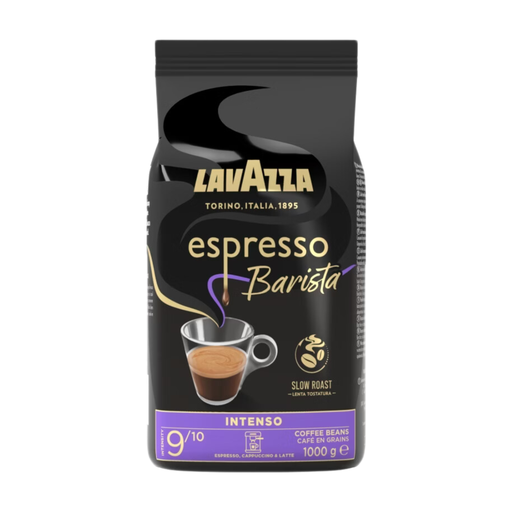
Lavazza Barista Intenso Beans, 1 kg
The listing recommends these beans for espresso and bean-to-cup use. It describes a medium roast, intensity 7 and chocolate and dried-fruit notes; check the pack’s bean composition if caffeine is part of your decision.
View on Joybuy
 No image available
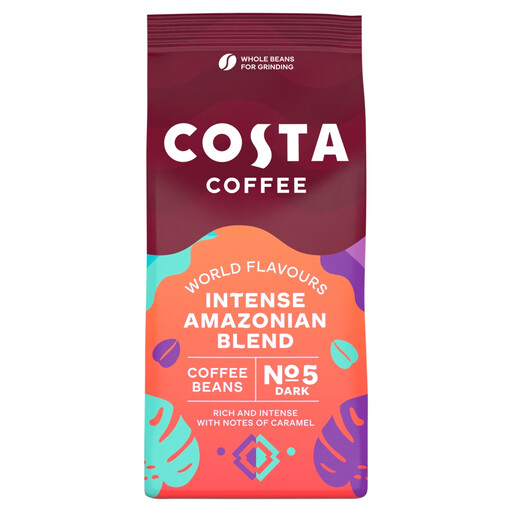
Costa Intensely Dark Amazonian Blend Coffee Beans, 200 g
For a dark-flavour breakfast coffee made as espresso or filter, the description names both preparations. It describes 100% arabica beans with smoky and dark-chocolate notes; those flavour descriptions do not indicate caffeine per serving.
View on Joybuy
 No image available
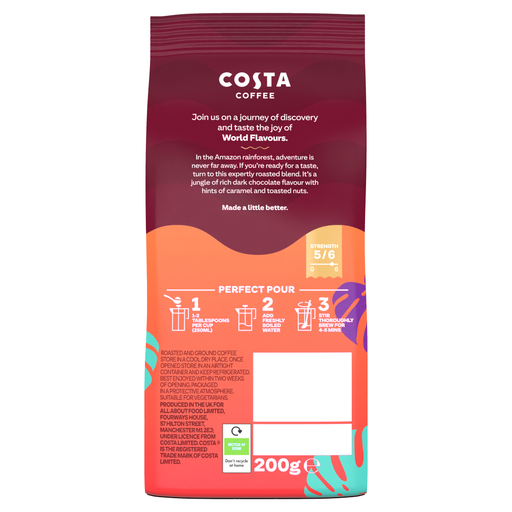
Costa Coffee Intensely Dark Amazonian Blend for Cafetière & Filter, No. 5, 200 g
This listing names cafetière and filter use and a No. 5 strength, with a dark flavour description. Check the pack for its intended grind form before buying: the descriptions do not consistently establish whether it is whole-bean or ground coffee. They also conflict on arabica and robusta composition, so do not use this listing to judge caffeine content.
View on Joybuy
 No image available
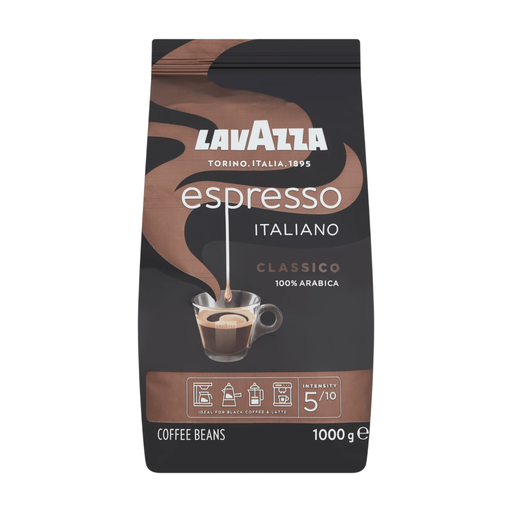
Lavazza Cafe Espresso Coffee Beans, 1 kg
These 100% arabica whole beans are described for espresso with a deep, full-bodied flavour. If your weekday choice depends on a particular roast level or intensity rating, check the pack rather than assuming one from the espresso name.
View on Joybuy
Common questions
Does a higher coffee strength score mean more caffeine?
No. Lavazza uses intensity to describe coffee character, including aroma, rather than caffeine. For bean-type context, Waitrose & Partners says robusta can contain up to double the caffeine of arabica; neither fact gives the caffeine amount in your prepared cup.
Which beans suit an espresso or bean-to-cup breakfast?
Start with beans explicitly recommended for your machine. Lavazza describes Crema e Gusto Classico for espresso, while illy lists espresso among the methods for Intenso. For its own Espresso Beans, Waitrose & Partners suggests 16–17 g, finely ground, for a 50 ml double espresso extracted in 20–25 seconds; treat that as product-specific starting guidance, not a recipe for every bean or machine.
How should I store beans after opening?
Follow the directions for the exact product. M&S advises keeping its Italian Style Coffee Beans in an airtight container for two weeks in the refrigerator or four weeks in the freezer; another pack may give different instructions. Grind only what you need for the drink if your equipment allows it.
What if I need to limit caffeine during pregnancy?
NHS guidance says pregnant people should have no more than 200 mg of caffeine a day from all sources, including drinks and foods other than coffee. A coffee’s strength label does not tell you its caffeine per serving, so account for the drinks you prepare and other sources of caffeine rather than treating a bold or mild flavour as a measure of intake.


